|
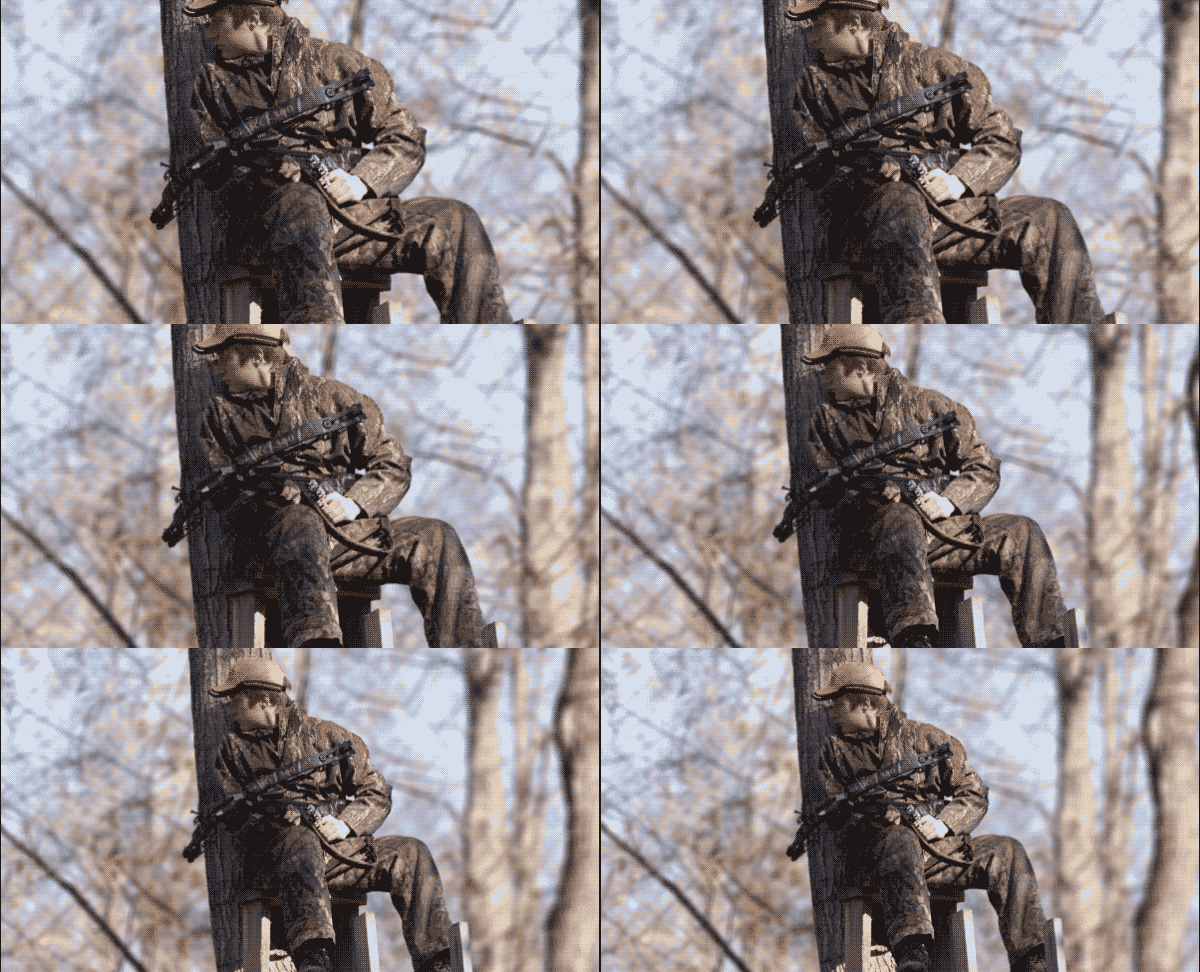
Archery deer season opens statewide Oct. 1 and is open through Nov. 14, then reopens Dec. 1 through Jan. 1. Remember to be safe while hunting.
Beginning Oct. 1, hunters may report their deer harvest online. Reporting is optional, but highly encouraged. All data collected helps the Department of Natural Resources to manage the deer population in Michigan.
This video will walk you through the simple steps you’ll use to report your deer harvest online. You can report your harvest at Michigan.gov/DNRHarvestReport.
Before you head into the field, be sure to check the latest hunting regulations in your area by looking at the 2021 Hunting Digest. The sections below refer to specific pages of the digest for more information on these topics.
For on-demand digest access that travels where you do, without the need for internet access, download DNR hunting and fishing digests right to your phone! Find the current digests and downloading instructions at Michigan.gov/DNRDigests.
Baiting and feeding
Baiting and feeding is banned in the entire Lower Peninsula and the Core CWD Surveillance Area in the Upper Peninsula.
- Exception: Hunters with disabilities who meet specific requirements may use bait, five days before and during the Independence Hunt, in areas where baiting is banned. See page 44.
- See page 56 for additional information about the baiting and feeding bans.
Universal antlerless license
- New this year: Universal antlerless deer licenses may be used on public or private land in any deer management unit open to antlerless hunting. Some hunters in the Upper Peninsula (DMU 351 and 352) will need to have an access permit along with a universal antlerless deer license to hunt antlerless deer. See pages 47-48.
Antler point restrictions (APR)
- Mainland Lower Peninsula hunters may harvest an antlered or antlerless deer on their deer or deer combo licenses during archery, firearm and muzzleloader seasons.
- Be sure to check the APR chart before heading out this year:
- Lower Peninsula APR chart, see pages 53-55.
- Upper Peninsula APR chart, see pages 58-59.
If you’re hunting in an area with high deer numbers or a disease-prevalent area, consider taking a doe this year to do your part in managing Michigan’s deer herd.
Harvesting does, the drivers of the deer population, is a key element in deer management. It is important to consider increasing doe harvest in areas with stable or overpopulated deer numbers to ensure healthy population ranges. This is especially crucial in known deer disease areas, where deer numbers often need to be lowered to help minimize the future spread of the disease.
Antlerless deer can be harvested on a deer or deer combo license in the mainland Lower Peninsula and during the archery season in parts of the Upper Peninsula. A universal antlerless license can also be used to harvest an antlerless deer.
Bovine Tuberculosis Management Zone discounted antlerless licenses
Discounted public- and private-land antlerless licenses for DMU 487 (which includes all land in DMU 452) are available for purchase for just $5. This discount, made possible by the state Legislature, provides an opportunity for hunters to further participate in deer management in northeast Michigan’s bovine tuberculosis area.
This firearm deer hunt for hunters with qualifying disabilities will take place on private lands, and some public lands requiring an access permit, Oct. 14-17.
During this hunt, a deer or deer combo license may be used for an antlered or antlerless deer. Antler point restrictions do not apply. A universal antlerless deer license or deer management assistance permit may be used to take one antlerless deer only, if issued for the area/land being hunted. The bag limit for this season is one deer. All hunters participating in this season must wear hunter orange.
Additional details can be found on page 44.
The DNR is beginning a five-year process of focused chronic wasting disease surveillance – in the form of testing deer heads – around the state. In 2021, surveillance will be occurring mainly in the lower third of the state. Over the next four years, the rest of the state will be sampled to determine if CWD is present in other parts of the state where it has not yet been identified.
In 2021, we will be accepting samples from Allegan, Barry, Branch, Calhoun, Eaton, Gratiot, southern Isabella, Hillsdale, Jackson, Kalamazoo, Lenawee, Livingston, Macomb, Monroe, Oakland, St. Joseph, Washtenaw and Wayne counties, and also from the core CWD surveillance area in the Upper Peninsula (portions of Dickinson, Menominee and Delta counties) for CWD testing. Deer heads from these counties can be submitted at any open DNR deer check station or drop box from Oct. through Jan.
Deer harvested in Clinton, Dickinson, Ingham, Ionia, Kent and Montcalm counties can be tested for CWD through the DNR for free from Nov. 15-18 only. Participating USDA-approved lab testing is available in these areas at any time for a fee.
Hunters in the remainder of the state who want their deer heads tested must submit them to a participating USDA-approved lab at any time for testing. Hunters will be charged a fee to have their deer heads tested. Hunters may visit Michigan.gov/CWD and click on "For Hunters" for more information about participating USDA-approved lab testing.
The DNR also asks hunters to submit deer from the northeastern Lower Peninsula to be tested for bovine tuberculosis, a bacterial respiratory disease that impacts deer and elk.
Entire carcasses from deer displaying symptoms of CWD or TB will be collected and tested throughout the deer season, regardless of where they were harvested.
DNR deer check station hours, days of operation and locations will be limited in 2021. To find a deer check station near you, visit Michigan.gov/DeerCheck.
Contact the DNR Wildlife Division at 517-284-9453.
|