|
The regular duck season is about to begin, so be sure to head out for some crisp September and October mornings on the marsh!
Have you been wanting to hunt at one of Michigan’s managed waterfowl hunt areas, also known as Michigan’s Wetland Wonders? Take some time this fall to get to know the areas! Open houses will be held at southeast Michigan’s Wetland Wonders in September and October.
The open houses will be held outdoors and will include a driving tour of the area. Participants will be able to tune in to their vehicle radios to hear an introduction and overview of the area before the driving tour begins. Various stops will be planned along the route to showcase improvements designed to provide great habitat for waterfowl and other wetland wildlife. Masks are suggested for tour participants while outside vehicles.
Open houses beginning at 6 p.m. will be held at the following locations:
-
Sept. 28 – Nayanquing Point State Wildlife Area, 1570 N. Tower Beach Road, Pinconning; 989-697-5101.
-
Sept. 29 – Fish Point State Game Area, 7750 Ringle Road, Unionville; 989-674-2511.
-
Oct. 6 – St. Clair Flats State Wildlife Area, 3857 Columbine Road, Harsens Island; 810-748-9504.
-
Oct. 7 – Pointe Mouillee State Game Area, 37025 Mouillee Road, Rockwood; 734-379-9692.
-
Oct. 7 – Shiawassee River State Game Area, 225 East Spruce St., St. Charles; 989-865-6211.
The Youth and Veterans/Active-Duty U.S. Military Personnel Waterfowl Hunting Weekend will be Sept. 18-19. This statewide hunt is for properly licensed youth 16 years old and younger and eligible veterans and active-duty U. S. military personnel.
Ducks, mergansers, geese, coots and moorhens may be harvested. The daily limits and species restrictions are the same as those allowed in the regular waterfowl hunting season. Adults accompanying youth hunters are not permitted to harvest these species during the hunt unless hunting during the September portion of the Canada goose hunting season. Youth 16 years old also must possess a waterfowl license and a federal duck stamp.
Participating veterans and active-duty U.S military personnel are required to possess documentation of verification afield and must present it upon request of a Michigan conservation officer, tribal conservation officer or any law enforcement officer. The following documentation along with a valid Michigan driver’s license or voter registration card will be accepted as proof of status: military ID, leave papers, duty papers, military orders, copy of DD Form 214, enhanced driver’s license or documentation from the Veterans Administration regarding disability status. Participating veterans and active-duty U.S. military personnel must possess a waterfowl license and a federal duck stamp.
- North Zone – Sept. 25 - Nov. 21 and Nov. 27-28.
- Middle Zone – Oct. 2 - Nov. 28 and Dec. 11-12.
-
South Zone – Oct. 9 - Dec. 5 and Jan. 1-2.
The daily bag limit is six ducks of any species, with no more than four mallards (no more than two of which may be hens), three wood ducks, two redheads, two canvasbacks, two black ducks, one pintail, and one or two scaup. Similar to last year, there are changes to the scaup daily bag limit during the season, and depending on when and where you are hunting in the state, you may harvest either one or two scaup daily. See the table on page 8 of the 2021 Michigan Waterfowl Hunting Digest for more details. In addition to the duck limit, hunters may take five mergansers, only two of which may be hooded mergansers.
-
North Zone – now through Dec. 16.
-
Middle Zone – now through Dec. 16.
-
South Zone – now through Sept. 30, Oct. 9 - Dec. 5, Jan. 1-9 and Feb. 5-14, 2021.
-
Allegan County Goose Management Unit – Now through Sept. 30, Nov. 6-13, Nov. 25 - Dec. 5 and Dec. 18 - Feb. 13, 2021.
-
Muskegon County GMU – Oct. 16 - Dec. 23.
Canada geese, white-fronted geese (or specklebellies) and brant are part of a dark goose aggregate daily bag limit. During the entire goose season, the dark goose aggregate daily bag limit for Canada geese, white-fronted geese and brant is five, only one of which can be a brant. An aggregate bag limit is also in place for light geese including snow, blue and Ross’s geese. Hunters may harvest 20 light geese per day during goose seasons.
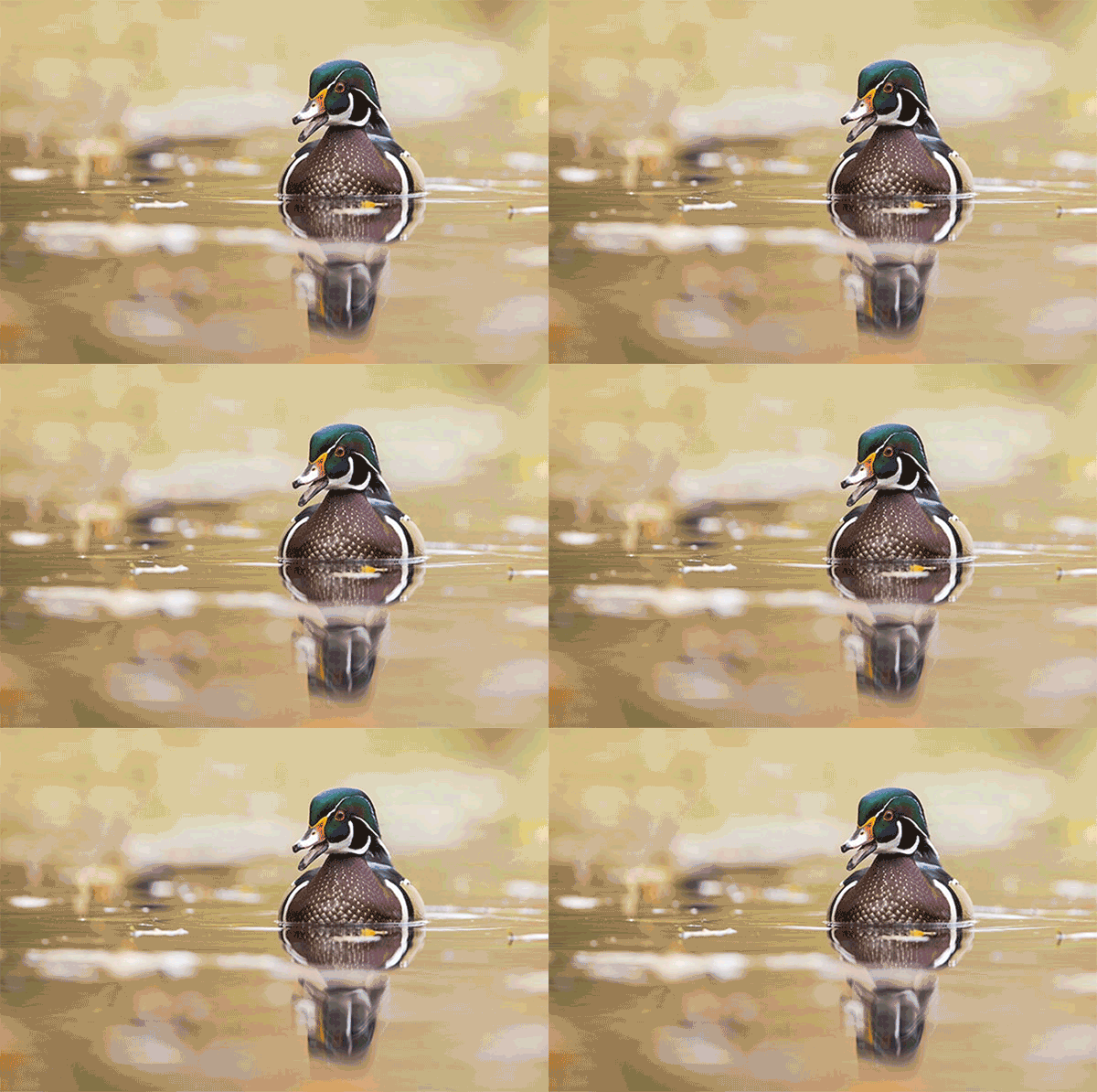
The Michigan Duck Hunters Association, in cooperation with the Michigan Department of Natural Resources, has introduced the 2021 Michigan duck stamp and print. This stamp, featuring a drake wood duck by wildlife artist John M. Roberts, is a voluntary purchase and does not replace the state waterfowl hunting license.
The MDHA is a nonprofit organization dedicated to waterfowl and wetland conservation. Proceeds from stamp sales will be used to fund MDHA and DNR wetland projects. MDHA will mail waterfowl hunters a free copy of the standard edition stamp (subject to availability) if they send a self-addressed, stamped envelope with a copy of their Michigan waterfowl hunting license to: MDHA Waterfowl Stamp Program, P.O. Box 186, Kawkawlin, MI 48631.
Invasive plants and animals like phragmites, European frog-bit and zebra mussels can cause significant harm to wildlife habitat, reduce hunting opportunities and damage equipment.
Invasive species are often spread unintentionally. Microscopic organisms and aquatic vegetation readily attach to equipment, and without proper steps to remove them, are unknowingly transported from one lake, river or wetland to another. Watch this video for reminders about how to help prevent the spread of invasive species and protect waterfowl habitat.
For on-demand access that travels where you do, without the need for internet access, download DNR hunting and fishing digests right to your phone. Find the current digests and downloading instructions at Michigan.gov/DNRDigests.
Contact the DNR Wildlife Division at 517-284-WILD (9453).
|