|
Michigan has some of the best wildlife-based recreation opportunities around. This quarterly newsletter will give you updates on the great work going on for wildlife conservation across the state and some tips on how to get involved.
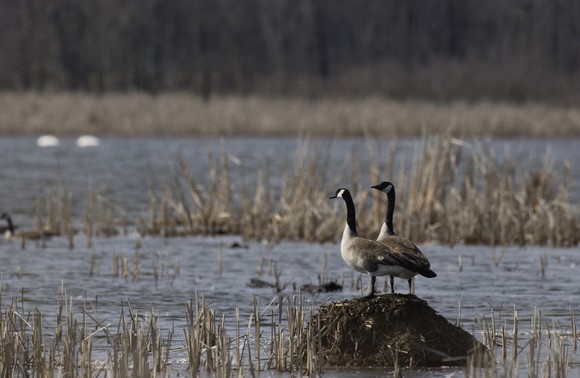 At the headwaters of the mighty Sturgeon River are the expansive wetlands known as the Sturgeon River Sloughs Wildlife Recreation Area. Located in Baraga and Houghton counties, this 8,839-acre ecosystem is a haven for wildlife, especially migratory waterfowl and wetland species. To further improve the area for wildlife and wildlife-related recreation, a section of the sloughs recently underwent a $700,000 improvement project to better support migratory bird habitat, efficiently control water levels and increase access for recreation.
In partnership with Ducks Unlimited and the Upper Peninsula Resource Conservation and Development Council, Department of Natural Resources Wildlife Division staff rebuilt portions of the wetland dikes, installed an electric water pump, constructed a berm for better flooding capabilities and improved the conditions of the service road to allow hunters to drop off decoys closer to the water.
During the spring and fall migration, the sloughs provide a respite to thousands of waterfowl. The added berms and water-control structure allow for intentional flooding of planted fields during the fall waterfowl hunting season, providing food and shelter for Canada geese, blue-winged teal, and wood and mallard ducks.
The Sturgeon River Sloughs are beloved by the many recreationists that visit. Kayakers, botanist, birders, deer hunters, beaver and muskrat trappers, and occasional anglers all can be found enjoying the recreation area. With proximity to Michigan Technological Institute, the area also draws students exploring nature and learning to waterfowl hunt.
The dikes within the wetland complex were built the 1960s with waterfowl hunting and wetland recreation in mind. These renovations will keep the area open and safe for outdoor enthusiasts to enjoy for decades to come. Ducks Unlimited will host a ceremony to celebrate the habitat improvement project later this summer. Details about the ceremony will be available on Ducks Unlimited – Michigan Events webpage.
Baraga, Gogebic, Houghton, Keweenaw and Ontonagon counties
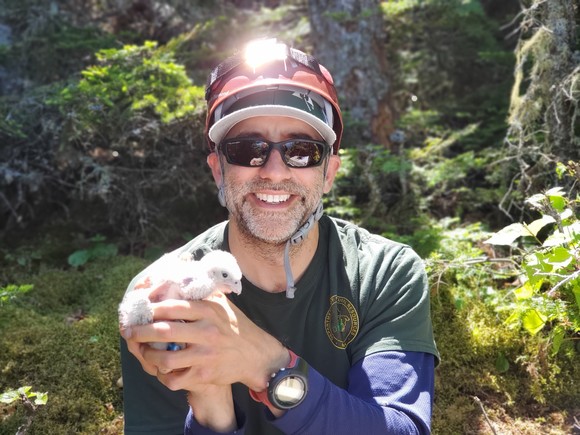 Wildlife biologist John DePue has been with the DNR Wildlife Division for seven years and works out of the Baraga Customer Service Center. When asked about the best part of working for Wildlife, DePue responded, "I enjoy working with people and groups on the many diverse wildlife conservation issues in the West U.P. and throughout the state."
Wildlife assistant Stan Budreau recently retired from the DNR Wildlife Division after 22 seasons. Apart from working outside every day and running large machinery, his favorite part of the job was how different each day’s task would be. “I would spend one day planting 500 acres of fields and the next day helping to relocate a bear. Each day it was something new.” Budreau remembers when the first dikes were created in the Sturgeon River Sloughs Wildlife Recreation Area. “There were concerns over how the excavator was going to be pulled over the Mackinac Bridge. The machine was so heavy they had to move it over in three pieces, each on a different semi. It was incredible.”
If you are interested in learning more about wildlife management or state game areas near you, contact your local wildlife biologist or email DNR-Wildlife@Michigan.gov.
 Grab your binoculars, sunscreen and water and venture out to one of the DNR's GEMS, grouse enhanced management sites, for an afternoon of wildlife watching or scouting for a hunting spot this fall.
Saddled within 4,100 acres of state-owned land is the Little Betsie GEMS. Only 28 miles from Traverse City, this area is perfect for hikers, birders, and new or seasoned hunters to explore. With 2.5 miles of groomed walking trails, a designated parking lot, trail maps and information kiosks, it offers the chance to explore an area of public land with confidence and ease.
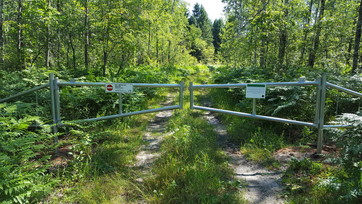
Throughout the Little Betsie GEMS, fields have been planted with sorghum, sunflowers, millet, soybeans, rye, timothy, clover and alfalfa. These plant mixes will benefit grouse, woodcock, turkey, deer, ground-nesting birds, small mammals, and hawks and raptors that prey upon the species that live within. Once you are comfortable finding great grouse and wildlife habitat along the site's hunter walking trails, jump off the trail to explore the aspen stands throughout the surrounding state land.
|
There are 19 GEMS, areas of publicly accessible land managed for wildlife habitat and wildlife recreation, across Michigan's northern Lower Peninsula and Upper Peninsula. While these areas are primarily used and managed for upland game bird hunting in the fall, they provide excellent birding and wildlife viewing locations in the spring and summer. All but one of these gems are equipped with accessible walking trails, parking lots and site maps, so that explorers of all types can navigate them.
Find site descriptions, maps with habitat types and locations of businesses where you can get a discount for visiting GEMS at Michigan.gov/GEMS.
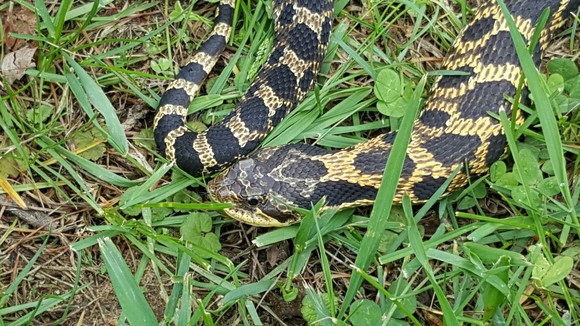 Hog-nosed snakes can be found throughout much of the state and are one of the many harmless snake species found in Michigan. They prefer areas with sandy soils, and their favorite prey are toads. It may be startling to see one of these snakes because they will often flatten their head and hiss loudly as a defensive posture to appear more intimidating; however, the hog-nosed snake is not venomous and poses no danger to people.
Want more snake ID tips? Check out our 60-Second Snakes video series or visit the Michigan's Snakes webpage to learn more about snakes in Michigan.
|