New opportunities are available in forest carbon markets
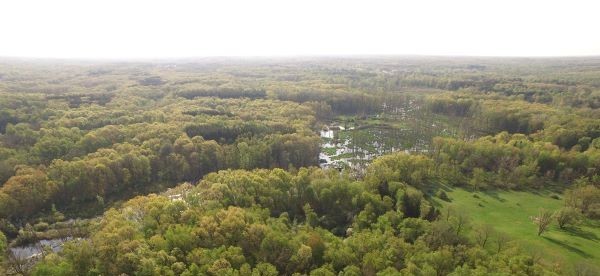
Growing forests and planting trees are important tools for reducing the impacts of climate change. About half of a tree’s dry mass is made from carbon pulled out of the atmosphere. According to U.S. Forest Service data, Michigan’s forests average 26 tons of carbon per acre in trees, with much more in the soil. View the Forest Resource Association’s short overview of forest carbon in Michigan for details.
For about 25 years, landowners have been selling forest carbon offset credits to manufacturers and others trying to reduce their overall greenhouse gas emissions. These offsets invest in forest management practices that result in more stored carbon.
Usually, carbon markets are restricted to very large landowners who have enough carbon to make it worth the complex efforts and expensive measurements to enter into 20- to 200-year-long contracts. There are about a dozen of these traditional forest carbon projects in Michigan, including a new pilot project in the DNR-managed Pigeon River Country State Forest. The average project size is 51,000 acres.
Programs may serve family forest landowners
However, four companies are offering new ways to help family forest landowners get paid for keeping carbon in their woods and out of the atmosphere. These organizations are trying innovative ways to make it cheaper to measure forest carbon and make it easier to sell to companies to offset their emissions. Two options are available now and two options are coming later this year or in 2022.
-
Forest Carbon Works has been selling family forest carbon on the California cap-and-trade market since 2016. To be eligible, you must have at least 40 acres of woods and a forest management plan, although properties between 200 and 500 acres are preferred. Landowners enter into six-year agreements with Forest Carbon Works that can be renewed three more times. Harvesting timber is not allowed in the first six-year contract but is allowed during the next 19 years. The California market tries to show permanent reductions in greenhouse gases by requiring 100 years of monitoring after 25 years of annual payments, so be prepared for a 125-year contract with the State of California too. If you want to get paid to grow big trees in your woods, this could be something to explore.
-
Natural Capital Exchange is trying a radical new approach by paying landowners to defer a timber harvest for just one year. This brand-new program is offered by SilviaTerra, a company that specializes in forest measurements with satellites. Request information from SilviaTerra and get a free assessment of your woods about a week later. Enrollment in Michigan is open now through June 1 and there are no minimum acreage or fees. Some harvesting is allowed but it will lower the carbon payment in your one-year agreement.
-
Family Forest Carbon Program is a partnership between The Nature Conservancy and the American Forest Foundation, the national host of American Tree Farm System. This performance-based approach will give landowners payments for 10 to 20 years to choose management practices that will increase carbon in their woods. The carbon produced will be sold to companies committed to net-zero pathways on the voluntary carbon market. Revenue from carbon sales goes to support more landowner payments and recoup the cost of program administration. The practices, payments and minimum acreages are being developed now for Michigan and should be available this fall or early 2022.
-
CORE Carbon offered by Finite Carbon, is currently under development. CORE Carbon focuses on voluntary forest offset projects developed under the American Carbon Registry and will offer 40-year agreements to landowners with 40 to 5,000 acres of woods. Finite has developed online tools to make it easy for landowners to enroll and adopts methods that eliminate landowner costs to measure, monitor and monetize their carbon stocks. Landowners agree to defer commercial timber harvests during the first 20-year crediting period but can collect firewood for personal use, install food plots and conduct forest health treatments. CORE Carbon is coming to Michigan in 2022.
The Department of Natural Resources and the Michigan Forest Stewardship Program are not endorsing any of these companies or their new approaches to forest carbon markets. However, the DNR does want landowners to appreciate how private forests produce public benefits like clean air, clean water, natural beauty and wildlife habitat. Both traditional forest-products markets and these new “ecosystem service” markets can help family forest landowners achieve success with land management goals.
As with all business transactions, do your homework before signing any contract, whether it is for one, 20, 40 or 125 years. Be sure you know the volume and value of your carbon and the costs for a developer to take it to a market. Landowners who are getting lower property taxes to produce commercial forest products in the Qualified Forest Program or the Commercial Forest Program need to ensure a carbon project fits with their obligations in the property tax programs. If you already have a forest management plan, discuss carbon and property tax programs with your forester.
Resources
If you don’t have a forester, you can get help for your projects in the woods with consulting foresters in Michigan at ACF-foresters.org.
The American Tree Farm System is a community of forest owners that provides recognition of excellent forest management and helps people share their woodland legacies with their families.
Landowners can get money and advice from the Natural Resources Conservation Service to improve wildlife habitat in their woods, build stream crossings to protect water quality, address forest health issues or fix soil erosion problems.
The Forest Stewardship Program connects landowners and their families with foresters to help them develop plans to manage, protect and enjoy their woods. The Forest Stewardship Program is funded nationally by the U.S. Forest Service and administered in Michigan by the Department of Natural Resources. The DNR is an equal opportunity provider and employer. For more information, contact Mike Smalligan, 517-449-5666.
|