|
Michigan has some of the best wildlife viewing opportunities around. This quarterly newsletter will give you some tips on how to get involved, what to watch for, where to go and the great wildlife conservation work going on across the state. Enjoy!
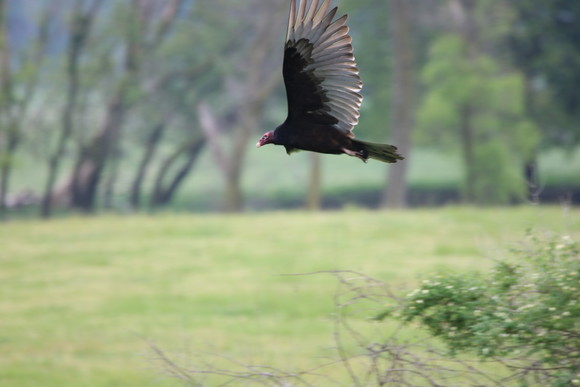 Turkey vultures are a sure sign that spring is here! Have you spotted any in the skies near you?
Some other bird species that mean spring has arrived include red-winged black birds, tree swallows, American woodcock and song sparrows. In addition, you may have noticed the fragrant odor of skunks in the air, which, while it may not seem like it, is another sign of spring! You might notice that woodchucks and opossums are also out and about more now that the weather has warmed.
What other signs of spring do you look forward to each year?
Wildlife viewing in Michigan ►
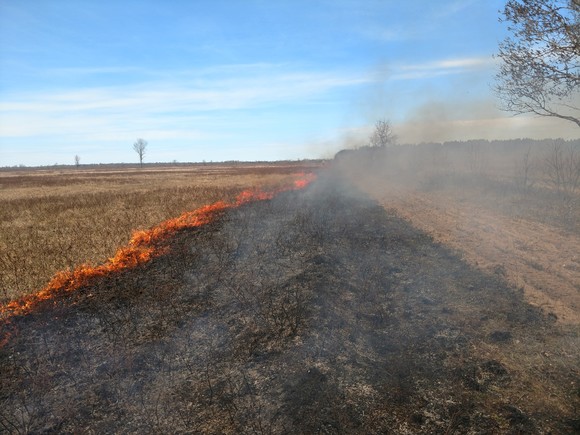 The Fletcher Grasslands is one of Michigan’s largest, contiguous, nonforested areas of public land, spanning across 2,000 acres in southeast Kalkaska County. Once managed specifically for sharp-tailed grouse, this area is now managed to support an ecosystem filled with diverse life. To maintain biodiversity in this grassland and oak pine barrens complex, a variety of techniques are used to manage the habitat, including native seed plantings, mowing, tree harvesting, farming and mulching. But there is one ancient approach preferred for stewarding this grassland: fire.
Centuries ago, large wildfires burned across Michigan, shaping the composition of the land and creating open grasslands in areas with sandy soils. This natural disturbance had the unique ability to set back forest succession, promote the regrowth of native species, clear and warm seed beds, and recycle nutrients back into the soil. In modern fire management, prescribed burns are used to obtain the same benefits that wildfires provided, without the variability and risk of an uncontained flame. Fire-adapted systems treated with a prescribed burn become more resilient to climate changes, grow native species of greater diversity and have improved overall ecosystem health.
The benefits of prescribed burns are on full display in the Fletcher Grasslands. Rich in wildlife, these areas provide countless opportunities for hunters and wildlife watchers. Wildlife species such as the tawny crescent, dusted skipper, eastern whip-poor-will, smooth green snake, wild turkey and white-tailed deer all depend on fire in the ecosystem to thrive.
To learn more about the benefits of fire, see where burns are taking place and watch footage from past burns, check out the DNR’s prescribed burns story map or visit Michigan.gov/FireManagement.
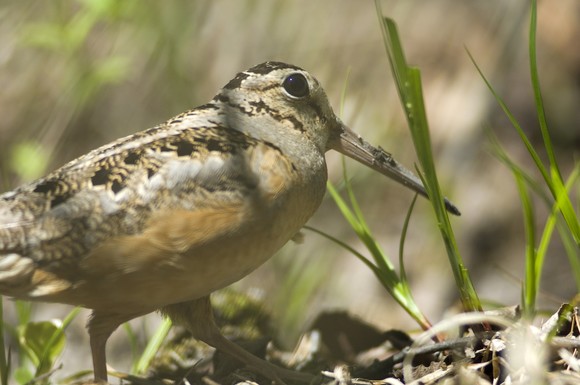 American woodcock, also known as timberdoodles, are ground-nesting birds of forest habitats. They use their long beak to probe the ground for worms and insects to eat.
Have you heard the distinctive “peent” of the woodcock yet? Woodcocks return to Michigan in the early spring to begin breeding. The males put on quite an aerial display of spiraling in flight on spring evenings.
Woodcock are also a popular game bird that hunters pursue in the fall.
All About Birds: American woodcock ►
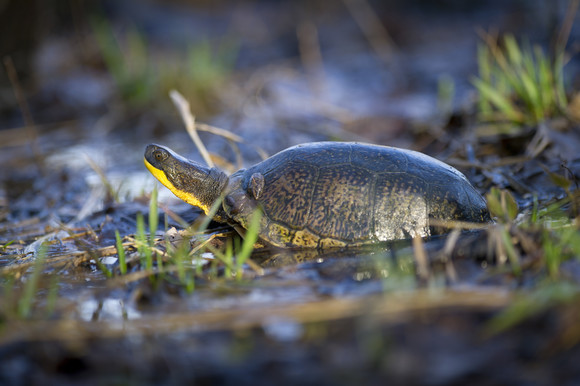 Now that the warmer temperatures are back, Michigan's reptiles and amphibians are out and about once again.
If you are exploring natural areas, parks, trails or even your own neighborhood and see a Blanding's turtle (pictured), eastern box turtle, spotted turtle or wood turtle, please report your observations at Michigan.gov/EyesInTheField. Eastern massasauga rattlesnake observation reports are also appreciated.
Your observations provide valuable data on distribution, relative abundance and trends for Michigan's reptile and amphibian species.
Report turtle observations ►
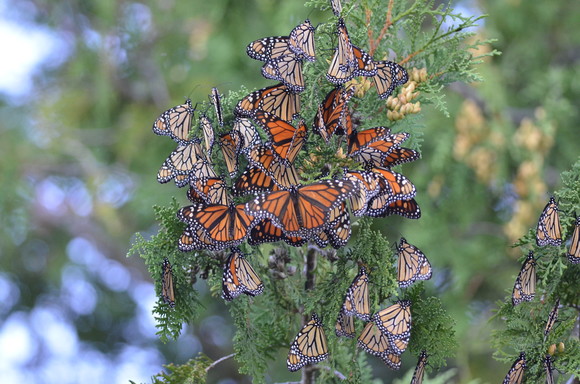 Monarch butterflies are a striking insect with their bold black, orange and white markings. They overwinter in Mexico and are now heading north to Michigan for the warmer months. You may have noticed that monarchs are not as common as they once were. Due to habitat loss, monarchs, along with other pollinators, have been experiencing population declines.
You can help monitor monarchs, their migratory journey and summer sightings by reporting your monarch observations through Journey North.
Find more opportunities to help Michigan's monarchs and other pollinators, including pollinator gardening tips, at Michigan.gov/Monarchs.
|