|
Some of the items in this week's news digest reflect the impact of COVID-19 and how the Michigan Department of Natural Resources is adapting to meet customers' needs. Public health and safety are our biggest priorities, and we will continue to share news and information about the safest, and sometimes new, ways to enjoy our state's natural and cultural resources.
Follow our COVID-19 response page for FAQs and updates on facilities and reopening dates. For the latest public health guidelines and news, visit Michigan.gov/Coronavirus and CDC.gov/Coronavirus.
Here's a look at some of this week's stories from the Department of Natural Resources:
See other news releases, Showcasing the DNR stories, photos and other resources at Michigan.gov/DNRPressRoom.
PHOTO FOLDER: Larger, higher-res versions of the images used below, and additional ones, are available in this folder.
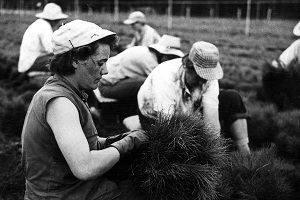
A new segment of Michigan’s Iron Belle Trail currently under development will add about 20 miles to the trail’s planned 828-mile biking route, but project managers also plan to add layers of story to this stretch that connects Higgins Lake Nursery and the Civilian Conservation Corps Museum at North Higgins Lake State Park with Hartwick Pines State Park – and you can help.
Led by the Michigan History Center, this heritage trail project in Crawford County – unofficially dubbed the Forest Heritage Trail – is welcoming local history stories. The Center is partnering with Central Michigan University and local stakeholders to identify the unique and critical history of the area and plan for a series of interpretive informational signs for people to enjoy while exploring the trail.
Dan Spegel coordinates Michigan’s Heritage Trails program. He said the right stories can help trail visitors connect with an area’s history and better understand a region’s development, character and place in the state’s bigger history. He pointed to the Kal-Haven Trail, in southwest Michigan, as an example.
“When we put the call out for the Kal-Haven, the community came forward with some great stories,” he said.
“For example, in 1948 Joe Louis spent a month training at Great Bear Lake to get ready for a fight with Jersey Joe Walcott. We found out that in 1901, A.M. Todd started a mint-oil operation that grew and revolutionized the global industry. We also learned about Julia Schelske, who in 1916 became one of the earliest female car dealers for Ford Motor Company in the town of Grand Junction,” Spegel said. “Bringing those stories into the trail makes for an experience that immerses visitors into the area’s natural and cultural history.”
Spegel stressed that heritage stories about the Forest Heritage Trail do not have to directly connect to or be about the forest. That working title for the project was chosen simply because the completed trail segment will connect the CCC Museum with Hartwick Pines, and the forest clearly has a strong presence/history in the area.
Want to learn more about the project and share some stories? Join in a virtual meeting from 7 to 8:30 p.m. Wednesday, Dec. 9. Advance registration for the meeting is not needed; just visit TinyURL.com/Forest-Heritage-Trail around 6:50 p.m. to sign in and join the meeting.
For more information, contact Dan Spegel at 517-420-6029.
|

If you’re hunting in the northeastern Lower Peninsula this firearm season, don't forget to take your deer head to a DNR check station or drop box to be tested for bovine tuberculosis.
The DNR needs samples from Alcona, Alpena, Cheboygan, Crawford, Emmet, Iosco, Montmorency, Ogemaw, Oscoda, Otsego, Presque Isle and Roscommon counties. Surveillance goals for these counties help biologists understand the scale of bovine TB infection in the local deer herd.
"Sixty percent of deer that test positive for bovine tuberculosis show no signs of the disease, so testing is important," said Emily Sewell, DNR wildlife health specialist.
Bovine TB is caused by the bacterium Mycobacterium bovis and, though typically occurring in cattle, it can infect nearly any mammal, including humans.
"It’s important that hunters take precautions like wearing latex or rubber gloves when field dressing their deer. If they notice any lesions on the lungs or in the chest cavity, they should avoid cutting into the lesions and bring the deer to a check station," Sewell said.
As an added convenience, several self-service drop boxes are available 24 hours a day throughout the region. Hunters will need a smartphone to submit deer heads at these drop boxes.
Hunters anywhere in the state who discover chest lesions on deer carcasses should submit the deer for testing; it's better if DNR biologists are able to examine the whole deer carcass. Hunters can either bring the deer to a check station or contact their local wildlife office for an appointment. Check station and drop box locations are available at Michigan.gov/DeerCheck.
Learn more about bovine tuberculosis at Michigan.gov/BovineTB. Hunters may check their deer or elk TB lab results at Michigan.gov/DNRLab.
Questions? Contact Emily Sewell at 231-340-1821.
|
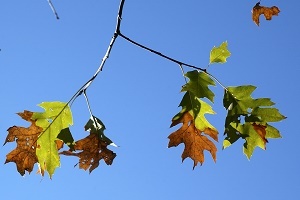
Leaves are down, temperatures are cooler, and that means it’s prime time for pruning oak trees, which can be infected by the oak wilt fungus if they’re pruned during the high-risk period April 15-July 15.
“Beetles that can carry the disease from tree to tree are not very active now, and the trees are not vulnerable to infection,” said Simeon Wright, forest health specialist with the DNR Forest Resources Division. The beetles are attracted to fresh bark damage or wounds where tree limbs have been removed.
Firewood can harbor the fungus, too. If you suspect your firewood is infected, burn it, chip it or debark it before April. Once the wood has been dried over a year and/or all bark loosens, it can no longer spread oak wilt.
“Not moving potentially infected oak firewood into areas that are free of oak wilt is critical to protecting our oak trees,” Wright said.
|
Oak wilt, identified in the 1940s, is widespread across Michigan’s Lower Peninsula and along the Wisconsin border in the Upper Peninsula. Red oaks are most susceptible and can die within weeks of infection. These trees have leaves with pointed tips and include black oak, northern red oak and northern pin oak. Trees in the white oak group have rounded leaf edges and are less susceptible. Affected trees will suddenly wilt from the top down, rapidly dropping leaves, which can be green, brown or a combination of both colors.
If you suspect oak wilt:
Learn more about invasive species and diseases at Michigan.gov/Invasives.
Questions? Contact Simeon Wright at 906-203-9466.
|