“It’s an honor to collaborate with Michigan’s Department of Natural Resources as it takes this groundbreaking action and serves as a model for other state forest management programs.”
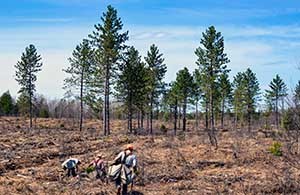
DNR forest practices that increase carbon absorption could include reforesting lands, restocking forests impacted by disease or invasive species or improving forest management methods.
Forest carbon programs benefit air and water quality and help provide habitat for fish and wildlife, in addition to reducing greenhouse gases.
Under the DNR’s new project in the Pigeon River Country, possibilities might involve a company voluntarily purchasing “stored carbon” credits from the DNR. The revenue from this transaction could enable to the DNR to plant more trees or take other actions to improve carbon storage.
The DNR manages 4 million acres of state forests across the state.
In addition to leveraging forest resources to improve the environment, the pilot project will move the department toward what will likely soon become a requirement of continued DNR forest certification.
Two independent organizations have established standards the DNR’s forest management practices are judged against to certify forests are sustainably and responsibly managed.
Both standards require continuous improvement in forest management while protecting the environment and providing social and economic benefits.
A new standard objective on climate states that certified organizations shall have a program to identify and address opportunities for climate change mitigation associated with its forest operations.
The objective, now in draft form, states that certified organizations, like the DNR, shall identify and address opportunities to enhance carbon sequestration (capture) on the forests they own or manage, based on the best scientific information.
“The public may not be aware that it’s a state law that our state forest system is certified,” said Scott Whitcomb, DNR senior advisor for wildlife and public lands. “Certification assures that our forests are independently verified to be managed sustainably and opens up our markets to suppliers of forest products who want this assurance.”
The DNR’s pilot project will also help move Michigan toward its climate change goals.
On Feb. 4, 2019, Gov. Gretchen Whitmer signed an executive directive entering Michigan into the U.S. Climate Alliance, a bipartisan coalition of governors from 20 other states who have committed to reducing greenhouse gas emission consistent with the goals of the Paris Climate Accord. Currently, there are 25 states enrolled.
Find out more about the DNR’s forest certification. To learn more about state forest management in Michigan and forest products, visit Michigan.gov/ForestProducts or Michigan.gov/ForestStewardship.
|