2020 waterfowl season update
Media contact: Holly Vaughn, 313-396-6863 or Barb Avers, 517-284-4721
September is right around the corner, and with it comes early teal and early goose hunting seasons in Michigan. Despite challenges like major flooding in the Saginaw Bay area, area wildlife managers have been working hard to make sure that migrating waterfowl have great habitat conditions at Michigan’s state game and wildlife areas this fall.
During this special early season, blue-winged and green-winged teal are the only ducks that can be harvested. Hunting hours are from sunrise to sunset, and the bag limit is six teal. Hunters are strongly encouraged to study their duck identification for early teal season – don’t shoot if you aren’t sure of your target!
- North Zone – Sept. 1-Dec. 16.
- Middle Zone – Sept. 1-Dec. 16.
- South Zone – Sept. 1-30, Oct. 10-Dec. 6, Dec. 26-27 and Jan. 23-Feb. 8, 2021.
- Allegan County Goose Management Unit – Sept. 1-30, Nov. 7-14, Nov. 26-Dec. 6 and Dec. 19-Feb 14, 2021.
- Muskegon County Goose Management Unit – Oct. 17-Dec. 22.
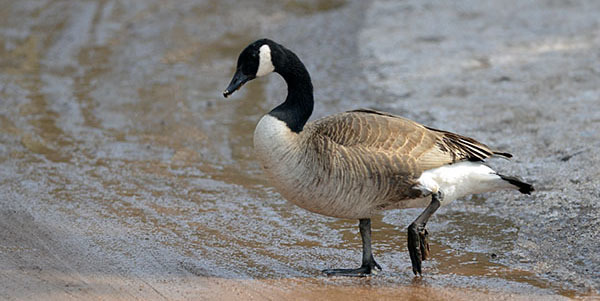
Canada geese, white-fronted geese (or specklebellies) and brant are part of a dark goose aggregate daily bag limit. From Sept. 1-30, the dark goose aggregate daily bag limit for Canada geese, white-fronted geese and brant is five, only one of which can be a brant. This means that hunters can take five Canada geese per day during September. After Sept. 30, the daily limit for dark geese is five, only three of which can be Canada geese and one of which can be a brant. An aggregate bag limit is also in place for light geese, including snow, blue and Ross’s geese. Hunters may harvest 20 light geese per day during goose seasons.
The youth and – new for 2020 – veterans/active-duty U.S. military personnel waterfowl hunting weekend will be Sept. 19-20. This statewide hunt is for properly licensed youth 16 years of age and younger and eligible veterans and active-duty U. S. military personnel. Ducks, mergansers, geese, coots and moorhens may be harvested. The daily limits and species restrictions are the same as those allowed in the regular waterfowl hunting season. Adults accompanying youth hunters are not permitted to harvest these species during the hunt unless hunting during the September portion of the Canada goose hunting season. Youth 16 years of age also must possess a waterfowl license and a federal duck stamp.
Participating veterans and active-duty U.S military personnel are required to possess documentation of verification afield and must present it upon request of a Michigan conservation officer, tribal conservation officer or any law enforcement officer. The following documentation, along with a valid Michigan driver’s license or voter registration card, will be accepted as proof of status: military ID, leave papers, duty papers, military orders, copy of DD Form 214, enhanced driver’s license or documentation from the Veterans Administration regarding disability status. Participating veterans and active-duty U.S. military personnel must possess a waterfowl license and a federal duck stamp.
- North Zone – Sept. 26-Nov. 22 and Nov. 28-29.
- Middle Zone – Oct. 3-Nov. 29 and Dec. 12-13.
- South Zone – Oct. 10-Dec. 6 and Dec. 26-27.
Regulation changes for 2020-21 include changes to the scaup daily bag limit during the season. Depending on when and where you are hunting in the state, you may harvest either one or two scaup daily. See the table on page 7 of the 2020 Michigan Waterfowl Hunting Digest for more details.
This fall, why not check out one of Michigan’s Wetland Wonders? These seven premier managed waterfowl hunt areas in the state, scattered across the southern Lower Peninsula, were created in the 1960s to provide exceptional waterfowl hunting opportunities, and are still managed today to provide waterfowl habitat for nesting and migration and for the benefit of other wetland-dependent wildlife. Since the beginning, these areas have been funded by hunting license fees, but they are open for anyone to visit, use and enjoy most of the year.
Due to the need for physical distancing related to COVID-19, managed waterfowl area check station procedures, including registering for hunts and selecting hunting zones, will be significantly different in 2020. Staff members are currently working to finalize a plan for waterfowl drawings, and information about check station procedures will be updated soon at Michigan.gov/WetlandWonders.
The Michigan Duck Hunters Association, in cooperation with the Michigan DNR, has introduced the 2020 Michigan duck stamp and print. This stamp features a flock of Canada geese landing in a decoy spread by wildlife artist Chris Smith. The stamp is a voluntary purchase and does not replace the state waterfowl hunting license.
The MDHA is a nonprofit organization dedicated to waterfowl and wetland conservation. Proceeds from stamp sales will be used to fund MDHA projects, with 10 percent used to match DNR funding for purchasing wetlands. MDHA will mail waterfowl hunters a free copy of the standard edition stamp (subject to availability) if they send a self-addressed, stamped envelope with a copy of their Michigan waterfowl hunting license to: MDHA Waterfowl Stamp Program, P.O. Box 186, Kawkawlin, MI 48631.
To prevent spreading invasive plants and organisms from one water body to another, boaters and anglers should “Clean, Drain and Dry” boats, trailers and all equipment and gear after each use on any lake, river or stream. State law requires:
- Making sure watercraft and trailers are free of all aquatic organisms and plants before transporting or launching.
- Removing drain plugs and draining all water from bilges, ballast tanks and live wells before moving watercraft.
Following these simple steps can limit the spread of invasive plants and animals like phragmites, European frog-bit and zebra mussels that can cause significant harm to wildlife habitat, reduce hunting opportunities and damage equipment. Watch this video for reminders about how to help prevent the spread of invasive species and protect waterfowl habitat.
|