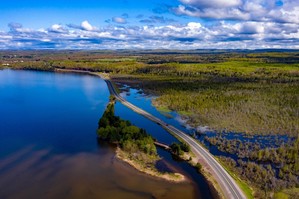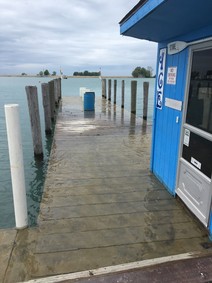
Conservation Officer Pat McManus, who patrols in Grand Traverse County, said that the Grand Traverse Bay area also is experiencing high water.
“Some boats are sitting so high in the rising water they are almost floating over the docks,” McManus said about the Leland River, a port for many vessels. “Regardless of the size of your vessel, if you come in too fast, your boat could cause water to overflow onto a dock where people might be standing. Speed and no-wake restrictions are in effect for a reason – it’s important to know the watercraft controls for the area.”
Water that overflows onto a dock that is located near a marina (or other structure with electrical power running to it) poses the risk for electric shock drowning. ESD occurs when a person comes into contact with an electrical current in the water, often caused by faulty wiring from boats, docks and other devices not approved for shore or marine use.
"Our crews are noticing an increase in flooding to docks and piers with electrical connections,” said Chief Petty Officer Marcus Collison, Officer in Charge, Coast Guard Station Charlevoix. “We believe this may be a serious hazard to swimmers as we get deeper into summer. Even without the current increase in water levels in the Great Lakes, electric shock drowning is a serious hazard around marinas, piers and docks."
ESD can be prevented by being aware of your surroundings – avoid getting into water that is located near a marina or a dock. This also applies to kayakers and canoers.
Kayakers and canoers should also be aware of fast-flowing water – a result of high water levels. Wanless said that kayakers and canoers should keep in mind that higher water may make it more challenging to go under low-hanging obstacles, such as bridges or trees.
State law requires that all vessels, including kayaks and canoes, have appropriate flotation devices available for every person on board.
“Don’t just take your life jacket – wear it,” said Wanless. “Nobody expects to get into an accident, but unfortunately, they happen.”
For more information on local watercraft controls, boating access sites, boating safety and facility closures, go to Michigan.gov/Boating.
|