|
If you want to attract deer to your property, spring is a great time to start planning. Here are some tips and considerations as you are making your habitat improvement plans this year.
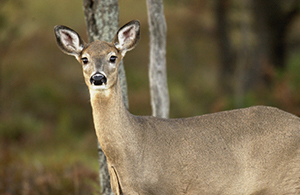
Deer do best in areas with young forests and brush, where they eat buds, branches, fresh grass and green leaves that are close to the ground. When you’re managing your land, remember the habitat needs of deer vary by season.
One place to start is evaluating the existing habitat elements and cover types that are already on your property. After you’ve assessed your property, you can start thinking about what you want to change or improve. Learn more about white-tailed deer habitat and habitat planning.
|
With the recent ban on baiting and feeding of deer, in order to help slow the spread of chronic wasting disease in the Lower Peninsula, we want to provide some alternatives for those who still want to watch and enjoy deer. The suggestions offered mimic what deer already can find in nature and is a healthier alternative to baiting and feeding, which can cause unnatural congregation of deer.
- In the spring, early-greening grasses and legumes are essential food sources. Examples include Canada wild-rye, blue grass, timothy grass and clovers.
- In the summer, when food is more abundant, the leaves of certain trees and shrubs, grasses and agricultural crops make good forage. Aspen, red maple, blackberries, dogwoods, wheat, oats, corn, soybeans and alfalfa are some examples.
- For fall forage, deer need to be able to build up fat reserves as winter approaches. Oak acorns, beech nuts, crabapples, willow, brambles, corn, soybeans and wheat are examples of fall food sources.
- In the wintertime, when deer move less, they need to be able to find food within a quarter-mile of cover. They eat woody browse, branches and buds, all of which need to be within reach. Examples include white pine, red maple, white cedar, yellow birch, dogwood, sumac and aspen.
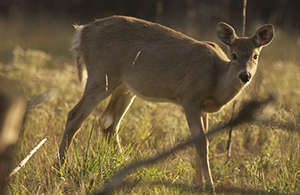
Forest management. Good forest and woodlot management practices are essential to providing food and cover for deer. Managing your forest or woodlot may require the assistance of a professional forester. Learn more about forest management.
Grassland management. Grasslands are an important source of food and cover, including bedding and fawning cover. Learn more about grassland management.
Food plots. Planting annual or perennial food plots can provide a good source of supplementary nutrition and, depending on what you plant, may also serve as cover. Learn more about grain plot planting.
Remember, in the Lower Peninsula, baiting and feeding deer and elk is banned; this ban, however, does not include planting and creating food plots. If you’re looking for a way to attract deer to your property for viewing, you may want to consider a food plot.
|
More about deer and deer management in Michigan available at Michigan.gov/Deer.
|