|
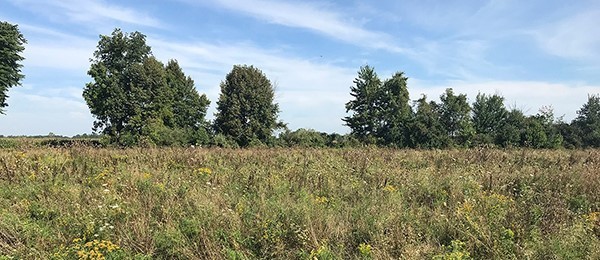
Over the course of the year, we’ll be sending a series of stories about grasslands and the benefits they provide to wildlife and to people. Specifically, we’ll highlight some of the exceptional grasslands that can be found in southern Michigan. Many may not know that grasslands help to improve water and air quality – important for all of us in Michigan and throughout the world. They also are simply stunning to view in mid- to late summer when the prairie wildflowers are in full bloom. This month, we’re featuring the awesome grassland habitat at Port Huron State Game Area. We hope you’ll take the time to experience this exceptional State Game Area for yourself this year!
Port Huron State Game Area lies along the Black River in St. Clair County. Long and skinny, the state game area spans over 7,000 acres through Grant, Clyde and Kimball townships. It provides opportunities for plenty of wildlife-based recreation, including hunting, birding, hiking, fishing and wildlife photography.
With a diversity of habitat types, the Port Huron State Game Area is home to many different types of wildlife. The forests provide habitat for deer, wild turkey, squirrels, rabbits, woodcock and the occasional ruffed grouse. Along the river, cerulean warblers, Louisiana waterthrushes and hooded warblers can be found in the spring and summer. The floodplains and wetlands along the river give wood ducks and mallards nesting and roosting places.
The grasslands of the game area offer great habitat for ring-necked pheasants, field sparrows, willow flycatchers, deer, wild turkeys, Henslow’s sparrows and upland sandpipers.
“Grassland habitat is so important,” said John Darling, Michigan Department of Natural Resources wildlife technician at Port Huron State Game Area. “We work to provide high-quality grasslands for a wide variety of species. With help from the St. Clair County Chapter of Pheasants Forever, we’ve improved nearly 100 acres of grassland habitat over the past few years. Each year, we plant 15 acres of food plots. Food plots provide additional food sources for deer, pheasants and turkeys, especially in the fall and winter when food can be difficult to find.”
Some of the state’s most imperiled species are grassland species. This habitat type has declined drastically over the last 150 years due to the conversion of grasslands to agricultural, residential and commercial development, along with the succession of grasslands into forestlands.
The Michigan Pheasant Restoration Initiative is working to improve and enhance Michigan’s remaining grasslands on private and public lands in southern Michigan. This includes planting diverse mixes of grasses and wildflowers for birds, insects and other wildlife. Extensive grassland restoration work is in progress at Lake Hudson State Recreation Area in Lenawee County, Verona State Game Area in Huron County, and Sharonville State Game Area in Jackson and Washtenaw counties in addition to Port Huron State Game Area, as well as on other public and private lands in southern Michigan.
Made up of many partners, the Michigan Pheasant Restoration Initiative is a conservation initiative to restore and enhance Michigan pheasant habitat (grasslands), populations and hunting opportunities on private and public lands. It works by acquiring state, federal and partner resources to assist landowners in cooperatives to improve wildlife habitat on their properties and by improving grassland habitat on selected state game areas, recreation areas or other public lands. To learn more, visit Michigan.gov/Pheasant.
/Note to editors: Contact – Holly Vaughn, 313-396-6863. An accompanying photo is available below for download. Caption information follows.
Port Huron SGA: Grasslands, like this habitat at Port Huron State Game Area, are vitally important to many wildlife species./
|