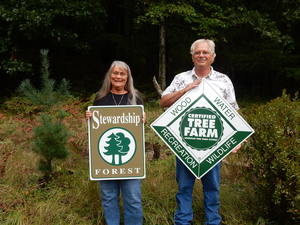
 David and Tonya Baker wanted to diversify wildlife habitat
on 80 acres their family bought last year in Mason County, Michigan.
So they hired American Forest Management in Houghton to develop a plan. The plan includes selling timber to clear space for deer habitat and better hunting. The Bakers also are lowering their property taxes by enrolling in
the Qualified Forest Program and certifying their forest with the American Tree
Farm System.
The Bakers are among five
Michigan families whose land has pushed the state's amount of private woodlands in the Forest
Stewardship Program to 1 million acres – an all-time high.All of them completed their plans Aug. 23. They join about 6,000
landowners throughout Michigan who have worked with foresters to develop plans to
sustainably manage their land.
All five landowners and the foresters who worked with them will
be recognized with a gift from the DNR and United States Forest Service at the
annual celebration of the Michigan Forest Association and the Michigan Tree Farm System Sept. 14 in Naubinway.
The Forest Stewardship Program started in 1991 and is a partnership between the
DNR and the U.S. Forest Service to help landowners manage, protect and enjoy their
woods. With funding from Congress and the USFS, the DNR provides a small cost
share to help lower the cost to develop a Forest Stewardship Plan.
Dennis McDougal, with USFS State and Private Forestry,
said that conserving woodlands and the sustainable management of private forests
benefit all citizens.
Landowners have many reasons to develop forest stewardship plans for their woods. Many people need a plan to enroll in the Commercial Forest Program or the Qualified Forest Program to lower
their property taxes. Some landowners use their plans to obtain
financial assistance from the Natural Resources Conservation Service to do conservation projects. Many
landowners want a plan to prepare for a timber sale, improve wildlife habitat,
protect nature or enhance recreation in their woods. The plans provide guidance
to help landowners ensure their forests thrive well into the future.
“The DNR is very proud to assist 6,000 landowners and
several hundred foresters over the past 28 years as they care for their
privately owned woods,” said Mike Smalligan, the DNR’s Forest Stewardship coordinator. Family forests make up 9 million acres, or 45 percent, of
Michigan’s 20 million acres of forest.
“The real reward is not the government subsidy for the plan,
but the fun work that landowners do in their woods to implement their plans and
achieve their personal forest stewardship goals,” Smalligan said.
Along with the Ball family, the other landowners who
enrolled Aug. 23 are:
- April
and Charlie Ball. They wanted to improve deer habitat in the 40-acre forest in
Iron County that her dad bought in the 1950s, and which she inherited several
years ago. They hired VanOss Forestry Services in Crystal Falls to develop a plan for the property. Besides habitat improvement, they also
wanted to enroll in the Qualified Forest Program to lower their property taxes.
- Mark and Laura Viel. They hired Wilson Forest Services in Rothbury to develop a plan and prepare for a
timber sale on their 80 acres in Newaygo
County. They have owned the woods for 30 years and wanted professional help to
improve wildlife habitat and manage beech bark disease. The Viels are
certifying their good stewardship by enrolling in the American Tree Farm System and
lowering their property taxes in the Qualified Forest Program.
- Nichole and Andrew Flickema. When they found out they were
expecting triplets, they turned to their 20-acre woodlot in Charlevoix County
to help pay expenses. The couple hired Martell Forestry in Gaylord to develop a plan for their property, where they also live, and help them conduct a
sustainable timber harvest in their forest, which is protected by a conservation easement with the Little Traverse Conservancy.
- Mike and Janet Gibson hired Steinkraus Forest Management in Marcellus to develop a plan for the 73-acre forest in
St. Joseph County that Janet inherited from her parents. They want to improve
deer habitat and prepare to someday pass the land on to their four children and two
grandchildren. They want to certify their forest in the American Tree
Farm System, lower their property taxes in the Qualified Forest Program and
apply for financial assistance to implement their plan with the Environmental Quality Incentives Program.
For more information, or to find a forester near you, visit michigan.gov/foreststewardship
or contact Mike Smalligan at 517-284-5884.
| 



