Fish Bites
July 2018
Welcome to the 15th edition of Fish Bites! This e-newsletter is made specifically for students, parents and teachers. Expect to receive Fish Bites about four times each year and have your friends sign up too!
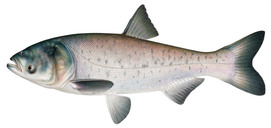 Name that Fish!
Can you name this invasive species (not currently found in Michigan)? Scroll to the bottom to find out!
Illustration by Joseph R. Tomelleri ©
|
|
 In the Current:
- August 4: 2018 Take an Adult Fishing Day! Invite your mom, dad, grandma, grandpa or other adult to go fishing with you! More information is below.
- Join the summer outdoor programs held at DNR visitor centers & state parks! There are different programs at every location and they’re a lot of fun!
- Learn to fish with Hook, Line and Sinker
Do you want to learn to fish? There are a number of classes that take place across the state and teach casting and fishing basics, such as knot-tying, casting, selecting and using bait and removing fish from the hook. We can even provide a rod and reel if you don’t have your own. The classes are offered free of charge, and participants under the age of 17 do not need a fishing license. Head online to find a list of locations (please call to find out when classes are taking place).
 Create slogans for invasive species!
Think about habitat as an animals address. The needs of life – food, water, shelter, and space in a suitable arrangement – all create their perfect habitat.
So we know an animal’s address…but what about its job? An animal’s job is called its niche. What role do different animals play in the environment? For an invasive species (one not from here that causes problems) their “job” is to make a lot of babies, eat a lot and live anywhere. But, that isn’t good for our native animals!
Think about different invasive species you have heard of: big head carp, red swamp crayfish, sea lamprey, zebra mussel… What are their “addresses”? What are their “jobs”? Can you think of a fun slogan to represent them?
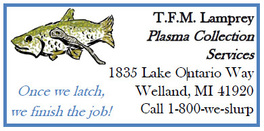
Create a business card or billboard for your invasive species. They should include: name of animal, job title, company name, address, a slogan and logo.
Check out an example above!
|
|
 |
|
Four Fun Fishy Facts…with an Invasive Species focus:
- 42% of threatened or endangered species are considered at risk due to non-native species (such as invasive species).
- More than 180 non-native aquatic species have established themselves in the Great Lakes since the 1800s.
- Aquatic invasive species have a $5.7 billion impact on the Great Lakes region each year.
- Removing aquatic plants from boats, boating equipment and boat trailers every time you pull it out of the water can help prevent the spread of aquatic invasive species.
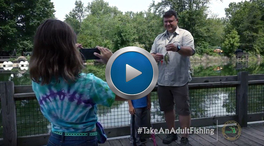 Don’t forget to Take an Adult Fishing
Check out the video above!
Do you love to go fishing but hate waiting to see if your mom, dad or another adult wants to go? Why not plan the outing yourself?
You can initiate the next fishing trip you take by finding your gear, locating a place to fish, and asking an adult to go with you! Maybe you’d like to locate a spot nearby by searching through the Family Friendly Fishing Waters website? Or how about visiting one of several state parks or visitor centers that offer instruction on how to fish through the Hook, Line and Sinker program? The options are almost endless!
You could also head out on Saturday, August 4 for the second annual Take an Adult Fishing Day in Michigan! On that day anybody who takes an adult fishing is encouraged to share their picture with us using the hashtag #TakeAnAdultFishing. We’ll randomly select a few winners to receive a fishing gear prize!
 Fun with Fish Activities (with an aquatic invasive species [AIS] focus)
|
|
|
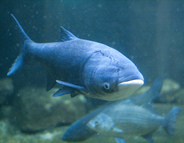 Name that fish!
Bighead carp are an invasive species. An invasive species is one that is not native and whose introduction causes harm, or is likely to cause harm to Michigan’s economy, environment or human health.
Bighead carp ARE NOT currently found in Michigan – and we want to keep it that way!
These fish can grow up to five feet long and weigh up to 90 pounds. They have a large head and their mouths have no teeth. Their eyes sit below their mouth and they have a dark gray body with dark blotches on the skin.
Bighead carp are considered filter-feeding fish which means they eat a lot of different things. They filter water through their gills to strain out the food they eat. They need to eat a lot too, around 40% of their body weight each day!
These fish are originally from southern and central China and have been found in at least 18 states surrounding the Ohio and Mississippi river basins. Again, they aren’t found in Michigan and we want to keep it that way!
If you learn what a bighead carp looks like you can help to report it if you ever think you’ve found one in a Michigan river, lake or stream. For more information, visit Michigan.gov/invasives.
|
|