 With
longer daylight hours and warming temperatures causing wildlife to start to
move, the Michigan Department of Natural Resources advises property owners that
now is the time to look around and see if they have items that soon may be attracting
bears.
“The
ideal situation is for a bear to walk past your property, not find a food
reward and move along on its own,” said DNR wildlife communication coordinator
Katie Keen. “That’s the best way to live with bears and not encourage conflict.”
Black
bears – an “up north” Michigan icon decorating many homes, restaurants and
hotels – can be found throughout more than half the state. Spotting a bear tends to draw
a lot of interest and attention.
"Everyone picks
up the phone to call us looking for advice at a different point,” Keen said. “For
some, seeing a black bear is enough. For others, it may be regular or daytime visits
that make them uneasy.”
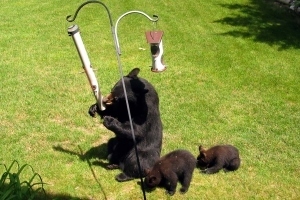
Bears
find birdseed and suet especially
attractive, as they are high-calorie and reliable compared to other plentiful
and natural food sources. Bird feeders can draw bears past their natural
habitat, where they would normally be enjoying roots of early spring plants and
insects in trees and logs. Bears also typically will continue to return to a location once they have found a food reward there.
“The majority of calls we receive
about bears involve a bird feeder. Taking the feeders
down before they are found by a bear
can eliminate future problems,” said Keen. “A
bear doesn’t just forget an easy meal, and wild animals can pick up habits.”
During
the spring and early summer, phone calls to the DNR from home and business
owners frustrated with bear activity increase. While it is legal to feed birds, property owners may be
creating an irreversible safety issue by providing food for bears.
“Bears that receive
a food reward when around homes, yards and neighborhoods typically lose their
natural fear of humans and can become a potential threat to people and their pets,”
Keen added.
The easiest
thing people can do to avoid problems with bears is remove bird feeders during
the spring and summer months. With an estimated 2,000-plus adult bears in the
northern Lower Peninsula and almost 10,000 in the Upper Peninsula, there are
plenty of bears searching for natural food that is plentiful in forests, fields
and wetlands.
“Many people who live in northern Michigan remove
their bird feeders during the spring and summer, but every year the spring
sneaks up on us and suddenly, it is now that time of year,” said Keen.
|