|
|
|
October 2017
Welcome to the 12th edition of Fish Bites! This e-newsletter is made specifically for students, parents and teachers. Expect to receive Fish Bites about four times each year and have your friends sign-up too!
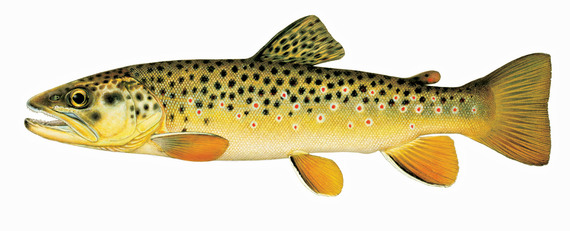
Can you name this Michigan fish species? Scroll to the bottom to find out!
Illustration by Joseph R. Tomelleri ©
|
|
In the Current:
Four Fun Fish Facts:
- Lake Huron has the longest shoreline of all the Great Lakes because you can count the shoreline of its 30,000 islands.
- Eating fish is good for you! Fish are high in protein, in addition to omega-3 fatty acids, and they help healthy bodies grow. Learn more at Michigan.gov/eatsafefish.
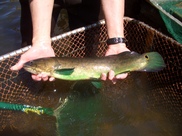
- There are bowfin in Michigan – you might have also heard them referred to as dogfish, grindle, mudfish and beaverfish.
- Scientists can tell how old a fish is by reading the growth rings on the fish scales – almost just like growth rings are used to tell how old a tree is.
|
Rearing & Stocking Fish:
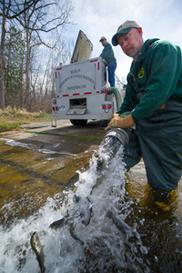 Michigan has a long history with stocking fish – but why? Those who manage the state’s fisheries are usually motivated by a many factors; to restore ecosystem balance, to provide diverse fishing opportunities, or to rehabilitate fish populations that aren’t doing well.
Fish stocking in Michigan wouldn’t be possible without the Department of Natural Resources’ fish stocking efforts, led by six state fish hatcheries, three permanent egg-take stations, and numerous rearing ponds. The state's fish production system annually produces tens of millions of fish for stocking, with rearing programs generally broken into two main groups: coolwater and coldwater.
What are coolwater species? They are those that can live in warmer water and include walleye, muskellunge, northern pike and lake sturgeon. What are coldwater species? They are those that need to live in colder water and include trout and salmon.
After these various fish species live (or are reared) in the state fish hatcheries or rearing ponds they are then stocked in public waterbodies throughout Michigan. Fish are transported on various types of trucks – anywhere from a small truck with a trailer to a large semi! The DNR has 17 specially-designed stocking trucks that drive thousands of miles across the state with fish.
Want to see how the DNR takes care of fish in the hatcheries up close? Plan a visit to one of the six locations by visiting Michigan.gov/hatcheries.
|
Fun with Fish Activities
Name that Fish: Brown trout!
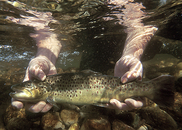 Native to Europe and parts of Asia, brown trout were introduced to Michigan in 1883. They are able to live in warmer water temperatures than other trout species and are often targeted by anglers across the state. They are closely related to Atlantic salmon.
The average lake run adult weighs eight pounds, although individuals can grow to be much larger. Young browns are preyed upon by larger fish and by certain birds such as mergansers and herons. The diet of adult brown trout includes insects and their larvae, crustaceans, mollusks, amphibians, small rodents and other fish. They enjoy a rather long life-span it appears, since researchers have observed them at up to 13 years of age.
Brown trout provide good fishing in many, mostly northern Michigan inland lakes. Anglers use a wide variety of methods, from fishing with live bait on the bottom to trolling with minnows or artificial baits. In the Great Lakes, brown trout can offer outstanding sports in the early spring - often before other species begin to bite - to anglers who wade, fish from piers with live bait or artificial lures, or who troll in largely inshore water with imitation minnows or other plugs.
Check out even more information on their Michigan Fish and How to Catch Them page!
|
|
|
|
|
|