Widespread spruce budworm defoliation expected in U.P., northern Lower Peninsula
Michigan Department of Natural Resources sent this bulletin at 06/11/2015 04:16 PM EDT|
White spruce and balsam fir are the trees most targeted. |

 |
 |
 |
 |
 |
 |
 |
Press Release
FOR IMMEDIATE RELEASE
June 11, 2015
Contact: Bob Heyd, 906-228-6561, ext. 3023 or John Pepin, 906-228-6561
Widespread spruce budworm defoliation expected in Upper Peninsula, northern Lower Peninsula
White spruce and balsam fir targeted; now is the time to protect landscape trees from damage
Over the past few years, white spruce and balsam fir have been defoliated by the spruce budworm, one of the most destructive native insects in the northern spruce and fir 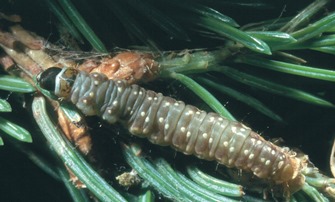 forests of the eastern United States and Canada.
“This year, budworm defoliation is widespread and expected to be heavy for the second or third years in many areas,” said Bob Heyd, forest health specialist with the Michigan Department of Natural Resources in Marquette.
Periodic outbreaks of these insects are a part of the natural cycle of events associated with the maturing of balsam fir and white spruce.
Spruce budworms overwinter as tiny caterpillars which disperse by dropping from treetops on webs. As new tree growth expands in the spring, the caterpillars grow and feed on new shoots. Budworms produce one generation each year.
Repeated budworm defoliation can cause top-kill and tree mortality in older and stressed trees. Balsam fir older than 60 and spruce over 70 years old provide prime infestation opportunities.
Younger trees infested with spruce budworms lose much of their new growth, but generally survive.
Balsam fir is most severely damaged by budworms. White and black spruces are also budworm hosts with some feeding occurring on tamarack, pine and hemlock trees. Spruce trees in stands with balsam fir are more likely to suffer budworm damage than spruce in pure stands — although all older, mature to over-mature stands are at higher risk of budworm infestation.
Heyd said this is the time of year to combat spruce budworms.
“Check your trees for signs of budworm activity,” he added. “Most of the damage is done between now and late June when the budworms pupate and are done feeding for the year.”
To protect landscape trees, Heyd recommends treating trees now before caterpillars grow larger.
The DNR recommends keeping the following in mind prior to treating trees:
- Biological sprays with “Bt” or garden-variety insecticides are effective.
- Follow label directions when selecting and applying a spray.
- Be sure to reach the top of the trees where defoliation is heaviest.
- Treatment with biological sprays may need to be repeated if heavy rains occur within a few days.
- Watering trees during dry periods helps trees recover from the stress of early season budworm defoliation.
Since 1909, there have been waves of spruce budworm outbreaks throughout the eastern United States and Canada. These outbreaks last for 10-15 years and have resulted in the loss of millions of cords of spruce and fir.
“If the budworm outbreak continues to expand into Michigan’s spruce and fir resource, we can expect significant losses over the next decade,” Heyd said.
For more information on forest health issues, visit: www.michigan.gov/foresthealth.
/Note to editors: Accompanying photos are available below for download. Suggested captions follow.
SBW Caterpillar: Spruce budworm caterpillars, like the one shown here, feed on new growth of balsam fir and spruce trees causing defoliation.
SBW Damage: Spruce budworm caterpillar damage is shown on new tree growth.
SBW Browning: Defoliation from spruce budworm caterpillars browns the needles of infested trees.
SBW Tops: Trees with dead tops caused by spruce budworm infestation. White spruce and balsam fir damage is expected to be widespread this year in Michigan’s Upper Peninsula and northern Lower Peninsula./