|
A Message from the Director

Hello Faith Partners,
As we continue to engage with faith leaders across Michigan and learn about the needs of their congregations and communities, we have continually heard this: there are more mouths to feed and less resources available to assist those in need. We want to provide you with information on food insecurity, what resources are available locally to your congregation and potential ways to get more involved.
Thank you for being a faith partner. We hope you had a most blessed holiday season and wish you health, happiness and success in the new year.
Sincerely,
Bill Hardiman
|
|
|
Food Insecurity: Insights for Faith Leaders
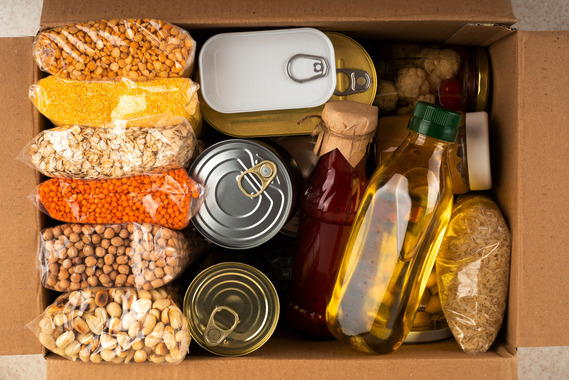 Food insecurity is defined by the U.S. Department of Agriculture as a lack of consistent access to enough food for an active, healthy life. Many Michigan residents struggle to meet their basic needs, which increases their risk of food insecurity. Individuals and families can become food insecure for a number of reasons, including but not limited to unemployment, low income, lack of affordable housing, chronic health conditions and more. Often, it’s a combination of these that lead to food insecurity, creating a cycle that can be hard to break.
In fiscal year 2024, nearly 13% of Michigan households, approximately 1.4 million people, received Supplemental Nutrition Assistance Program (SNAP) benefits. About 43% are families with children and 36% are families with members who are older adults or disabled.
Food insecurity forces those affected to make difficult decisions, such as paying for food or health care, rent, utilities or other expenses. People who are food insecure are disproportionally affected by diet-related chronic diseases such as diabetes, obesity and high blood pressure. Lack of access to food can have serious implications for a child’s physical and mental health, academic achievement and future economic prosperity.
Houses of worship and faith-based organizations work hard to provide food for their communities, and for that we thank you. We believe you are uniquely positioned to be involved with community-led solutions. Your leadership, your spaces and your voices are powerful tools in the movement to address food insecurity.
If you feel called to get involved, here are some examples of how you and your congregation can make a meaningful impact:
- Host a food pantry, community meal or mobile market – open your doors to those in need.
- Start a community garden – grow fresh produce, hope and connection.
- Speak out – use your voice to raise awareness and push for change.
- Collaborate – partner with community resources and other houses of worship for greater reach and impact.
|
|
State Resources and Programs |
|
- Explore MI Bridges to learn more about SNAP, which offers temporary food assistance to eligible families.
- Call or Text 2-1-1 or visit Find Help - Michigan 2-1-1 for free, confidential assistance and referrals to local food programs and support services.
|
|
Special Announcements

SNAP Updates
SNAP Updates is a new section in the OFE newsletter that is designed to provide clear, timely information about changes to SNAP benefits. We hope this will help faith leaders guide congregants and neighbors through new policies and help connect them with the support they need.
SNAP recipients are encouraged to reach out to their local MDHHS office with questions regarding their SNAP benefits or they can check MI Bridges for updates.
To be eligible for SNAP in Michigan, applicants must be a U.S. citizen (or have an acceptable non-citizen status) and must live in Michigan. Eligibility is based on the financial situation of all members of a household. Everyone who lives together, purchases and prepares food together is considered a member of the same household group. To determine if a household is eligible for SNAP, MDHHS will review expenses, assets and income. Expenses include rent, mortgage, utility bills, child support and dependent care expenses. For individuals with a disability or who are at least 60 years old, medical care, medical supplies and health insurance premiums may be included as an expense.
Work requirements for food assistance:
Able-bodied adults without dependents who are between the ages of 18–64 and have children 14 and older, with some deferral exceptions for Native Americans, are now subject to work requirements to access SNAP benefits. Beginning Monday, Dec. 1, all counties implemented Time Limited Food Assistance (TLFA) work requirements under new federal guidelines, except for the following counties and cities:
-
Counties: Alcona, Alger, Arenac, Cheboygan, Iosco, Iron, Luce, Mackinac, Montmorency, Oceana, Ogemaw, Oscoda, Presque Isle, Roscommon and Schoolcraft.
-
Cities: Bay City, Detroit, Eastpointe, Flint, Jackson and Saginaw.
SNAP recipients may meet their monthly TLFA work requirements through the following:
- Employment – work at least 80 hours per month (20 hours per week average) or receive monthly average earnings of at least 20 hours per week multiplied by the federal minimum wage.
- Includes work in exchange for money, including self-employment, work in exchange for goods or services (in-kind) and/or unpaid work (volunteer).
- Self-Initiated Community Service (SICS) – unpaid work for a nonprofit organization. The number of hours worked must equal the SNAP group’s monthly food assistance benefit amount divided by the state minimum wage.
- Michigan Works! Agency (MWA) Employment and Training program (not available in all counties) – participate 80 hours per month (20 hours per week average) in an employment and training program. Individuals have the option to meet their monthly TLFA work requirements by choosing to participate in a workfare activity through MWA. The number of hours worked in the workfare activity must equal the SNAP group’s monthly food assistance benefit divided by the state minimum wage.
Food assistance recipients who received a full calendar month of SNAP benefits and do not meet their monthly TLFA work requirements, qualify for deferral or who provide a good cause reason will receive a “countable month.” An individual may only receive three countable months within the 36-month period.
Additional information, including FAQs can be found: Work Requirements for Food Assistance
|

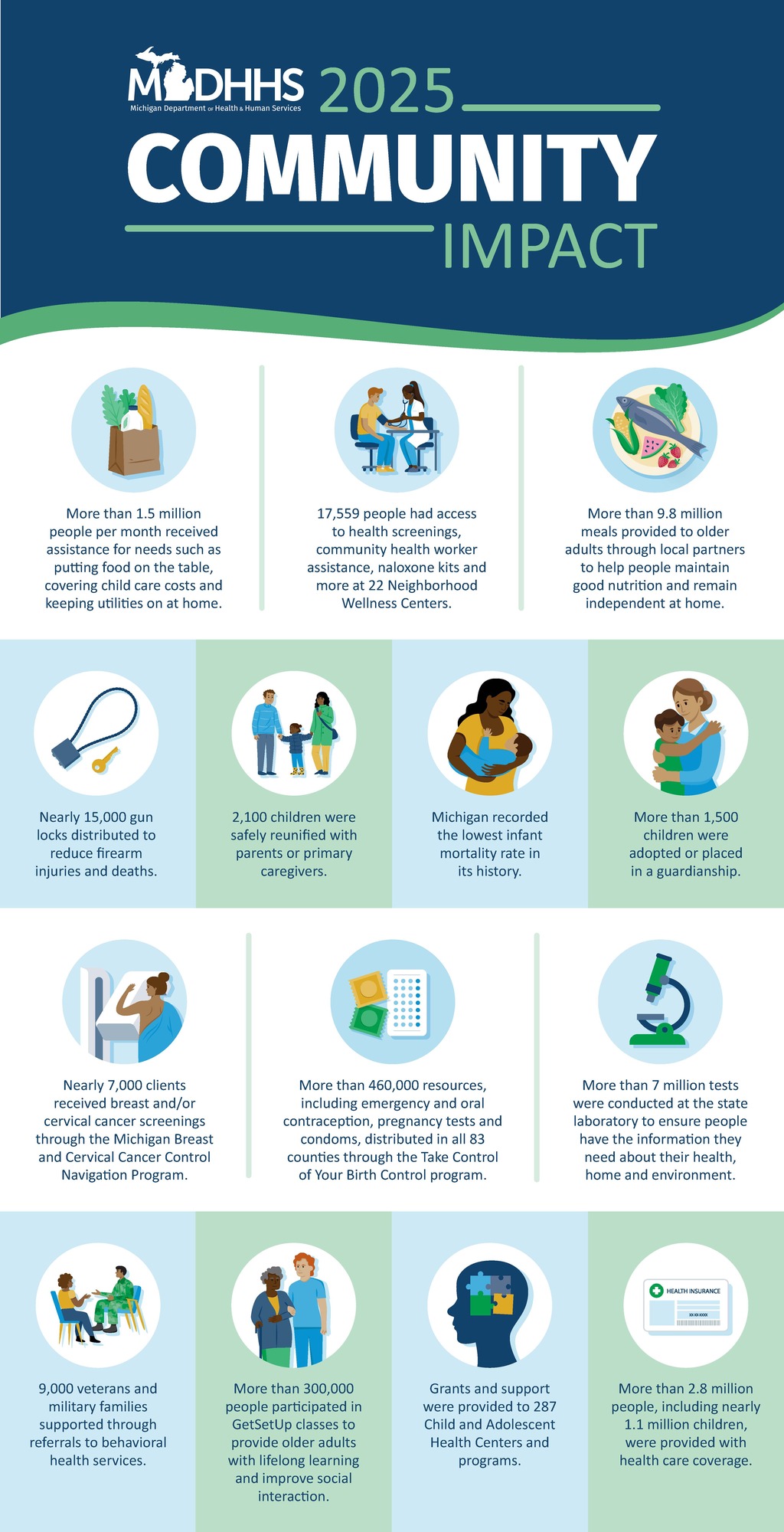
MDHHS 2025 Year in Review
MDHHS continues working to make Michigan a place where everyone has the opportunity to prosper and achieve their dreams.
As 2025 has come to an end, we want to highlight and share the impact of MDHHS programs and investments and their impact across the state. We look forward to building on this progress in 2026.
|

Standing Recommendation for children's vaccines
Michigan’s Chief Medical Executive Dr. Natasha Bagdasarian has issued a Standing Recommendation regarding children’s vaccines.
Health care providers and families are advised to continue to follow the child and adolescent immunization schedule produced by the American Academy of Pediatrics or the American Academy of Family Physicians.
Vaccines play a critical role in the prevention and control of infectious diseases and have led to the elimination of several diseases and significant reductions in illnesses and fatalities. This Standing Recommendation will help encourage vaccine accessibility and availability in Michigan.
Read more on the Standing Recommendation for children's vaccines.
In addition to the Standing Recommendation for children's vaccines, it is important to be aware of respiratory viruses like COVID-19, flu, and RSV. Influenza activity is increasing across parts of the United States, including Michigan. MDHHS encourages residents to take preventative steps now to protect themselves, their families and their communities.
For each of these viruses, the best protection is to be up to date on vaccines. Visit Seasonal Respiratory Viruses to learn more.
|
|
|
|
|
|