|
|
Welcome to the Michigan Department of Agriculture and Rural Development's (MDARD) Food and Agriculture Business Development Newsletter - your source of information, updates and resources for Michigan's food, agriculture, and forest products industry!
|
|
Success Story
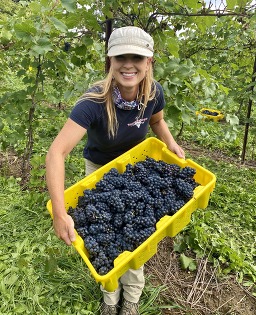
What does it take to build metro Detroit’s only commercial vineyard?
Growing up in Washington state, Jessica Youngblood had no idea she would one day be a farmer, vintner, and Michigan business leader. Her first calling was public service – Jessica became a teacher, her husband David a Marine.
But when the Youngbloods moved to David’s family farm in Ray, Michigan, they saw an opportunity to serve in a new way. They realized the farm would be an ideal venue for a vineyard dedicated to crafting fine wine, drawing visitors, and building community.
In 2016, the Youngbloods began planting 25 acres of wine grapes on the family property. Jessica poured herself into the business. She became an expert on the grape varieties that grow best in southeast Michigan. She learned to drive tractor. And she mastered the art of making world-class wine from 100 percent Michigan-grown grapes.
“It would certainly be cheaper and easier to purchase grapes or juice,” said Jessica. “But growing our own gives us control over the entire winemaking process, from monitoring grape chemistry to choosing exactly when to harvest. It allows us to showcase what can be grown right here in southeast Michigan.”
The early years required a lot of hard work and sacrifice. The vineyard relied largely on manual processes that consumed enormous time and energy. In 2022, Youngblood Vineyard applied for – and received – an MDARD Food and Agriculture Investment Program Grant to purchase a mechanical press.
“Having that press allowed us to process seven tons of fruit in an hour and forty-five minutes versus one ton of fruit every four hours,” said Jessica. “I cannot tell you how much of my life was given back to me because of that one piece of equipment.”
The vineyard only expanded from there, allowing the Youngbloods to hire more workers from surrounding communities. As the winemaking side of the business expanded, Michiganders started flocking to the vineyard.
“We are an open book for our customers,” said Jessica. “They’re watching us pick the grapes, they’re watching us press that fruit, if they’re walking by I give them a taste of the juice straight from the press. Those are memories people will never forget.”
Ten years have passed since the Youngbloods planted their first grape vines. Today, Jessica is not only a proud business owner, but also a leader in Michigan’s craft beverage industry. In 2022 and again in 2025, Governor Gretchen Whitmer appointed Jessica to represent winemakers on the Michigan Craft Beverage Council.
“It’s a true gift,” said Jessica of her appointment to the council. “It’s an opportunity to see the needs of the industry and… to see all the parts come together for the greater good of Michigan agriculture.”
The same spirit of service continues to animate Youngblood Vineyard. So there you have it. Hard work, vision, dedication to using Michigan-grown grapes, and a commitment to serving your community. That’s how you build a successful winery in metro Detroit.
|
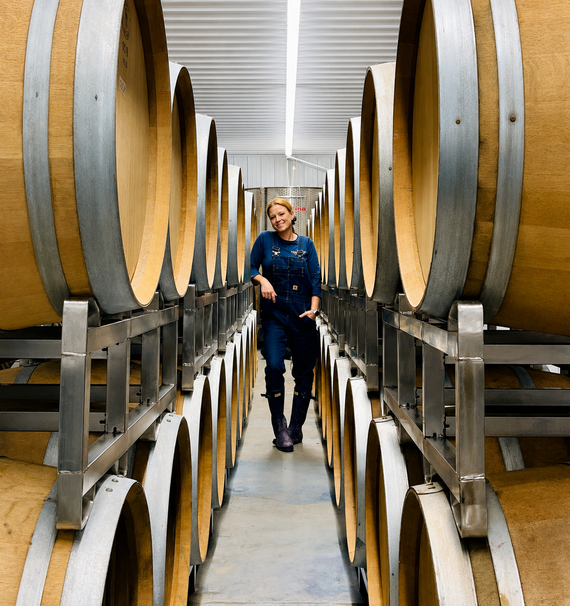 |
Owner Jessica Youngblood stands between barrels of wine at her metro Detroit vineyard
|
|
International Marketing
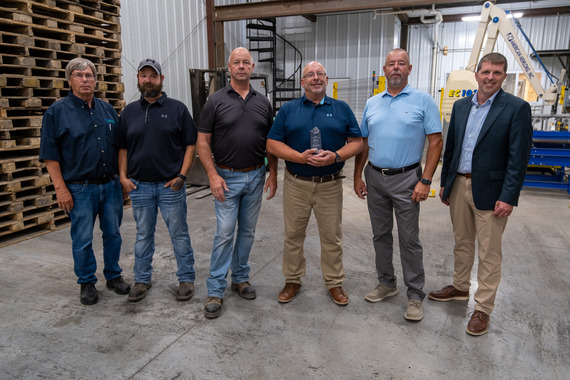
Every year, MDARD recognizes one Michigan company for its leadership in export growth, innovation, and the pursuit of new markets. On August 12, MDARD Director Tim Boring traveled to Michigan’s bay region to present the 2026 Agriculture Exporter of the Year Award to Freeland Bean and Grain Inc.
“Freeland Bean and Grain Inc. is Michigan’s Agriculture Exporter of the Year thanks to their team’s commitment to opening new markets for Michigan producers, creating economic opportunities for Michigan farmers and helping strengthen communities across our state,” said Director Boring. “MDARD takes pride in working with companies like Freeland Bean and Grain that show what’s possible when Michigan agriculture reaches beyond our borders and brings the value of our products to markets around the world.”
Founded in 1983, Freeland Bean and Grain is a locally owned, family-run business that buys and sells corn, soybeans, soft red wheat and edible black beans. The company first entered international markets in 2005 and now exports Michigan-grown black beans to Colombia, Costa Rica, the Dominican Republic, Guatemala, Mexico, Panama, and Peru.
“Winning this award has great significance for our team here at Freeland Bean and Grain because it recognizes the effort and time we’ve devoted to building strong relationships with customers and growers, and to investing in new technologies and facilities,” said Freeland Bean and Grain Marketing Manager Roger Hupfer. “As a small company our strengths are extreme customer focus with our growers and our export partners. Being awarded Ag Exporter of the Year is the culmination of years spent executing our vision - providing high quality edible black beans, promoting our brands and growing our export business.”
Learn more about Freeland Bean and Grain Inc. and their journey to becoming Michigan’s 2026 Agriculture Exporter of the Year.
Listen to Brownfield Ag News’ interview with Roger Hupfer.
MDARD Director Tim Boring (far right) presents the Michigan Ag Exporter of the Year Award to Freeland Bean & Grain Marketing Manager Roger Hupfer (third from right) at the company's headquarters (August 12, 2026)
|
|
Summer in the Cities Spotlight
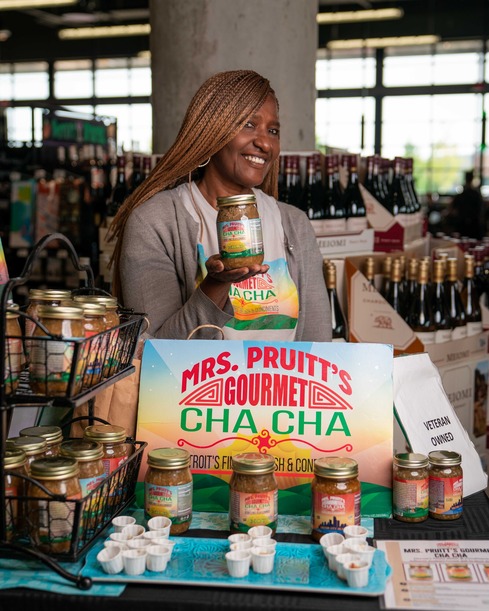
Linda Kay Pruitt is on a mission to bring her family’s cha cha recipe to the world.
Cha cha is a sweet and tangy relish that’s a staple of southern cuisine. The dish offered a way for families to use leftover vegetables and preserve them for winter.
Linda Kay learned the art of making cha cha from her 82-year-old mother-in-law, Ma Pruitt, who brought the family recipe from South Carolina to Detroit. With encouragement from her husband and Ma Pruitt, Linda Kay started manufacturing Mrs. Pruitt’s Gourmet CHA CHA in March 2014.
Linda Kay has been growing the business ever since. She published the definitive cha cha cookbook. She expanded from farmers markets to stores across the country. And last year, she began incorporating produce from her urban farm into Mrs. Pruitt’s Gourmet CHA CHA products.
Now, Linda Kay is ready to take Mrs. Pruitt’s Gourmet CHA CHA to markets around the globe. In August, she joined MDARD and Food Export at the Summer in the Cities Buyers Mission in Detroit, an event that connected U.S. food and agriculture businesses with buyers from twenty countries.
“Attending the Summer in the Cities Detroit Buyers Mission gave me the opportunity to meet international buyers face-to-face and introduce Mrs. Pruitt’s Gourmet CHA CHA to the world,” said Linda Kay. “Working with MDARD has opened the door to new opportunities by connecting my business with international buyers and giving me the chance to grow into new markets.”
Mrs. Pruitt’s Gourmet CHA CHA was one of 20 Michigan companies to join the Summer in the Cities Buyers Mission in Detroit. Together, these companies reported 311 new meetings and connections resulting in 80 new distributorships, $40,250 in immediate sales, and an anticipated $2.75 million in export sales over the next 12 months.
Learn more about upcoming Michigan agriculture export events.
Owner Linda Kay Pruitt displays some of Mrs. Pruitt's Gourmet CHA CHA products at a retail store in metro Detroit
|
|
Farm to Family Update
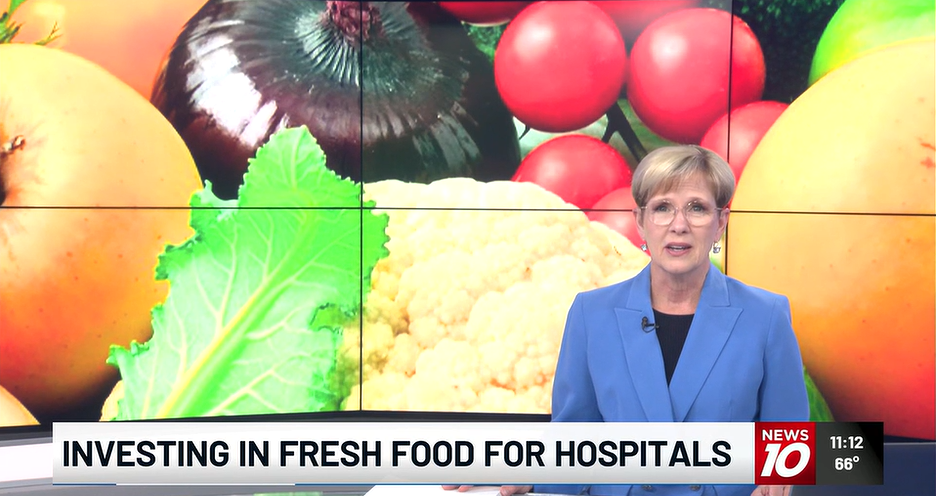
The Good Food for Michigan Project took another big step in August by issuing a $156,000 grant to Corewell Health Foundation West Michigan. The funding will help Corewell Health increase the volume of Michigan-grown foods provided to patients at three hospitals that serve nearly five million meals per year.
“Local, fresh food supports better health outcomes for patients,” said Mick Rickerd, Corewell Health’s corporate executive chef. “This investment from the Good Food for Michigan Project will help our team serve more fresh, nutritious Michigan food to patients in Corewell Health communities. We also will be able to serve as a model for other hospitals to do the same and use what we learn to help other hospitals strengthen local food purchases and partnerships with Michigan farmers.”
Still in its first year, the Good Food for Michigan project is also working with Bendle Public Schools, Dearborn Public Schools, and the Chippewa-Luce-Mackinac Community Action Agency to provide more fresh foods to students and seniors.
Is your farm, business, or community institution interested in giving your customers more access to nutritious, Michigan-grown foods? Sign the Good Food for Michigan Pledge!
Questions? Join MDARD’s partners at the next Good Food for Michigan Webinar on Wednesday, September 23 at 10 a.m. ET.
See more from WILX News 10
|
|
Industry Opportunities
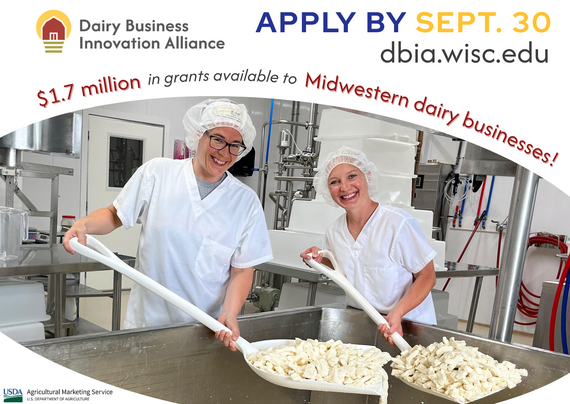
Michigan dairy businesses have just two more weeks to apply for $1.7 million of grants from the Dairy Business Innovation Alliance (DBIA)!
DBIA’s Dairy Business Builder Grants offer up to $150,000 in funding to support projects that:
- Diversify on-farm activity.
- Create value-added products (use milk to manufacture cheese, yogurt, etc.).
- Enhance the value of dairy commodities or dairy by-products.
- Increase dairy exports.
DBIA’s Dairy Industry Impact Grants offer up to $100,000 to support projects that positively impact the dairy industry, such as implementing sustainable packaging options of developing dairy by-product innovations.
Michigan dairy businesses have been well represented in past rounds of DBIA grant funding. Recent grant recipients include Annie G’s Dairy in Ann Arbor, BigGoat Farm in Houghton, Sanilac Creamery in Ann Arbor, Semifreddo, LLC in Grand Rapids and Sweet Temptations in Spring Lake.
Eligibility requirements and application materials for these grant opportunities are available on the DBIA grants website. Applications must be submitted by 5 p.m. CT on Wednesday, September 30, 2026.
 |
The 2026 Great Lakes Expo is a can’t-miss opportunity for your food and agriculture business! Join MDARD and our partners in Grand Rapids on December 9 to connect with new, high-quality suppliers who are ready to meet your sourcing needs.
At this year’s event, MDARD will partner with Michigan State University Extension to host exclusive, one-on-one matchmaking sessions tailored for buyers who seek Michigan-made products. These 10- to 20-minute sessions will provide a focused and efficient way to build new relationships and explore product opportunities. Buyers will have the opportunity to review supplier profiles in advance and select which ones they want to meet.
Register for the event by October 2, 2026! Early registration ensures you’ll have access to the full lineup of Michigan suppliers.
Questions about the matchmaking event? Email MDARD-AgD@michigan.gov.
The Michigan Craft Beverage Council is accepting proposals for research and education grants now through Friday, October 9 at 3 p.m. ET.
The council is offering grants of up to $40,000 for projects focused on:
- Increasing the use of Michigan agricultural products in craft beverage production.
- Increasing the use of regenerative agriculture practices to grow crops used in Michigan craft beverage production.
- Improving crop quality for Michigan agricultural inputs used in craft beverage production.
- Improving quality control and assurance methods for Michigan craft beverages.
The council is also offering grants of up to $5,000 to support activities that educate Michigan consumers about Michigan’s craft beverage industry.
Applicants must email their proposals and letters of support to MDARD-CraftBev@Michigan.gov by the October 9 deadline.
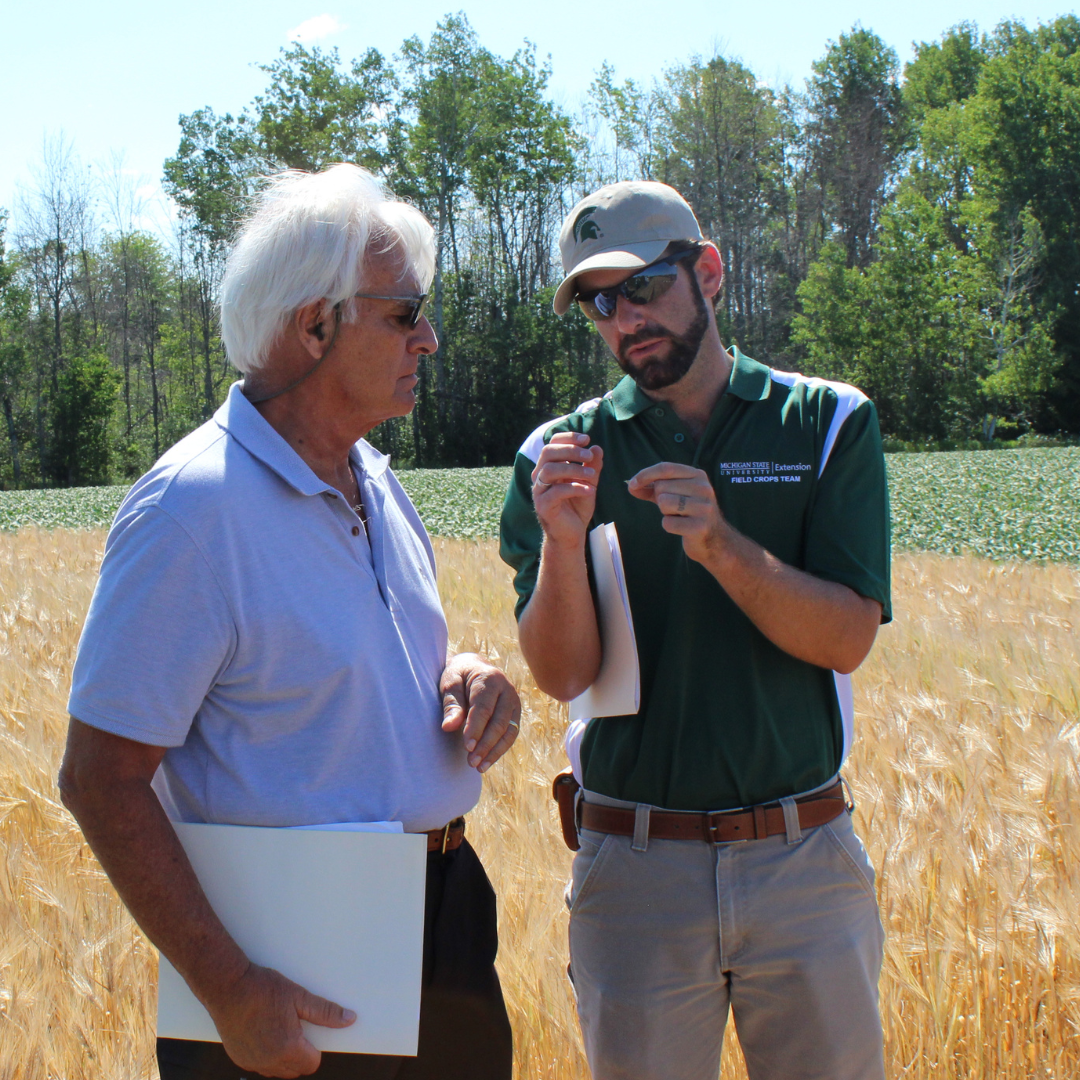
Dr. James DeDecker (right) received a 2025 craft beverage research grant to study optimal methods for distilling rye
|
|
In Case You Missed It...
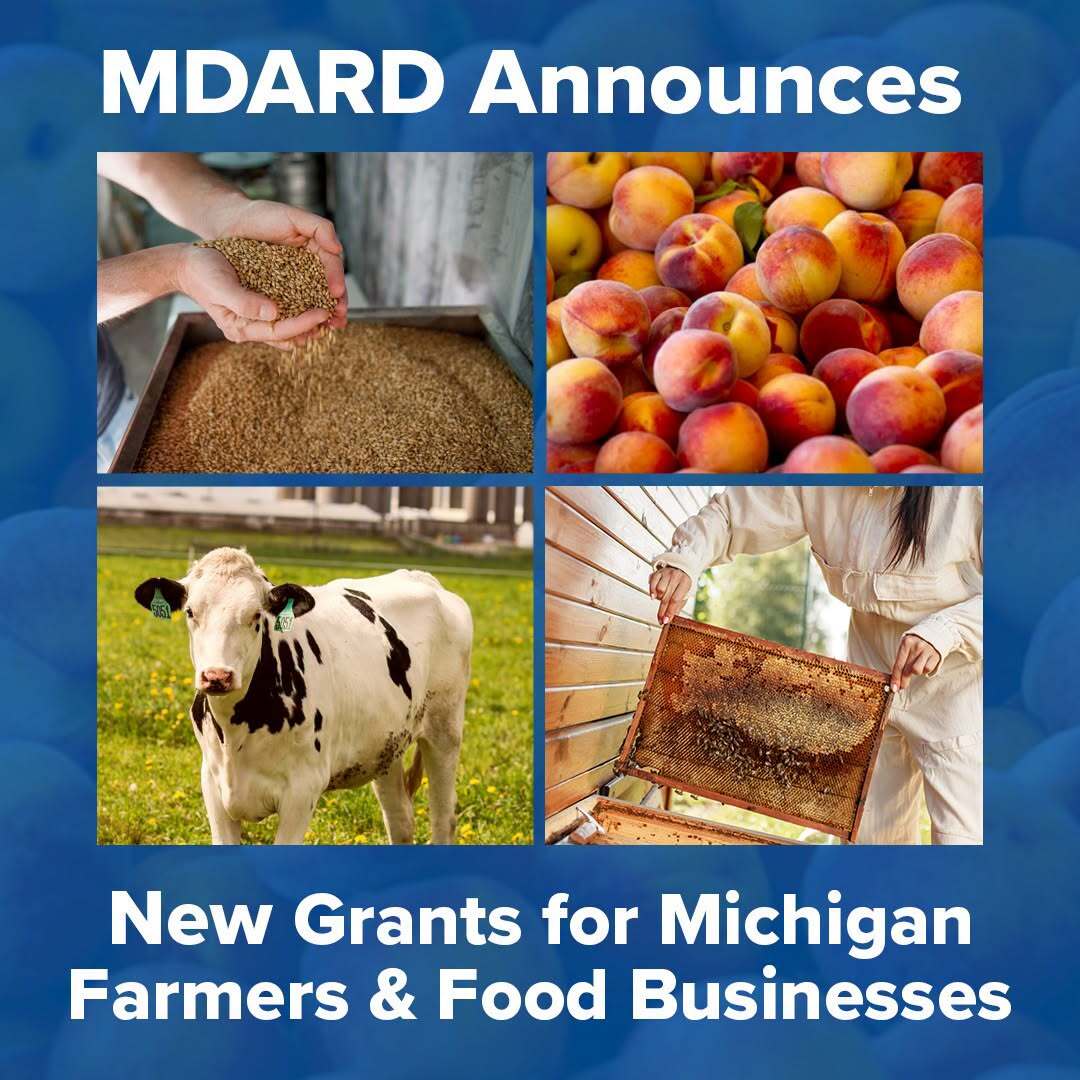
On September 8, MDARD announced $2.3 million of grants to accelerate business growth and strengthen the food supply chain. The grants will help create dozens of new jobs, increase demand for Michigan-grown agricultural products, and give Michiganders more access to local foods.
Among other projects, the new grants will support:
- A new meat processing facility in Shiawassee County.
- New equipment for fruit and vegetable processors in Kent, Newaygo, and Ottawa Counties.
- New milling equipment for farms in Berrien and Oceana counties.
- New production equipment for dairy businesses in Oakland and Washtenaw counties.
- Additional cold storage for a food bank in Flint.
MDARD’s Underserved, Value-Added, Regional Food Systems and Supply Chain Grants strengthen Michigan’s food and agriculture economy by helping businesses seize opportunities to expand production, improve distribution, and strengthen supply chains.
See the full list of Underserved, Value-Added Grant recipients.
On September 8, the Michigan Department of Labor and Economic Opportunity (LEO) and MDARD announced 19 Rural Development Fund Grants for land-based industries and infrastructure in rural communities across the state.
The grants will provide more than $1.6 million in funding for projects including the construction of:
- A new livestock facility at Owosso High School to promote agricultural education and career readiness.
- A new livestock facility at Partners in Animal Health II in Portland to expand cattle producers’ access to veterinary services.
- New seasonal workforce housing at Riveridge Produce Marketing in Sparta to increase harvest capacity.
- The Mill Street Market in Hastings, a community-driven initiative to address food insecurity and expand access to affordable childcare.
This year marks the first time LEO and MDARD jointly issued Rural Development Fund Grant recommendations under Executive Order 2025-9. LEO plans to issue a request for proposals for the next round of Rural Development Grants in October 2026.
Learn more about Rural Development Fund Grants.
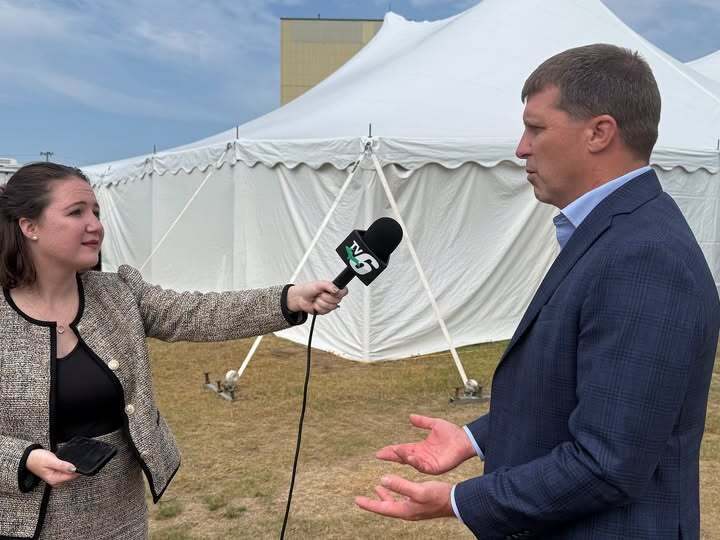
On August 20, MDARD Director Tim Boring announced new investments in local food, agriculture, and forestry production during a visit to the Upper Peninsula State Fair.
Among other projects, the new funding will support:
- Equipment purchases by food processors in Macomb, Marquette, and Oceana counties.
- The expansion of craft beverage producers in Antrim, Emmet, Marquette and Oceana counties.
- Infrastructure investments at sawmills in Ionia and Iron counties.
Fourteen of the 20 economic development grants will support food and agriculture businesses in northern Michigan and the Upper Peninsula.
"MDARD is making bold investments in Michigan's food, agriculture and forestry economy to help expand production, create new jobs and improve quality of life for Michiganders," said MDARD Director Tim Boring. "Today's grants support businesses whose growth will create economic opportunities throughout our state, increasing demand for local farm and forest products and giving families more access to nutritious, Michigan-grown foods."
Watch coverage from WLUC TV 6.
MDARD Director Tim Boring speaks with a reporter from TV 6 News at the Upper Peninsula State Fair in Escanaba, MI (August 20, 2026)
|
|
|
|
|