|
|
Welcome to the Food and Agriculture Business Development monthly newsletter – providing Michigan's food, agriculture and forest products businesses and producers with updates, resources, and industry news.
|
|
Success Story
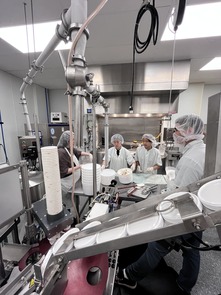
Founded in 2018, Milk & Froth, makes dairy and vegan ice cream from scratch in small batches at their production kitchen in Detroit’s Eastern Market. The company doesn’t use artificial flavors, colors or synthetic additives, focusing instead on using Michigan-grown dairy, fruits and other agricultural goods to handcraft unforgettable flavors. Their mission leaves no room to compromise: make ridiculously good ice cream people feel great about eating and with every scoop and pint sold, to support Michigan farmers.
In 2022, Milk & Froth received a Value-Added and Regional Food Systems Grant from the Michigan Department of Agriculture and Rural Development (MDARD). The $100,000 in funding helped purchase equipment that expanded Milk & Froth’s production capabilities and supported their growth, doubling their revenue and enabling the company to open a second storefront and create over 20 additional jobs.
“The Value-Added and Regional Food Systems Grant funding from MDARD has allowed a relatively small Detroit-based ice cream company build the production capabilities needed to begin competing with much bigger, national brands,” said Deion Cao, Co-Founder & CEO of Milk & Froth. “Michigan has all the ingredients to own the ice cream industry: dairy, fruit, sugar. And it hasn’t yet. With MDARD’s ongoing support and the backing of our farmers, we’re going to build an ice cream company that competes with the biggest brands in America and put Michigan’s farmers and agriculture on the national stage.”
Prior to receiving the MDARD grant, Milk & Froth’s ice cream production process was labor intensive and almost entirely done by hand. The grant helped the company mechanize key parts of the process, reducing manual bottlenecks and increasing their pint production capacity by over 100-fold.
The most interesting thing about Milk & Froth may be what they haven’t released yet. The company is quietly developing a new kind of ice cream, something they've dubbed “Healthy Ice Cream.” It tastes exactly like the super-premium brands, so you no longer have to choose between indulgence and health. The team is convinced it’s the future of the category, and with continued support from MDARD and Michigan’s farmers, they intend to prove it.
|
|
|
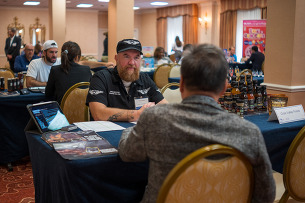
MDARD is partnering with the Food Export Association of the Midwest (Food Export) to bring international food and beverage buyers from 17 countries to Detroit for the Summer in the Cities Buyers' Mission (SITC) on August 10, 2026. Early registration for the event is open until June 12, 2026.
Buyers’ missions are opportunities for companies to meet directly with multiple international buyers that seek to purchase a variety of food and agricultural products. During these missions, you will meet for 15-20 minutes with buyers that you select. These meetings are a great way to share your products and company with buyers while learning about how your product may fit into their market. This year’s SITC Buyers’ Missions will take place in Detroit, Indianapolis and Albany.
"Food Export's buyers' missions are amazing ways to connect with international buyers and make connections and relationships with different countries," said Natasha Halabu, operator at Grandpapa's Snack Company in Hamtramck. "Because of the help we have received from MDARD and Food Export, we currently sell our products in Saudi Arabia, Australia, Indonesia, Canada, and many more."
SITC’s Detroit stop will feature buyers from Brazil, Canada, China, Japan, Peru, the Philippines, Vietnam and ten other countries. The main products of interest for SITC are snacks, beverages, nuts, dairy products, meat products and desserts and confectionary. For a full list of products of interest and buyers’ profiles, visit the Food Export webpage.
MDARD’s International Marketing Program and Food Export hosted the SITC Buyers’ Mission in Grand Rapids in 2024. The 2024 event generated more than $1.6 million in immediate export sales and over $5 million in projected export sales.
|
|
|
International Marketing
Does your company use Michigan ake advantage of deeply discounted booth spaces at the following fall trade shows!
-
The show will take place September 14-16, 2026, in Miami, Florida.
-
The exhibiting company is responsible for all other costs including shipping samples, travel, lodging, etc.
-
This show qualifies for Food Export’s Branded Program, which provides a 50% reimbursement of booth space for eligible companies.
-
The show is geared toward small- to medium-sized businesses looking to engage with qualified buyers and explore export opportunities.
-
Show provides access to Latin America and South America markets along with opportunities within the hospitality industry, including cruise ship lines.
-
Product categories include frozen foods, snacks, gourmet/specialty foods, meat, non-perishable pantry staples, and more.
-
Booth spaces are available at this show as 5’x10’ or 10’x10’ booth spaces.
-
The Michigan Pavilion at this show will be located in the National Association of State Departments of Agriculture (NASDA) ‘A Taste of the States’ Pavilion.
-
The show will take place October 15 and 16, 2026 in Orlando, Florida.
-
The exhibiting company is responsible for all other costs including shipping samples, travel, lodging, etc.
-
This show qualifies for Food Export’s Branded Program, which provides a 50% reimbursement of booth space for eligible companies.
-
The Global Produce & Floral Show is the world's largest fresh produce and floral show.
-
One 10’x10’ booth space available for this show.
|
|
In May, the Michigan Commission of Agriculture and Rural Development approved $275,000 in Food and Agriculture Investment Program (FAIP) grant funding to fairlife, LLC. The funding, awarded by MDARD, will allow the business to complete an expansion project that will help meet consumer demand and create 150 new jobs.
The FAIP funding will be used as part of a $650 million investment project that will expand fairlife’s Coopersville facility. The project will add two new high-speed production lines using fairlife’s patented ultrafiltration technology and expand the plant by more than 245,000 square feet.
The Coopersville facility sources over 6 million pounds of raw milk per day from more than 30 Michigan dairy farms. The completed expansion is expected to increase milk intake by up to four million pounds per day, a more than 60 percent increase. This projected increase creates significant new market opportunities for Michigan farmers, strengthens revenues and supports long-term farm sustainability.
Since Fiscal Year 2019, MDARD has awarded more than $6.4 million of FAIP grants. The grants were part of more than $250 million MDARD delivered over the past seven years to help local communities build infrastructure, promote agricultural prosperity, ensure food safety and create jobs.
|
|
MDARD and the Michigan Craft Beverage Council (MCBC) announced a new application period for the Qualified Small Distiller Program, which is open until June 18, 2026 at 5 p.m. ET. The Qualified Small Distiller Program lowers markup costs on bottles of spirits produced with at least 40 percent Michigan-grown grain, barley, oats, potato, corn, fruit, sugar beets or honey.
Michigan distillers that produce no more than 60,000 gallons of spirits per year are eligible to apply for a certificate through the program. Out-of-state entities that produce no more than 60,000 gallons of spirits per year may also qualify for the program provided they meet additional requirements. Entities applying for this certification may be eligible for a reduced markup beginning January 1, 2027.
More information about the Michigan Craft Beverage Council, including research and education grants and industry communications, can be viewed on the MCBC webpage.
|
|
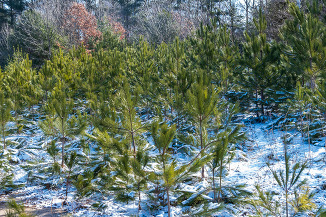
MDARD is reminding private landowners that applications to enroll in the Qualified Forest Program (QFP) are due September 1, 2026 to receive the associated tax exemption for the 2027 tax year.
MDARD’s QFP encourages Michigan landowners to actively manage their privately-owned forests for commercial harvest, wildlife habitat enhancement and improvement of other forest resources. Pursuant to the General Property Tax Act, the program provides landowners with two potential tax benefits for enrollment of their property as an incentive for sustainably managing their forests:
-
School Tax Affidavit – Authorizes an exemption from the local school operation millage; up to 18 mills of school operating taxes per year. This exemption only applies to land value.
-
Taxable Value Affidavit – Keeps the previous owner’s property taxable value from uncapping on enrolled land after a transfer of ownership.
When applying for the QFP, landowners should remember that:
-
Land parcels must be 20 acres or larger
-
Enrolled landowners must pay an annual fee
-
Public access to the land is not required
-
Buildings and structures are allowed but are not eligible for tax exemption
-
The property is generally non-homestead; it may be homestead on structures and non-homestead on the land
To enroll a parcel of land in QFP that is less than 40 acres in size, no less than 80 percent must be stocked with productive forest. To enroll a parcel of land that is 40 acres or more, at least 50 percent must be stocked with productive forest. A productive forest is a forest capable of producing forest products at a rate of 20 cubic feet per acre per year.
|
|
|
|
|
|