|
November 2025
Around the Table is produced by the Michigan Department of Agriculture and Rural Development’s (MDARD) Bureau of Food Safety and Animal Health to share important regulatory updates and program information. The newsletter will be shared periodically via email to licensed food establishments and will also be available on the department’s website. Please feel free to email article suggestions and feedback to MDARD’s Communications Team.
In this Edition:
|
|
|
In 2024, MDARD went through a reorganization process to better align programs and services in the department. During the reorganization, all human food safety, animal feed safety, and animal health programs were combined under the newly created Bureau of Food Safety and Animal Health. Three divisions were created under the bureau:
Human Food Division enforces laws and regulations governing the safety and wholesomeness of food and food products; responds to food safety complaints, recalls, and food safety emergencies; serves as a key link in the federal-state-local food safety system; and provides food safety education and outreach.
Dairy, Feed, and Produce Division enforces laws and regulations governing the safety of dairy, animal food and feed, and fresh produce; provides dairy, food, feed, and produce safety education and outreach; responds to dairy, feed and produce safety complaints, recalls, and emergencies; assures the interstate movement of milk and dairy products; and holds a critical role in One Health through communication, collaboration and coordination.
Animal Industry Division is responsible for programs that control and eradicate reportable, contagious, infectious, and communicable diseases of livestock, poultry, aquaculture, equine, and companion animals; controlling contamination of animals from toxic substances; enforcing and supporting the humane treatment of animals; and promoting Michigan’s animal industries.
|
|
Resources
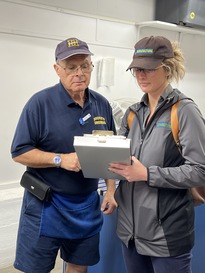
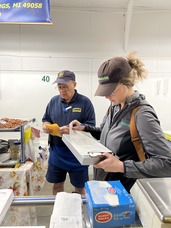
- A food inspector will likely begin by asking for the person in charge and verifying their food safety knowledge.
- The food inspector will walk through the facility and grounds to observe food prep, storage, and sales areas.
- Inspectors will check equipment and surface cleanliness, temperature logs, employee hygiene, pest control, etc.
- Inspectors may test sanitizers or use thermometers to verify temperatures.
- Inspectors will review violations. Some violations are priority or high risk and are more likely to cause foodborne illness.
- After the inspection, you will receive a report. If there are violations, you will likely have to correct them in a certain timeframe. It may be possible to correct some violations immediately while the inspector is still there. Sometimes a re-inspection will be necessary.
|
- Hot or cold foods not held at the correct temperatures.
- Cross-contamination: raw meats dripping onto ready-to-eat foods.
- Poor hand hygiene: employees do not wash hands properly or often.
- Inadequate sanitization of cutting boards, utensils, and food contact surfaces.
- Employees working while sick.
- Food items not obtained from approved source.
- Lack of labels or improper date marking.
-
Self-Inspection - Conduct mock inspections and check that staff are following the Michigan Food Law, Michigan’s Modified Food Code, policies, procedures, and other guidelines.
-
Personal Hygiene - Provide access to handwashing stations that are stocked with soap, warm water, and single‐use towels. Follow policies for reporting health issues and illness.
-
Monitor Temperatures - Calibrate thermometers. Check cooking temperatures and cooling procedures. Monitor refrigerators, freezers, and hot-holding units.
-
Cleaning and Sanitizing - Have sanitizer solutions ready and properly mixed. Ensure staff cleans and sanitizes food contact surfaces after use, between different types of food, and after four hours of constant use.
-
Food Source and Storage - Obtain food from approved sources. Cottage foods and food from unlicensed facilities are not approved for sale or use in a licensed food establishment. Store raw food below cooked food. Avoid allergen cross-contact.
-
Training - Provide basic food safety training for food staff and provide refresher training when rules or procedures change. Have a certified manager on staff.
-
Licenses and Records - Make sure your food license is up-to-date and posted as required. Keep required documentation handy (menu, food safety plan, training records, supplier information).
-
Plans for Special Processing - If you have special processes (e.g., smoking foods, fermenting, or reduced oxygen packaging), ensure you have proper variance, Hazard Analysis Critical Control Point (HACCP), or other plans and documentation. Notify your inspector of major planned changes to your facility.
-
Emergency Preparedness - Have backup in case of a power outage. Know what to do if equipment fails. Review MDARD’s emergency action plans.
|
|
|
Reminders
Food safety is a team effort, and everyone plays a crucial role in keeping food safe, wholesome, and nutritious. Following safe food handling guidelines helps keep you and those around you free from foodborne illness, and it’s always a good time to review and commit to following safe food handling practices.
As a food business, you are encouraged to review safe food handling practices with your staff and make sure they are familiar with them. Here are a few things to focus on to encourage safe food handling and storage:
-
Cleanliness and Hygiene: Regular hand washing, wearing clean uniforms, and using hair nets or hats are essential. Proper sanitation of surfaces, utensils, and equipment is also crucial.
-
Temperature Control: Keeping perishable foods out of the temperature danger zone (40° to 140°) is vital. Implementing strict time and temperature controls is necessary.
-
FIFO (First In, First Out): Training staff on labeling and using older food items before newer ones can help minimize waste and ensure timely usage.
-
Airtight Containers: Using airtight containers to preserve food freshness and prevent contamination is recommended.
-
Proper Food Labeling: Using waterproof labels and markers to avoid smudging ensures accurate tracking of storage dates and prevents confusion.
By following these practices, food businesses can significantly reduce the risk of foodborne illnesses and maintain the safety and quality of their food products.
|
|
|
Do you know what to do if a man-made or natural disaster like a fire, power outage, tornado, or flood strikes? Now is an excellent time to review your emergency action plan (EAP) to make sure you are prepared for any disaster. If you don’t have an EAP, MDARD’s EAP guide can help you.
|
|
|
If you have any food safety questions or concerns, or any questions about Michigan food establishment regulations, please reach out to your MDARD inspector. If you don’t know who your inspector is, please call the MDARD Call Center at 800-292-3939 to find the inspector in your area.
|
|
|
Dietary supplements are products such as vitamins, minerals, and herbs that claim to promote wellness. Dietary supplements are classified as food in the Michigan Food Law.
As of May of 2025, firms that manufacture, hold, pack, label, distribute, or sell dietary supplement products are required to be licensed and inspected by MDARD. License applications and annual renewals are due by April 30 each year. We encourage firms to apply online using MDARD’s Licensing Portal System (LPS).
Firms are encouraged to get acquainted with the applicable regulations for dietary supplements:
For more information, visit MDARD’s Dietary Supplements web page.
|
|
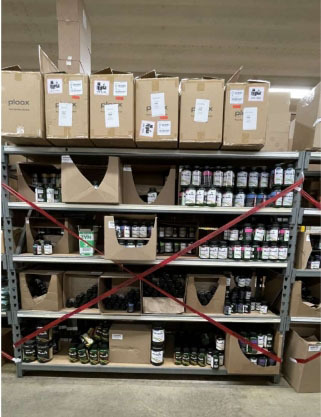
MDARD inspectors have seen a rise in the availability of foods and dietary supplements containing potentially harmful psychotropic or psychoactive substances. These products are illegal to manufacture and sell in Michigan.
Psychoactive or psychotropic substances, when added to foods or dietary supplements and consumed, can affect mental processes like perception, consciousness, cognition or mood and emotions and are not legal to use as food ingredients. Many food products claiming to contain these and similar ingredients may be inaccurately labeled and could produce unexpected or potentially harmful side effects.
Food establishments are encouraged to check the ingredient labels on products they sell and remove any products with unapproved ingredients from their store shelves.
Unapproved ingredients include psychotropic and/or psychoactive mushrooms like psylocibin and A. muscaria, cannabis-based ingredients, non-noble forms of kava, kratom and other potentially harmful ingredients. Potential side effects of consuming these types of unapproved ingredients could include liver toxicity, seizures, elevated blood pressure and heart rates, reduction in motor skills and hallucinations. Foods containing these ingredients are considered adulterated according to the Michigan Food Law and the federal Food, Drug and Cosmetic Act (Sec 402(f)(1)(B)). Dietary supplements are defined as food under the Michigan Food Law.
Many consumable products containing these unapproved ingredients have entered the market in recent years. However, these products are unlawful and cannot be legally sold or produced in Michigan or cross state lines. These ingredients have not satisfied the criteria necessary for being listed on the generally recognized as safety (GRAS) list for use. Consumable products containing any form of these unapproved ingredients are suspected of adulteration and therefore are not allowed in the manufacturing, holding, distribution or sale of food in Michigan.
Outside of the marijuana regulations, any substance that will be added to food, drink or animal feed (including dietary supplements) must first be approved by the U.S. Food and Drug Administration (FDA) for that intended use. There is no legal path for manufacturing, selling or holding food products containing other psychoactive or psychotropic food additives in Michigan.
If you have questions, please email the MDARD Human Food Division.
|
|
|
Food Assistance Updates
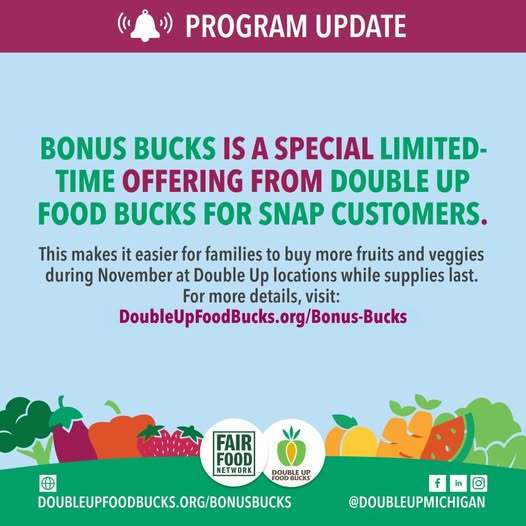
Last week, in response to the USDA order to pause SNAP distribution on Nov. 1, the Fair Food Network (FFN) expanded the Double Up Food Bucks (DUFB) Program, which is supported by a grant administered by MDARD. Effective through Dec. 31, 2025, FFN is:
1. Expanding access and flexibility so families can build up savings on their Double Up cards:
- Double Up earnings no longer expire. FFN lifted the 90-day limit so shoppers can use their earned benefits whenever they need them.
- No daily earning cap. FFN removed the usual $20 per day limit, enabling families to earn as much as they can while shopping for fresh produce.
- Frozen fruits and vegetables are now eligible. Shoppers can now use Double Up on frozen options with no added salt, sugar, or oil—available at all 237 locations across the state.
2. Introducing Double Up Bonus Bucks, a limited-time voucher of $40 that will not require a matching SNAP purchase to receive. It can be used exclusively on fresh or frozen fruits and vegetables beginning Nov. 1and will be distributed:
- Directly onto Double Up cards and app, or loyalty cards at participating sites, where applicable.
- As printed vouchers for shoppers using tokens or coupons at participating locations.
When SNAP is disrupted, families feel it immediately—and so do the local grocers and farmers who serve them. These changes have been implemented to ease the burden on Michigan families, expand access to healthy food, and support community food retailers that keep fresh produce on shelves and dollars circulating locally. More information on the changes to DUFB.
Many families in Michigan who rely on SNAP benefits each month are facing an urgent need for community support during the federal funding pause for these benefits. Many Michigan food businesses and industry organizations have already stepped up to help and many others may be planning food drives or monetary donations as the need continues. MDARD is sharing guidance on where to donate and how to safely handle food items being donated to food banks. You can also visit the Food Bank Council of Michigan’s website to donate online or connect with a food bank near you.
|
|
|
|
|