
Reminder: Be on the lookout for box tree moth
Michigan Dept of Agriculture & Rural Development sent this bulletin at 06/25/2025 09:00 AM EDTHaving trouble viewing this email? View it as a Web page.

Reminder: Be on the lookout for box tree moth
The Michigan Department of Agriculture and Rural Development (MDARD) is reminding nurseries and greenhouses to be on the lookout for box tree moth (Cydalima perspectalis). Although this invasive pest is not a threat to Michigan’s natural resources, it can lead to significant defoliation and death of ornamental boxwood.
Identifying box tree moth
Box tree moth caterpillars are green and yellow with white, yellow, and black stripes and black spots. Adults have white wings with dark brown borders and a distinctive white dot or mark in the middle of each forewing.
Box tree moth may not be easily recognized at the beginning of an infestation because young caterpillars hide among twigs and leaves. Signs of infestation include chewed, cut, or missing leaves; yellowing or brown leaves; white webbing; and green-black excrement on or around the plant. Larvae skeletonize the leaves and feed on the undersides, causing defoliation and dryness and eventually leading to the plant’s death.
MDARD response
In 2023, MDARD implemented a box tree moth interior quarantine, which now encompasses 13 counties in Southeastern Michigan: Clinton, Eaton, Ingham, Jackson, Lapeer, Lenawee, Livingston, Macomb, Monroe, Oakland, St. Clair, Washtenaw, and Wayne. MDARD conducted statewide trapping for adult box tree moths as part of a 2024 survey. The department will conduct a similar survey this year. MDARD also traps around the perimeter of the quarantine area to monitor for spread of the pest
Reporting suspected infestations
Individuals outside the quarantine area should photograph suspected infestations and report them via www.Michigan.gov/ReportBTM.. After MDARD officials have confirmed a suspected case, residents are advised to either remove infested branches or for heavy infestations, cut the boxwood from its base (it should grow back from its roots). All boxwood debris should be double bagged in plastic and discarded with household trash. Some municipalities or trash vendors may have restrictions surrounding plant material disposal, so please check with your local waste management entity for guidance.
Individuals inside the quarantine area do not need to report suspected infestations.
Treatment and additional information
For more information about pest treatment and a list of insecticides known to be effective against destructive caterpillars, view the Michigan State University Insecticide Options for Box Tree Moth Management.
Additional information about box tree moth can be found at www.michigan.gov/invasives.
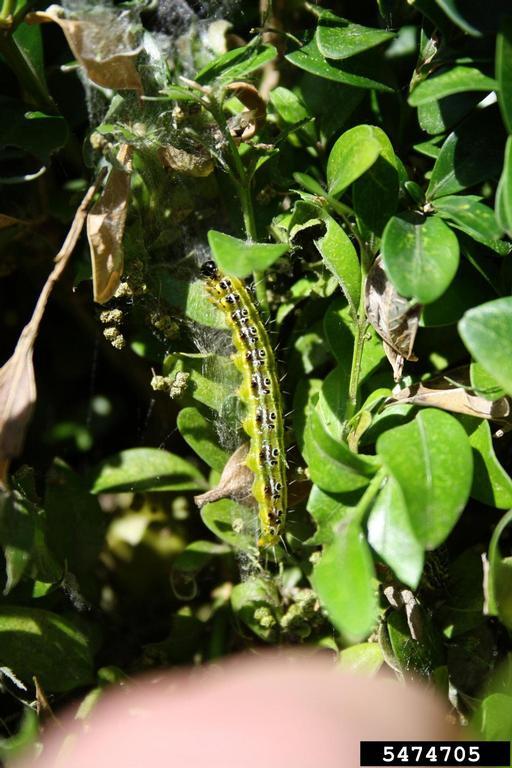
Photo credit: Ferenc Lakatos, University of Sopron, Bugwood.org

|
QUESTIONS? Contact Us Phone: 800-292-3939 |
||||||
STAY CONNECTED:
Get personalized voter information on early voting and other topics. Michigan.gov/Vote |
|||||||
|
SUBSCRIBER SERVICES: To ensure delivery of our emails to your inbox, please add MDARD@govsubscriptions.michigan.gov to your address book. If you were forwarded this email and would like to join our email list, subscribe here. Please do not reply to this email as this address is not monitored for responses. Having trouble viewing this email? View it as a Web page. |
|||||||


