|
|
|
Last Chance: Share Your Perspective Today!

Michigan needs more veterinarians—especially in rural areas and large animal medicine. Your feedback is vital to help define the 2024 designated veterinarian shortage situations, which are the foundation of two federal programs supporting veterinarians.
The U.S. Department of Agriculture’s National Institute of Food and Agriculture created the Veterinary Medicine Loan Repayment Program (VMLRP) and the Veterinary Services Grant Program (VSGP) to financially support veterinarians working on food supply medicine within designated shortage situations, which are updated annually and informed by feedback.
The VMLRP is a loan repayment program designed to help any veterinarian who has qualifying educational loan debt and provides service in a designated high-priority shortage situation. The program compensates veterinarians by providing three years of DVM-related loan repayment of up to $25,000 per year. While VMLRP primarily provides compensation for student loans, it also accommodates loans used for educational materials or housing during a veterinarian’s time of study.
The VSGP goes a step further. This competitive grant program provides funding to those within designated shortage situations who want to establish or expand their veterinary practices by equipping veterinary offices, sharing overhead costs, and/or establishing mobile veterinary facilities.
Overall, the benefit and impact of these two programs hinges on how effectively the veterinarian shortage situations are defined. Identifying these areas accurately and appropriately is necessary to take full advantage of these funding opportunities. This is why your insights are so crucial and why the deadline to provide feedback has been extended.
Please take a moment to fill out a brief survey on designated shortage areas or send an email directly to Michigan’s State Veterinarian, Dr. Nora Wineland at WinelandN@Michigan.gov by October 30, 2023.
Sharing your insights will be pivotal to strengthen the veterinary profession in Michigan’s rural communities.
|
Welcome Dr. Shannon Cerveny!

The Michigan Department of Agriculture and Rural Development (MDARD) is pleased to welcome Shannon Cerveny, DVM, DACZM, to serve as the new Assistant State Veterinarian and Tuberculosis Program Coordinator.
Dr. Cerveny earned a BS in Zoology from the Honor’s College at Michigan State University, and she later attended St. George University for veterinary school before finishing her clinical year at North Carolina State University. In 2013, she became a board-certified Diplomate of the American College of Zoological Medicine.
Before joining MDARD, Dr. Cerveny worked as a clinical zoo veterinarian at several zoos—including the San Antonio Zoo, Saint Louis Zoo, and Saginaw Children’s Zoo.
“I am very excited to use my veterinary skills in a new way,” said Dr. Cerveny. “As a zoo veterinarian, we have a broad knowledge about disease risks in a variety of animal species in both managed and wild settings. This position is a great opportunity to apply that experience and work with people in communities across the state to promote animal health.”
Please join us in welcoming Dr. Cerveny to her new position.
|
|
|
|
Interested in Becoming a Certified Swine Sample Collector Trainer?
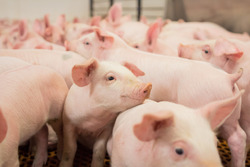
MDARD invites you to participate in Michigan’s Certified Swine Sample Collector (CSSC) Program this fall.
Throughout the past year, MDARD has been collaborating with Michigan Pork Producers Association, Michigan State University Veterinary Diagnostic Laboratory, and Dykhuis Farms along with Dr. Pam Zaabel (formerly of the National Pork Board and a developer of the original CSSC Program) to create a form of the CSSC Program tailored specifically for Michigan. In general, the CSSC Program is a national training program providing instruction from a Category II Accredited Veterinarian to those working in the pork industry on how to correctly collect, handle, and submit samples during a foreign animal disease (FAD) outbreak.
If African Swine Fever (ASF) or another FAD affecting swine was ever detected in the United States, swine would need frequent diagnostic and surveillance testing to allow for the safe movement of healthy animals through control zones and across state lines. As both state and federal resources will be in high demand, there must be a way to supplement this need. This is where the CSSC program becomes crucial in building Michigan’s capacity for response.
If you are interested in becoming a Michigan CSSC Program trainer and training your own class of CSSC candidates or have general questions regarding this program, please contact MDARD’s Swine Program Manager, Dr. Daniel MacArthur, at MacArthurD4@Michigan.gov.
|
Learn More About BLV

On November 8-10, 2023, Michigan State University will host the 2023 All Things BLV Conference.
The conference is planned as a welcoming and collaborative gathering place for sharing ideas, successes, challenges, and needs regarding BLV – while providing career development, mentorship, and training to early career individuals and students.
To learn more and register, please visit the event’s website.
|
|
|
A Michigan Department of Agriculture and Rural Development Publication
|