April Ann Arbor Water Newsletter

Ann Arbor Water Banner

A N N   A R B O R   W A T E R

A City of Ann Arbor Newsletter    |    April 2023    |    Volume 2    |    Issue 4

Drinking Water Glass

Ann Arbor Water meets proposed EPA regulations on PFAS in Drinking Water

On March 14, 2023, ​Environmental Protection Agency (EPA) released proposed drinking water regulations for PFAS. The proposed rule would hold utilities to an even higher standard of water quality than Michigan's existing PFAS regulations, as it contains lower Maximum Contaminant Levels (MCLs) for PFOS and PFOA and includes a Hazard Index to track four compounds as a mixture (PFNA, PFHxS, PFBS, and GenX also known as HFPO-DA). It will be several years before utilities will have to meet these proposed rules. The good news is Ann Arbor already meets EPA's proposed PFAS regulations and produces water that is protective of public health. All the PFAS compounds included in the proposed rule are consistently undetectable in Ann Arbor's finished drinking water or below the EPA's proposed practical quantitation limits.

We are well positioned to meet these regulations today because of work and investments we made in 2018-2019 to replace the media in our filters with optimal Granular Activated Carbon (GAC) for PFAS removal. We also continue to regenerate our media every three years to meet our own internal water quality goals that hold us to a higher standard than regulations require.  

Ann Arbor Water staff take public health very seriously. The new proposed rule confirms the actions we have previously taken for PFAS removal are protective of public health. For more information, see EPA's fact sheet on the proposed PFAS regulations. We will also update our PFAS website as more information becomes available www.a2gov.org/PFAS

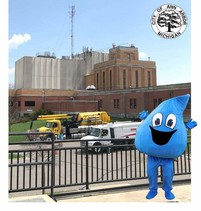
WTP Open House

May Water Celebrations 

The Drinking Water Treatment Plant (919 Sunset Rd) will hold its annual open house on Saturday, May 6, which is a free family-friendly event with activities for kids. The event will be held outdoors rain or shine. Tours will be capped at 15 participants, so please register for tours in advance at https://www.a2gov.org/pages/calendar.aspx

Enjoy the beautiful Huron River with free, family-friendly river activities during the Huron River Day festival on Sunday, May 21 from noon to 4 p.m. This event is held at Gallup Park (3000 Fuller Road) and celebrates Ann Arbor's wonderful freshwater with discounted boat rentals, children's activities, river exhibits, music and food. 

L&C Service Line Replacement

Service Line  Replacement Update

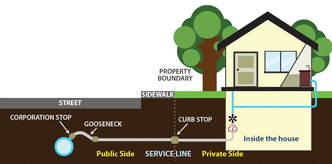
Did you know Ann Arbor has an online dashboard to track our progress on water service line inventory and replacements? Michigan’s Lead and Copper Rule requires the city to complete a materials inventory of all privately owned water service lines and then use that data to determine which lines are eligible for replacement. Galvanized iron water service lines that were previously connected to the water system via a lead gooseneck can release lead into drinking water when disturbed, such as when utility or road work is performed.

The city has historic data on the publicly owned portion and is now in the process of gathering data on the privately owned portion of the service lines. The inventory has been performed as part of our meter replacement project and is nearly 80% complete, but we need your help to finish the work. You can view information about your service line material by zooming into your address on the map in the online dashboard . If the circle isn’t completely filled in, your line has not been inspected. The inventory map shows service lines that have been replaced, those that are eligible, and those that still require in-home verification.

If you haven’t had your line inspected, please send an email to leadandcopper@a2gov.org with your address and contact information and staff will reach out to you. The city wants to complete the inventory as soon as possible so we can better plan and schedule replacements.

Since 2019, more than 300 water service lines have been replaced. Eligible residents will get a letter when their service line is scheduled for replacement. For more information about Ann Arbor's lead and copper replacement program is online at www.a2gov.org/lcr.  

Legal image

City Council directs City Attorney to take legal action against Gelman

On March 6, City Council authorized the City Attorney to take legal action to enforce the city’s 2006 Settlement Agreement with Gelman Sciences, Inc. According to the resolution passed by Council, in 2004 and 2005, the city filed actions in state and federal courts against Gelman Sciences, Inc. regarding 1,4-dioxane released at and migrating from Gelman’s property. In 2006, the intervening parties entered into a Settlement Agreement in which Gelman agreed to compensate the city, monitor water quality, and undertake certain activities. The city has made various attempts to ensure Gelman’s compliance with the activities outlined in the 2006 Settlement Agreement, but Gelman has refused to comply with its obligations, including installation of certain monitoring wells. View the resolution online.  

2022 Water Quality Report

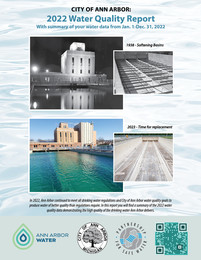
2022 Annual Water Quality Report

The 2022 Annual Water Quality Report is now available and explains where your drinking water comes from, what is in it and how we keep it safe. We are proud to continue to produce better quality water than State and Federal regulations require and deliver to you our award-winning drinking water.

City Receives CDC Water Fluoridation Quality Award

The City of Ann Arbor’s water system has recently been recognized for achieving the Center for Disease Control’s (CDC) Optimal Fluoridation Award. The city adds fluoride, a naturally occurring mineral, to water for its public health benefits relating to dental hygiene. Fluoride strengthens tooth enamel and prevents cavities. Since 1951, City Council has made the policy decision to fluoridate Ann Arbor’s drinking water. Water Treatment Plant staff constantly monitor fluoride in the city’s drinking water both at the plant and throughout the distribution system to maintain the CDC’s target concentration of 0.7 mg/L. Read the fluoride in Ann Arbor water fact sheet.

Babbling Brook

April Water Fact

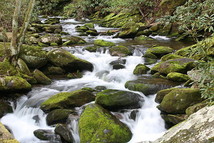
The sounds of nature, such as a babbling steam, can be calming and relaxing. Did you know that these same sounds can also give scientists insight into important things like water quality? 

 Youmi Hong, a master’s student at Illinois State University, has been researching why water in a local freshwater creek becomes murky, or turbid, every night. It is possible that this happens because wildlife is disturbing the creek bed. She conducted this research by leaving audio equipment in the creek for six months. This method allowed Hong to collect data without being in the water herself. The data collected allows Hong to see if there’s a connection between animal activity and the water quality, while also reducing the chance that the data would be influenced by her presence.  

 As she told Redbird Scholar, “Turbidity is important because a lot of the sediments can either harbor microorganisms or bacteria that can be extremely harmful to human life, especially because we drink a lot of the water that comes from small agricultural streams like this that feed into larger rivers that we use for our water sources.” 

 Cutting edge research like this has the potential to improve our water systems and protect our planet. Next time you visit an Ann Arbor park, take a listen to the sounds of nature around you. Who knows what nature will have to say! 

Read the full article at https://news.illinoisstate.edu/2023/03/stream-sounds-grad-student-listens-in-on-aquatic-life-to-solve-underwater-mystery/

April Water Champion

April Water Champion

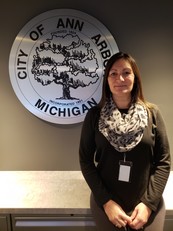
Congratulations to this month’s Water Champion, Susan Gotts. Susan is the Administrative Assistant at the Ann Arbor Water Treatment Plant. Have you called or visited the water plant during business hours over the past year? If so, you likely remember Susan. She has some role in nearly all projects that go through the water plant such as submitting paperwork, paying invoices, taking phone calls, scheduling, or welcoming visitors and is a tremendous asset to our team. She loves her job, and one of her favorite projects that sticks out from all the rest was helping with the stairwell mural project this year. Thank you, Susan for all that you do at the water treatment plant to keep the projects flowing!

WTP Project Plan

Water Treatment Plant Project Update  

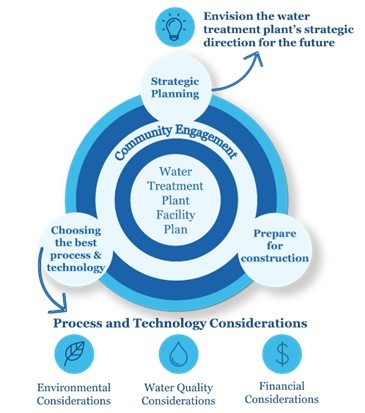
The Ann Arbor Water Treatment Plant Facility Plan to improve drinking water treatment systems began in mid-2022. The project includes a strategic plan, a study to choose the best technology, and pilot testing of the new technology, with community engagement throughout. Engagement is designed to make sure that the plan’s priorities and decisions reflect community priorities, because Ann Arbor residents will be the ones who enjoy and support the plan in the future.

The project’s community engagement included an online citywide survey designed to help shape the strategic plan and technology selection. This survey was also distributed in-person at events throughout the city, where team members talked with the public about the project and heard first-hand public priorities. The results of this survey – and how it impacted the study – are described here.

For further background about any of these project parts, visit the project website.

Survey Findings

The city is committed to incorporating community voices and priorities into the final project recommendations to City Council. A citywide survey on community priorities is a tool the WTP project team used to accomplish this goal. We identified two opportunities for the public to influence project decisions.

First, the Strategic Plan includes guiding principles, derived from the city’s overall mission, vision and goals. The Strategic Planning Team, which includes customers/ratepayers, environmental advocates, and a representative of historically underrepresented communities, validated these principles; the project team wanted to confirm that the community as a whole endorses the guiding principles as well.

Second, the Technical Analysis team is deciding on the best water treatment technology, using social, environmental, quality, and cost factors. Each factor is weighted to reflect its importance. We wanted the community’s help in assigning these weights.

The citywide survey therefore included two core questions. The first asked respondents to organize the guiding principles in priority order, and to write in any missing criteria. The second asked respondents to weight the social, environmental, and quality criteria. The survey resulted in these important findings:

  1. Reliable and safe drinking water are top priority for the community, consistent with the project team’s priorities
  2. The project’s guiding principles are all important, and they are complete. For more information, visit the project’s strategic planning website.
  3. The community believes that having access to drinking water, regardless of ability to pay, is important. The community believes that having a consistent water supply is critical

Many respondents wrote in suggestions. Most of these suggestions fell into two categories. Respondents want the city to know that removing contaminants (like PFAS and 1,4-dioxane) is of critical importance. Members of the public should know that the WTP currently has the technology to remove PFAS and other chemicals from Ann Arbor’s drinking water. Our award-winning drinking water is free from these contaminants.

And, respondents encouraged the city and WTP to communicate regularly about the project and drinking water in general. The WTP will continue its community engagement efforts for this project and for all its activities. You can meet our team in person at these upcoming events: Dance for Mother Earth, Earth Day and the Water Treatment Plant Open House on May 6. We’ll also be at several food distribution events in April. 

Implications for the Project

The survey findings have implications for the Strategic Plan and for choosing the right technology. The project team will recommend action steps for the strategic plan that reflect public priorities based on the survey results. With respect to choosing the best technology, the survey results affirmed the project team’s recommendation to pre-screen technologies and exclude those that fail to meet the city’s minimum standards for safe drinking water. The city’s standards are more strict than State and Federal regulatory requirements. Selection criteria for the technology that makes the cut will be weighted to reflect public priorities. This includes: ensure reliability; aligning with the city’s A2Zero carbon neutral goals; and building in flexibility to handle a wider range of water quality conditions, including increasing the proportion of well water.

Equitable Engagement

Hearing diverse voices through an approachable and welcoming process is an important component of the project’s community engagement. Although online surveys can reach broad audiences, they require technology, time, and interest to complete. To make sure we captured diverse voices in our survey responses, project team members met people where they are, using events throughout the city, including the Mayor’s Green Fair, the Farmers Market, and food distribution events. We brought mobile devices and helped community members complete the survey in real time. These efforts resulted in one of the city’s most diverse surveys to date. Part of the project team’s charge is to provide recommendations on community engagement for the future, and the team plans to recommend continued attendance at community events to increase equitable engagement in surveys.

 We continue to seek out diverse voices through our other project activities. We’ll keep meeting people where they are by attending community events. We’ll also share information through social media, press releases, the Ann Arbor Water newsletter, and the project and WTP web site. We’ll present about the project at public meetings. And we’ll invite members of the public to the WTP for tours and open houses.

Current Survey: Test Your Knowledge

Interested in testing your knowledge about drinking water treatment in the City of Ann Arbor? Our current citywide survey quizzes residents on the basics and shares the correct answers, so we hope you will learn something too. We’ll use the results to improve future communications, helping us provide more useful tours, articles, and notices. This upcoming quiz will be fun and accessible to everyone, even those who aren’t already in the know. The quiz will be open until May 5, 2023. You can find the link on the project website.