|
Having trouble viewing this email? View it as a Web page.
Spring 2026 Newsletter
Training Log
This newsletter provides training for any staff who assist with WIC sales in your store. Please have all staff handling WIC transactions and WIC benefits read this newsletter and complete the Training Log. Please keep this for your records. WIC staff will check your training logs during on-site visits.

Program Purpose
The Special Supplemental Nutrition Program for Women, Infants, and Children (WIC) provides eligible families with nutritious supplemental foods, nutrition education, breastfeeding support, and referrals to health care and social services. WIC has been proven to improve health outcomes for nutritionally at-risk women, infants, and children up to age five.1 The WIC Program is federally funded by USDA’s Food and Nutrition Services.
Impact on Food Insecurity: Research suggests that WIC participation decreases child food insecurity rates by at least 20%.2 Food insecurity among children is linked to poor health and developmental outcomes.3 WIC grocery stores and their staff play an important role in supporting the health of Maine families by providing access to healthy food options and helping to alleviate food insecurity.
I have found WIC to be very helpful for our family because it gets us through hard times when we are struggling with food. – Maine WIC Participant
|
Authorized Foods
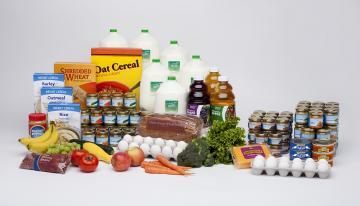
Did you know that there are more than 10,000 products on Maine WICs Approved Product List (APL). The foods in each WIC family’s monthly supplemental food package are tailored to meet their specific nutrition needs and food preferences. Current WIC Food categories include:
| • Milk and milk alternatives |
• Beans/ Peas/ Lentils |
• Breakfast Cereal |
| • Cheese, tofu and yogurt |
• Whole Grain Items |
• Canned Fish |
| • Eggs |
• Fruits and Vegetables |
• Infant Formula |
| • Nut and seed butters |
• Juice |
• Infant Food |
Tools to identify WIC-eligible foods include:
The WIC Shopper App scans a product’s barcode and verifies if the item is WIC-eligible. With this app, you can also submit new products for review using the “I couldn’t buy this!” button. If the product meets nutritional and other state requirements, it will be added to the APL.
The Food & Cashier Guide lists types of foods allowed or not allowed in each food category.
For a full list of WIC Approved foods, you can download our current APL from the Maine WIC website.
|

What’s New
The USDA recently updated the nutritional requirements for yogurt. As a result of the change, certain yogurt products have been removed from the WIC-approved list. Please ensure that your POS provider regularly downloads the latest WIC Approved Product List (APL) so that eligible items scan accurately at checkout, preventing transaction denials and payment issues.
Note: yogurts packaged in tubes are no longer WIC-approved.
|

WIC Training
Stores in the following counties are required to attend a training session this summer: Carroll NH, Coos NH, Cumberland, Kennebec, Rockingham, Somerset, Strafford NH, and York. At least one person from each store must attend. This training is designed to empower store staff with the confidence to conduct WIC transactions effectively.
While attendance is mandatory for stores in the specified counties, this training is open to any store representative that needs training or support, subject to space availability. Interested vendors can register through the link provided below.
If you have questions about training or require individualized technical support, please call: 207-287-3991 or email: WICVendor@maine.gov.
|
Minimum Stocking Requirements
Stores are required to stock WIC-approved foods and keep a minimum inventory available to ensure participating families can always find their prescribed foods without visiting multiple stores. The most up to date Minimum Stocking Requirements (PDF) can be found on the Maine WIC Website.
|

Transacting Benefits
Here are some transaction tips for store cashiers:
Tip 1: Issues with Fresh Produce…likely a mapping issue
All fresh produce is eligible for WIC. If a fresh produce item does not scan as WIC-eligible, this is a signal that it was not mapped correctly in the POS system. Mapping allows for the quick addition of fresh produce items to the APL by linking (i.e., mapping) produce items to a similar price look up code (PLU) already on the APL.
If a fresh produce item fails to scan as WIC-eligible and the participant has enough fruit and vegetable benefits on their balance inquiry receipt, it is likely due to a mapping error. Inform the participant that they can either select another produce item or remove that item from their order. If your store accepts the generic WIC PLU code of 4469, this will allow the customer to receive the item immediately. Be sure to note the item and report the mapping issue to someone responsible for ensuring that the produce item is correctly mapped.
Tip 2: Receipts
Please make all receipts available to the WIC customer during the transaction as each provides valuable information about their benefits and items covered. The balance inquiry receipt provides a snapshot of the customers beginning food balances.The mid-transaction receipt explains which products will be covered by WIC benefits and the final receipt includes the participants ending balance. If there are any issues during the transaction, the receipts contain valuable information to help solve the issue.
Tip 3: Look for Common Causes
There are some common reasons why an item may not scan properly. For instance, an item could be WIC-eligible, yet the customer may not have enough benefits to cover it. Checking the participant’s beginning balance can help identify this issue. Additionally, the fat content of milk or yogurt must match what is specified in the participants’ benefits. Another common cause of a transaction failure is the package size; approved products must meet container size requirements for each food category. Consult the WICShopper App or the Food and Cashier Guide for a list of eligible package sizes.
|

Incentive Item Policies
WIC participants must receive the same incentives, discounts, and promotions when shopping as other customers. This includes:
-
Manufacturer Coupons: Shoppers can use standard paper or digital coupons on WIC-approved items. The value of the coupon is deducted from the total charge sent to the state WIC program.
-
Buy One, Get One (BOGO): WIC participants can receive BOGO deals. If a WIC-approved item is on a BOGO sale, the first item is deducted from the participant's WIC benefit balance, and the store must provide the second item for free as part of the promotion.
-
Sale Prices: Retailers must always charge WIC transactions at the current sale or promotional price, rather than the standard shelf price.
-
Loyalty Rewards: Shoppers can scan store loyalty cards, apply member discounts, and accumulate store rewards points on their transactions.
|

Vendor Complaint Process
If you encounter a WIC customer in need of extra instruction on how to locate the right foods or use their benefits correctly, please let us know. Local WIC agencies have staff members trained to provide education and shopping support. Should a WIC shopper need more support than you can provide, encourage them to reach out to their local WIC office or collect the last 4 digits of their card and the time of the transaction and contact the State WIC Agency at 207-287-3991 or WICVendor@maine.gov. We will ensure that the customer receives the extra support they need to shop with confidence.
|
Policy Corner
Authorized Formula Sources
WIC Vendors are required to purchase infant formula from a WIC-authorized Infant Formula Supplier. You can find the current list of authorized formula suppliers and information on how to submit suppliers here: Authorized Infant Formula Supplier List (PDF)
Sanction System
The Maine WIC Program sanction system is predominantly a pattern-based sanction system. The Program may initiate administrative action to assess a civil money penalty, terminate for cause, or disqualify vendor for non-compliance on the basis of an incident of violation or a pattern of violations. For more details, refer to the WIC Program VM-6: Sanction System.
Claims Procedures
If the WIC Program detects overcharges by an authorized vendor, it will establish a claim against the vendor. The Program will provide the vendor with an opportunity to justify or correct the vendor overcharges. If satisfied with the justification or correction, the WIC Program will adjust the proposed claim accordingly. If a claim against the vendor remains, the WIC Program will issue a final claim. The final claim must be paid within 30 days of issuance, or the vendor agreement will be terminated. Claims against vendors are not subject to administrative appeal.
This institution is an equal opportunity provider. Non-Discrimination Statement
Maine WIC Nutrition Program
Department of Health & Human Services
Center for Disease Control & Prevention
286 Water Street
Augusta, ME 04330
207-287-3991 1-800-437-9300
TTY: Maine Relay 711
email: WICVendor@maine.gov
website: Maine.gov/WIC
|