|
In this update:
May is National Stroke Awareness Month. Strokes happen
when blood flow to your brain stops. Within minutes, brain cells begin to die.
There are two kinds of stroke. The more common kind in the United States is caused by a blood clot
that blocks or plugs a blood vessel in the brain. A more
uncommon type of stroke is caused by a blood vessel that breaks and
bleeds into the brain. A stroke can happen to anyone at any age, but many
people do not know the signs and symptoms of stroke:
- Sudden numbness or weakness in the face, arm, or leg, especially on one side of the body.
- Sudden confusion, trouble speaking, or difficulty understanding speech.
- Sudden trouble seeing in one or both eyes.
- Sudden trouble walking, dizziness, loss of balance, or lack of coordination.
- Sudden severe headache with no known cause.
Call 9-1-1 immediately if you or someone else has any of these symptoms.
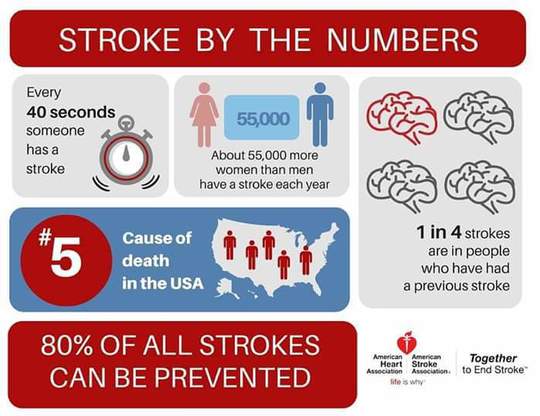
Stroke is the fifth leading cause of death in the United States
and a leading cause of severe disability. On average, one person dies from
stroke every 4 minutes. The good news is that 80
percent of all strokes can be prevented and timely access to the latest
therapies can greatly reduce disability from stroke. For more information
about stroke, including risk factors and symptoms, visit www.mainehearthealth.org
Maine CDC will observe Hepatitis Testing Day on May 19.
It
is estimated that there are more than 3.9 million individuals living with
hepatitis C in the United States, with the highest risk factor for new cases
being injection drug use. In both 2014 and 2015, the State of Maine had
more than triple the number of cases of acute hepatitis C reported in
2013. During 2014 and 2015, approximately two-thirds of new cases
identified injection drug use as a risk factor, and of these approximately 40
percent also named other (non-injection) drug use as a risk factor.
Hepatitis C virus (HCV) is nearly 10 times as infectious
as HIV, can live on open air surfaces for up to seven days and has been
detected in sealed containers for up to two months. HCV can be contracted
by sharing syringes and needles, but it is more efficiently transmitted via
other shared injection equipment.
Approximately
80 percent of individuals infected with HCV will have no symptoms. Most
people living with hepatitis C do not know they are infected and can live with
HCV for decades without feeling sick. If left untreated, HCV can lead to
serious liver damage, including cirrhosis and liver cancer. Hepatitis C
infection is the leading cause of liver cancer and the main reason for liver
transplants in the United States. It
is both preventable and treatable.
Those at risk for hepatitis C are
urged to get tested for HCV every six months.
It
is important for people to talk to their health care providers about their risk
for hepatitis C. For more information, visit: http://www.cdc.gov/knowmorehepatitis
No cost hepatitis C testing is available for under or
uninsured high-risk individuals. For more information, visit: http://www.maine.gov/dhhs/mecdc/infectious-disease/hiv-std/services/hepatitis-testing-site.shtml
Local data about Lyme disease and deer ticks are now
available through the Maine Tracking Network interactive data portal. The major
release of data responds to increasing requests from municipalities and
residents trying to make decisions about local disease prevention efforts.
Users can now explore reported cases of Lyme disease for
the years 2008-2014 for hundreds of Maine towns, and view town-level maps that
show where Maine residents have reported acquiring deer ticks.
The Maine CDC also released 2015 Lyme disease incidence
and adult prevalence data within the portal. These data are available for
counties, public health districts and the state, with 2015 town-level incidence
data to follow later this year.
Explore the data: data.mainepublichealth.gov/tracking
U.S. CDC has issued Health, United States, an annual report on trends in health statistics. This year's report includes a special feature on
racial and ethnic health disparities. The report is available at http://www.cdc.gov/nchs/hus/index.htm
Zika virus is primarily spread through the bites of infected
mosquitoes. The types of mosquitoes that can transmit Zika virus are not
found in Maine.
Maine CDC is issuing biweekly reports on Zika, which are available at http://www.maine.gov/dhhs/mecdc/infectious-disease/epi/vector-borne/zika/index.shtml
There is no vaccine to prevent Zika virus infection and there is
no specific treatment for people who become infected. Although Zika virus is
primarily spread by infected mosquitoes, exposure to an infected person’s blood may also result in transmission. It can also be spread
from male to female and male to male through sexual contact.
Only one in five people infected with Zika shows symptoms which
include fever, rash, joint pain and red eyes. Illness is usually mild with
symptoms lasting from several days to a week. Zika can cause microcephaly and other birth defects if infection
occurs in pregnant women.
The
best way to prevent infection is to not get bitten by mosquitos when travelling
to Zika affected areas and:
- Wear long sleeves and long pants
- Use an EPA approved repellent on skin and
clothes
- Stay in places with air conditioning or the
use screens on the windows and doors to help keep mosquitoes out.
- Sleep under a mosquito bed net if you are
overseas and outside an not able to protect yourself from mosquito bites
- Prevent sexual transmission by using condoms
or not having sex
For more information:
|