JUNE 2026
In accordance with previous years, Maine DEP is expecting the DMR-QA Study 46 to open the first week in June. All facilities enrolled in the DMR-QA program should receive an email from EPA announcing the opening of the study, along with an announcement letter. Once you receive the study packet, please confirm receipt with Brett Goodrich, the DMR-QA Coordinator, by emailing Brett.A.Goodrich@maine.gov.
Please review the letter carefully as it contains important forms that must be filled out along with due dates for results. Be sure to check your email spam folder periodically as the announcement email from EPA may end up there.
Maine DEP will forward a copy of the announcement letter as soon as it is received from EPA. You can also go to the EPA website, https://www.epa.gov/compliance/discharge-monitoring-report-quality-assurance-study-program to download the letter when available.
You do not need to wait until you receive the letter to order your DMR-QA supplies and begin analyses of the samples. Make sure that you choose the DMR-QA and/or Water Pollution (WP) studies that are valid during the DMR-QA study period, typically June – August for DMR-QA and January – August for WP studies. Actual dates will be listed in the EPA announcement letter.
This year, facilities that have Enterococci Bacteria (Entero) in their MEPDES permit will be required to perform Proficiency Testing (PT) for Enterococci bacteria during the DMR-QA Study 46 testing period. Currently, Enterococci bacteria testing is not available under the DMR-QA program, so facilities must use a blind, Water Pollution (WP) Study to fulfill this requirement. Enterococci testing must be performed in accordance with 40 CFR 136.
If you have any questions or need to update your contact information, please contact Brett Goodrich at Brett.A.Goodrich@maine.gov or call 207-450-5590
Copyrighted material. Reprinted and edited with permission from Environmental Leverage, www.environmentalleverage.com. The appearance of external hyperlinks does not constitute endorsement by the Maine Department of Environmental Protection of the linked web sites, or the information, products or services contained therein.
Learning to identify and quantify the major categories of higher life forms, also called indicator organisms, is a predictive method to examine live microorganisms (protozoa, rotifers, filaments) to assess biomass health, settleability, and detect process issues before they appear in chemical tests. This is best performed using a compound phase contrast microscope with magnification capabilities ranging from 100x to 1000x. The discussion below identifies the major categories and impacts on activated sludge process control.
Amoebae are single celled microorganisms. Amoebae are e motile by pseudopodia, also known as "false feet". Amoebae are divided into two different types, testate and naked. Testate amoebae are those that have shells (or tests) and naked amoebae do not have shells. The shells can be proteinaceous or siliceous shells. A naked amoeba might make you think of the movie "The Blob" as they can slowly spread out their protoplasm in any direction. They eat by engulfing their food. They range in size from 10-200 μm. Amoebae tolerate low D.O. environments. When Amoebae are dominant, this indicates a young sludge age or a recent high BOD loading High F/M conditions are present. This is an Arcella. They are usually easy to spot since they can sometimes look like a donut! They can sometimes indicate the presence of heavy metal salts.
Amoeba can be found during plant start-ups or often following upsets. They can be used as an indicator for a process control tool to cut back wasting, increase a thicker RAS short term or use bioaugmentation if limited by hydraulic capabilities.
Flagellates are single-celled protists with one or more flagella; whip-like organelles often used for propulsion. The flagella are used for movement through the liquid. Some flagellates live as colonial entities, while others function as a single cell. Flagellates can be plant or animal-like. Plant-like Flagellates contain chlorophyll and are autotrophic. Animal-like Flagellates are colorless heterotrophs. Many times, flagellates are overlooked and must be viewed at 400x. If Flagellates are dominant, this means a young sludge, high F/M or low MCRT.
Like their relatives, the amoebae, flagellates are usually present when there are large amounts of soluble food available (high F/M or high BOD). They are found during start up when the sludge is young or after an upset, but will quickly predominate over the amoebae because they are more efficient feeders. They are often found in trickling filter, oxidation ditch, ponds, lagoons and activated sludge. Flagellates are one of the few protozoan forms present in sludge that are strongly loaded. Their presence may indicate high soluble BOD levels.
Flagellates usually are present in very large numbers during initial start- up of a wastewater treatment plant, during recovery from a toxic discharge to the treatment plant, or at low D.O. levels. If flagellates are present as the dominant protozoan group, this could indicate an unstable wastewater environment and a sludge biomass that is very young.
The Ciliates are more complex organisms than the amoebae and flagellates. Free swimming ciliates are covered with cilia, hair-like projections, which are uniform and aligned in rows. The ciliates move and capture food by means of the cilia. The anterior portion of the ciliate is the oral region, which is also covered with cilia.
Free swimming ciliates range in size from 20-400 μm and have two kinds of nuclei. Sexual reproduction is by conjugation. Free-swimmers swim faster due to more cilia than flagellates, so they can compete better for food. Crawling ciliates have cilia mainly on the lower surface of their bodies that make them appear to be legs. They may look like lady bugs crawling around on the floc structures. Ciliates feed on bacteria not on dissolved organics. While bacteria and flagellates compete for dissolved organics, ciliates compete with other ciliates and rotifers for bacteria. They are usually an indicator of good quality sludge. They are typically found in young to medium age sludge.
Free swimming ciliates or crawling ciliates are found in various types of water, including freshwater and wastewater. Free swimming ciliates are important because they work with the bacteria. They feed on the bacteria and thus help to clarify the effluent. These can be found during most sludge ages but are dominant during the middle sludge ages.
Some types commonly found in wastewater are Paramecium, Litonotus, and Coleps. Common types of crawling ciliates found in wastewater are the Genus: Aspidisca and Euplotes.
Next time we will discuss Stalked Ciliates, Rotifers, Nematodes, and Tardigrades (Water Bears).
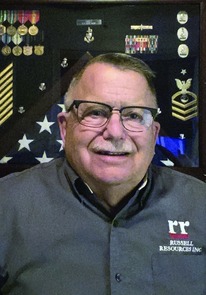
Kudos to John Hart, one of the longest serving Water Professionals in the State of Maine!
During his illustrious career spanning more than 5 decades, John has held varying positions in both public and private organizations, and has received numerous awards for his public service roles.
John began his career right out of high school by attending the Wastewater Training Institute in South Portland. He began working as an operator at the Scarborough Sanitary District, where according to John, “I could have stayed for my whole career” but saw many other opportunities. He spent many years as Deputy Director of the City of Saco Water Resource Recovery Department (WRRD), providing management of the 4.2 mgd facility, including stormwater treatment, 29 pump stations, collection system, Industrial Pretreatment and general oversight of various construction projects.
After retiring in 2016, rather than resting on his laurels, John embarked in a new direction performing technical sales with Russell Resources, a manufacturer representative firm based in Brewer. As John says, “I have a hard time saying no and a hard time slowing down.” He credits his 50+ years of hands-on and supervisory experience to sharing best practices and expertise with other operators. “The water environment industry is a family, and I feel very connected to a lot of people in it. I wanted to continue in some way to add value and be of service.”
John first joined WEF in 1974, and after a lifetime of service became a WEF Fellows recipient in 2014, one of the organization's highest professional honors that recognizes long-time members who have made outstanding, lasting contributions to the global water sector through exceptional leadership, technical expertise, and service. He has held numerous positions and received many awards from DEP, NEWEA, MEWEA and AWWA. In addition, John served 32 in the U.S. Coast Guard Reserves, where he achieved numerous qualifications and leadership roles.
While he has no plan to slow down, John offers this advice to clean-water professionals nearing retirement, “Don’t let all your experience and skills go to waste. Try to repurpose it as much as possible. Be engaged and try to mentor someone — encourage a replacement.”
Thank you John for your many years of outstanding service!
|
The Department of Environmental Protection is proposing two new rulemaking efforts:
- An amendment of Chapter 595: State Revolving Fund. (Jointly with the Maine Municipal Bond Bank) The purpose of the amendment is to update language related to interest rates and administrative fees to reflect current program requirements and ensure the long-term sustainability of the fund. Chapter 595 has been posted for public comment until June 12, 2026. The Draft rule and link for submitting comments can be found here: Chapter 595: Clean Water Revolving Fund
- An amendment of Chapter 579: Classification Attainment Evaluation Using Biological Criteria for Rivers and Streams. The purpose of the amendment is to incorporate additional numeric aquatic life criteria for fresh surface waters based on macroinvertebrate and algal communities. A request to post Chapter 579 for public comment and to schedule a public hearing will appear on the July 2, 2026 Board of Environmental Protection agenda.
The Department welcomes your input on these proposals. Please contact Matthew Hight at matt.hight@maine.gov or 207-719-0703 for additional information. There will be opportunities for public comment on the draft rules.
To keep informed about the rulemaking process you may sign up for email notices here or visit the Department’s rulemaking page at https://www.maine.gov/dep/rules/
Lagoon Day!
Maine Rural Water Association (MRWA) is pleased to present this year’s Lagoon Day at the Thomaston Environmental Department Lagoon System on June 18, 2026. Join other lagoon system operators for a full day of classes, tours, discussions, networking, and a catered lunch!
The four, 90-minute sessions include:
- Wastewater Treatment Facility Tour (Tony Leo, Thomaston Environmental Department)
- Seasonal Process Controls for Wastewater Lagoon Operations (Aaron Gaylord, Maine Rural Water Association)
- Lagoon Mixing Optimization: Hydraulic Performance and Solids Management with Lagoon Master Systems (Don LeBlanc, DLVEWS)
- Lagoon Aeration Optimization: Oxygen Transfer and Biological Treatment Performance with Lagoon Master Systems (Don LeBlanc, DLVEWS)
Don’t miss out your chance to meet other lagoon system operators to share experiences and learn new skills. Go to Lagoon Day 2026 - Maine Rural Water Association to find out more about the event and to register.
Questions? Please contact the Training Department at (207) 737-4092 or email trainingdepartment@mainerwa.org.
Virtual BOD Class Taught by Phyllis Rand
Biochemical Oxygen Demand (BOD5) is one of the most commonly performed tests in the wastewater treatment plant laboratory. Despite the prevalence of this test, it is often a challenge to set up and to troubleshoot.
Join JETCC and Phyllis Rand of Compass Rose Training Solutions. on June 9 from 12:15 – 3:30 for this live, virtual class. Topics include:
- Setting up the BOD5 test
- Lab equipment
- Calculations
- Quality control tests
- Troubleshooting guidance
- Using BOD5 data to calculate Food-to-Microorganism Ratio (F:M) for wastewater treatment plant process control
Interactive poll questions will be administered throughout the course to reinforce learning.
Sign up at Laboratory Analysis: Biochemical Oxygen Demand (J2625) (3 TCHs) - NEIWPCC Training Registration.
Electricity Basics for Water & Wastewater Operators
On Wednesday June 10, 2026 JETCC will present a live, virtual class, Electricity Basics for Water & Wastewater Operators taught by Scott Lavine of AC Electric. The class offers 3 TCHs.
From basic terminology and units to plant power distributions, this class is designed for operators to better understand how electrical systems work, device functionality and operations, electrical systems maintenance, and common issues. This course will emphasize safety, electrical risks, and the importance of having quality personnel troubleshoot electrical issues.
Register at Electricity Basics for Water & Wastewater Operators (J2626) (3 TCHs) - NEIWPCC Training Registration.
Water & Wastewater Professionals Day with the Portland Sea Dogs!
There’s no better way to officially begin summer than an all-you-can-eat BBQ with the Sea Dogs at Hadlock Field in Portland! Join MWUA, MEWEA and all your friends at Water & Wastewater Professionals Day for a fun-filled event to honor all the hard work you put in during the year.
Click Water & Wastewater Professionals’ Day at the Sea Dogs - MWUA for more information and to purchase your tickets.
Save the Date – MWUA Annual Summer Outing 2026
Mark your calendars for the MWUA Annual Summer Outing on August 4, 2026 at Lost Valley Ski Resort in Auburn. A fun-filled day of learning, networking, and activities. Watch your emails for more information.
NEIWPCC Announces No-Cost, Self-Paced Training
NEIWPCC is pleased to announce the release of two self-paced courses, Basic Municipal Wastewater Treatment and Wastewater, Process, Troubleshooting, & Optimization. The on-demand training is delivered via an interactive platform designed to be comprehensive and engaging for self-study. These classes are being offered free of charge under NEIWPCC’s Training and Technical Assistance Program, supported by EPA Grant TW84064801.
Sign up for Basic Municipal Wastewater Treatment here: https://payments.neiwpcc.org/product/basic-municipal-wastewater-treatment-26s-sp003-20-tchs/
Sign up for Wastewater, Process, Troubleshooting, & Optimization here:
https://payments.neiwpcc.org/product/wastewater-process-troubleshooting-and-optimization-26s-sp004-8-tchs/
Questions? Contact Josie Fazio, jfazio@NEIWPCC.org, 978-349-2525.
1. The pressure gauge on the discharge side of a pump reads 19 psi. What is the discharge pressure head? Use the conversion 1 psi = 2.31 ft head.
A. 55 feet
B. 44 feet
C. 33 feet
D. 22 feet
2. What is the name of one chemical that can be added to remove residual chlorine?
A. Sodium thiosulfate
B. Sodium hydroxide
C. Sodium chloride
D. Sodium hexa-metaphosphate
3. The precision of an instrument used to perform a laboratory test is a measure of:
A. The accuracy of the average measurement
B. The accuracy of the smallest or largest measurement made
C. The values of all measurements repeatedly
D. The ability to repeat results within a small margin of error
4. A rectangular channel is 18 inches across by 12 inches deep. If the water in the channel is 9 inches deep and moving at the rate of 4 feet per second, how many gallons of water will move through the channel in 2 hours? Use the equation Flow (Q) = Velocity (V) X Area (A) and the conversion 1 gal = 7.5 cu. ft.
A. 16,200 gallons
B. 91,000 gallons
C. 243,000 gallons
D. 162,000 gallons
5. The basic unit of electrical current is the:
A. Watt
B. Ohm
C. Volt
D. Ampere
Answers
1. B. 1 psi = 2.31 feet of water. 19 X 2.31 = 43.89 feet (round up to 44).
2. A. Sodium thiosulfate is typically used to dechlorinate.
3. D. Precision refers to the degree to which repeated measurements or observations under unchanged conditions show the same results. It measures reproducibility and consistency rather than closeness to a true value (accuracy).
4. C. First, find the cross sectional area in square feet:
18 in/12 in/ft X 9 in/12 in/ft = 1.13 square ft.
Next, multiply the velocity by the cross sectional area to find the flow rate in cfs:
1.13 sq. ft. X 4 ft/sec = 4.5 cu. ft / sec (cfs).
Next convert the flow from cubic feet/second (cfs) to gallons per minute (gpm):
4.5 cfs X 7.5 gal/cf X 60 sec/min. = 2025 gpm.
Finally, to find the amount of water in 2 hours: 2025 gpm X 120 min. = 243,000 gallons
5. D. Ampere (amp for short).
|





