Browntail Moth Update #9: August 26, 2026
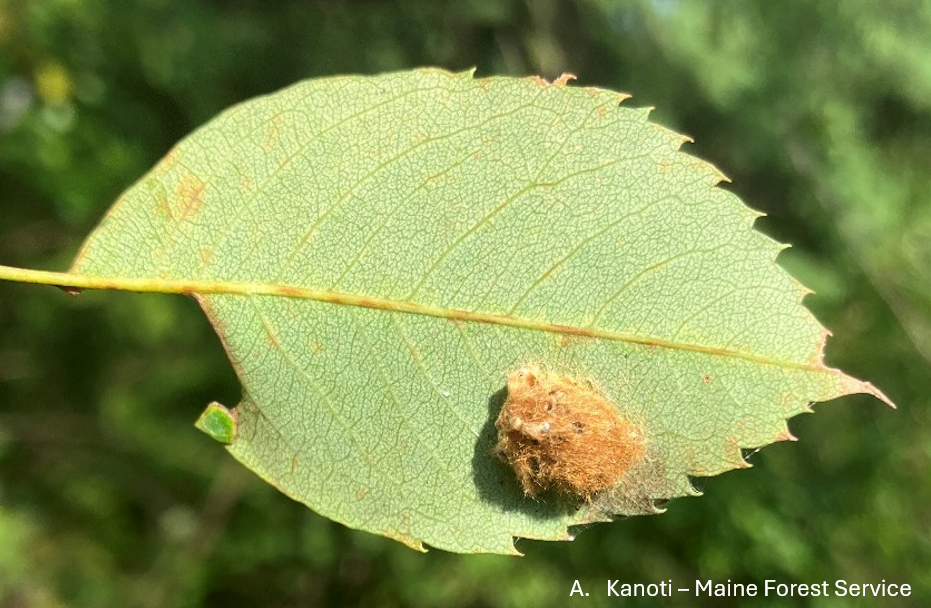
In August, browntail moth caterpillars hatch from their egg masses and begin feeding on the late summer host foliage. Browntail egg masses are small, hairy, and light tan in color and are typically found on the underside of oak, apple, cherry, elm, birch, and other hardwood host leaves.
Browntail moth egg mass on the underside of a host leaf in Old Town, ME.
Newly emerged browntail caterpillars are too small to eat all parts of the late summer leaves, so they graze only the outer surface, leaving behind the leaf skeleton. Over time, this process of skeletonization causes the leaf to die and turn a copper color – a clue we use to help narrow down which defoliator is causing the damage in late summer.
In most areas of the state with recent browntail moth populations, egg masses are difficult to spot. You may need to wait until late autumn, after the winter webs tighten up, to get a good understanding of the potential browntail moth impact next spring.
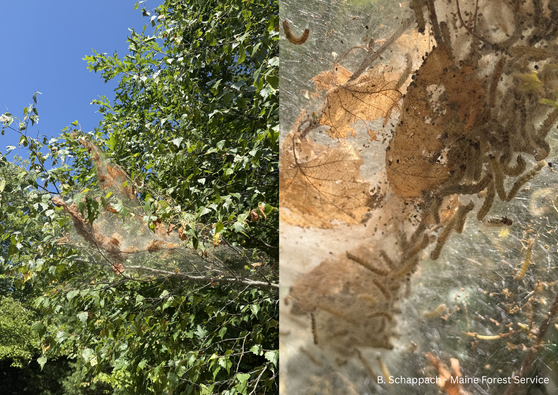
Over the past month, we have received many reports of large webs in the trees. Most commonly, webs larger than a football in late summer are created by a native caterpillar, fall webworm (Hyphantria cunea) and are not created by browntail caterpillars.
While these fall webworm caterpillars can create webs that get very large - sometimes covering an entire tree - they are not a forest health concern and do not cause a rash in humans. At most, their webs can be unsightly for a couple months until they naturally break down in the winter season.
If you see webs in your trees in late summer and want to know how to tell the difference, consider:
- Does the web cover entire branches, or sometimes the whole tree?
- Are there large (greater than 1 inch long), hairy, yellowish-brown bodied caterpillars crawling on or inside the web?
--> If so, you are likely looking at native fall webworm caterpillars. Celebrate their success and leave them be with the knowledge that they are a great food source for birds and are described as "parasitoid hotels" in Wagner's Caterpillars of Eastern North America guide (2005), which help support other beneficial insects in our forests.
Native fall webworm caterpillar web in late August (left). Close up of fall webworm web, showing hairy, yellow-bodied fall webworm caterpillars on and inside their web (right). These webs will break down on their own in the next few months.
But, if the web:
- Is only the size of your palm,
- Has silken pathways leading up the branch,
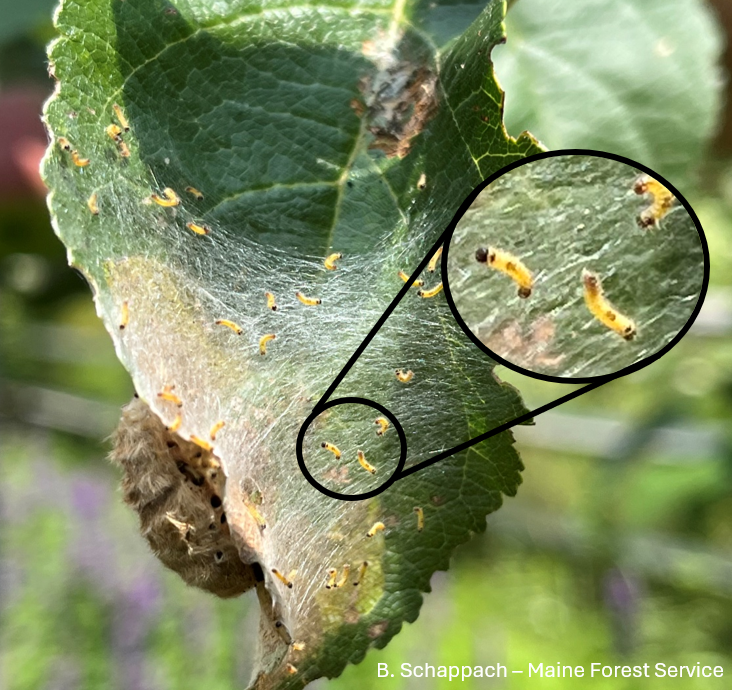
- Has small (~less than 1/2 inch long) pale yellow caterpillars with a black head and two dark spots near its head,
--> You are likely looking at non-native browntail moth caterpillars. Although it is too late for effective management in the late summer, make a plan to monitor these webs and remove them in the winter season to reduce browntail moth populations on your property. Read our Browntail Moth Brochure for tips on how to recognize and remove winter webs.
Young browntail moth caterpillars are pale yellow and have dark spots near their black head. By late autumn, these webs will be tightly woven and remain on the tips of the branches of their host trees.
As we transition from summer to autumn, fallen leaves may harbor toxic browntail moth hairs and cause a rash. If you've had browntail caterpillars on your property in the last 3 years, their hairs may be lingering.
During fall leaf clean-up:
- Wear protective gear to reduce exposure to hairs: long sleeves, long pants, socks, closed-toed shoes. Goggles and a mask may also be helpful.
- Perform yardwork on wet days, or early in the morning to decrease the likelihood of the hairs getting stirred up.
- Shower after being outside to rinse off any hairs that may have settled on your skin.
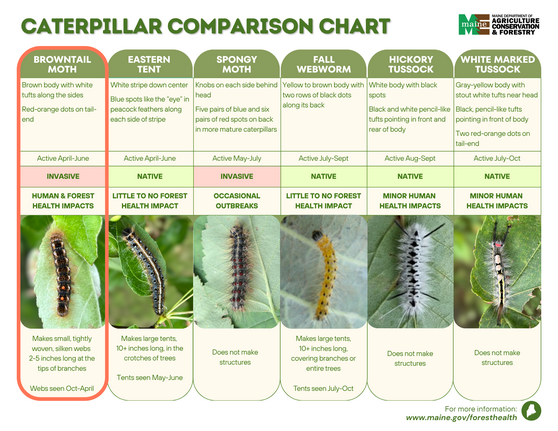
Maine is home to many different species of caterpillars seen each spring, summer, and autumn. This chart can help you distinguish some of the species most commonly mistaken for browntail moth caterpillars and when you may see their webs and tents in your trees.
A chart comparing browntail moth caterpillars with other species commonly mistaken for browntail caterpillars: eastern tent, spongy moth, fall webworm, hickory tussock, and white marked tussock caterpillars. Click image to enlarge.
|