Browntail Moth Update #6: June 18, 2026
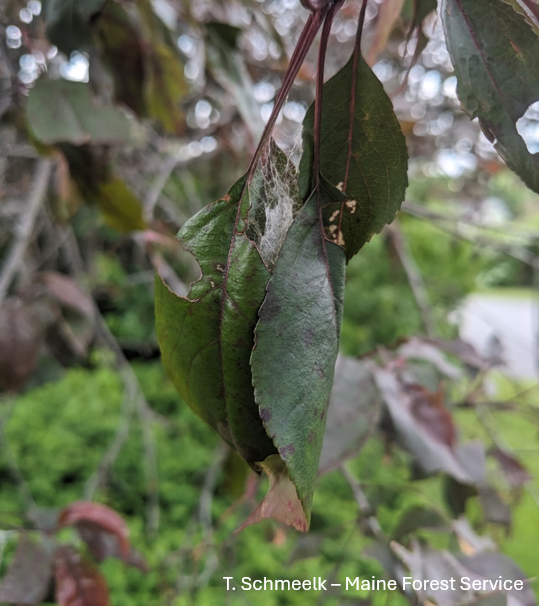
At our sites this week, most, if not all, of the caterpillars still present have spun pupal packets among the leaves or in sheltered places in preparation for their next life stage. They will shelter in these pupal packets for a couple of weeks and emerge as adult moths in early July.
The pupal packet can be composed of leaves silked together, with multiple individuals pupating together within the same packet. As the caterpillar prepares for pupation, it sheds its last caterpillar skin, incorporating the irritating hairs into the pupal packet. This provides an added layer of protection when the pupae are immobile and most vulnerable.
People should take care not to touch or disturb these packets unless necessary. Common non-host tree areas where cocoons may be found include sheltered areas on buildings (roof overhangs, siding, decks), vehicles, or outdoor equipment. Disturbing these pupae is a common cause of the rash.
If removal is required:
- Use protective measures like personal protective equipment to avoid skin contact with the toxic hairs
- Cocoons/packets can be eliminated by placing them in a plastic bag or container, then freezing or soaking them in a bucket of soapy water before disposing of them in the trash.
Image: A fully constructed browntail moth pupal packet in a host tree.
Thank you for your reports!
Browntail caterpillars at our monitoring site in Turner have now reached 100% mortality, and our Old Town monitoring site has reached 95% mortality. In addition to our monitoring sites, we confirmed public reports of diseased browntail moth caterpillars in four towns: Bangor, Bridgton, Brewer, and Naples. If you are seeing diseased browntail moth caterpillars in other towns, please take a photo and include it in your report form!
What's Next? Adult browntail moths are expected to begin emerging in early July, marking the start of the moth flight season. Visit our FAQ page for more information on the browntail moth life cycle, management strategies, and health impacts.
|