Browntail Moth Update #7: June 13, 2025
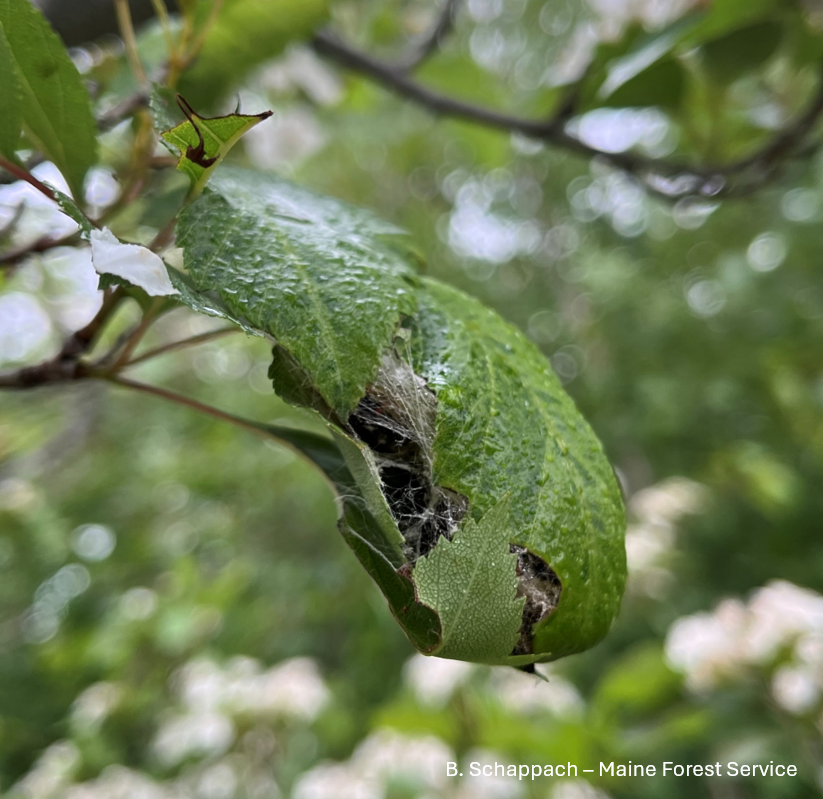
This week we observed mostly late instar browntail caterpillars at our monitoring sites and expect them to continue feeding for another week or so. In some areas, browntail caterpillars were preparing to pupate. Pupation occurs after a caterpillar reaches its final instar and hormonal changes cause it to stop feeding and begin to change into an adult moth. When browntail moth caterpillars prepare to pupate, they create a protective structure called a "pupal packet" by tying leaves together with silk. These silky pupal packets help hide them from predators and shelter them from weather as they become a flying adult.
Image: Browntail moth caterpillars pupating inside of a silky pupal packet made from their host tree leaves in Old Town.
Sometimes, these caterpillars can pupate in different areas besides host leaves: sheltered areas on buildings (roof overhangs, siding, decks), vehicles, or outdoor equipment. The silky pupal packets contain the last cast skin of the caterpillar and are full of toxic hairs. People in areas with browntail moth populations should take precautions to minimize exposure to the caterpillars’ hairs. Use protective measures to avoid skin contact with the toxic hairs when carefully removing caterpillars or cocoons. Eliminate caterpillars and cocoons by moving them to a plastic bag or container, then freeze them or soak them in a bucket of soapy water before disposing of them in the trash.
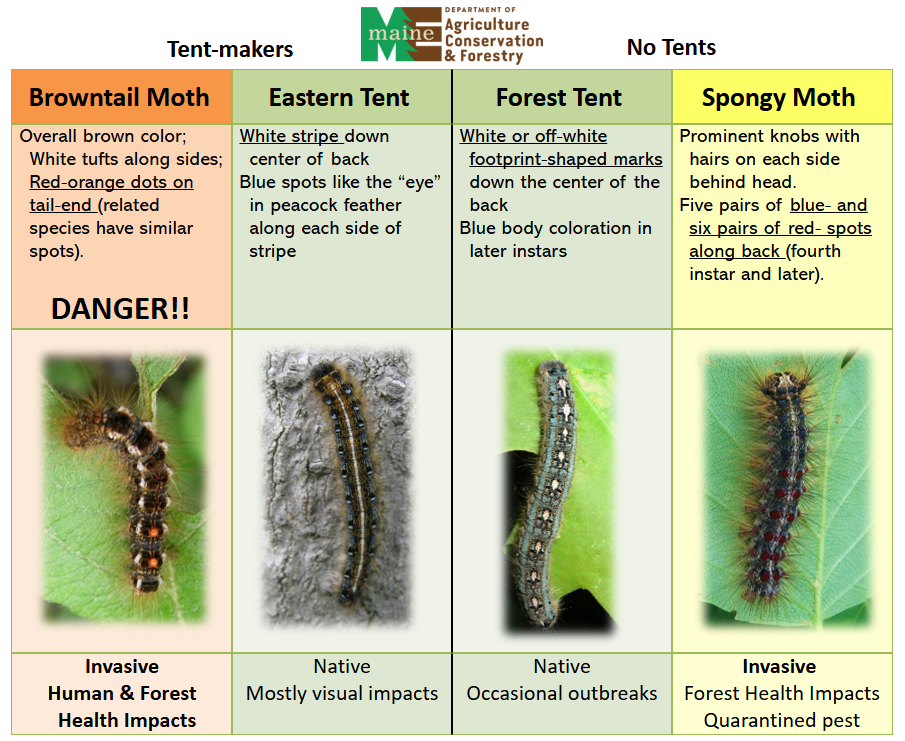
Which caterpillar is eating my tree?
As caterpillars in Maine become larger and more apparent, there are a few hairy caterpillars that can get mixed up with browntail moth. Remember, late instar browntail moth caterpillars are dark brown with two red-orange dots on their tail end.
Any species of hairy caterpillar has the potential to be irritating in sensitive individuals, but only browntail moth caterpillars have toxic hairs that cause a poison ivy-like rash.
 Find more information on browntail moth life cycle, management, human and animal health concerns, and more on our FAQ page:
|