Browntail Moth Update #2: May 8, 2025
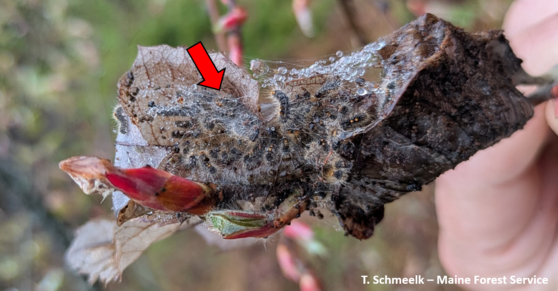
Across our monitoring sites this week, we observed browntail caterpillars huddled under the cover of their webs. As the caterpillars grow and become more active, they create gauzy silk that helps protect them from rainy weather and will add to the size of the web over the coming months.
The current pattern of weather is beneficial to the pathogens that control browntail populations. If the precipitation persists further into May and June, we might see a continued decline in the browntail population in the areas that are experiencing elevated levels in portions of Androscoggin, Cumberland, Franklin, Hancock, and Oxford Counties.
Host tree development is progressing and many of the trees at each site are now finally starting to break bud and push out leaves. The evolutionary advantage to building their winter webs on the branch tips is that the small caterpillars are close to the nutritious newly emerging leaves.
Image: The underside of a browntail moth winter web showing the caterpillars huddled together under the web and the gauzy silk (indicated by the arrow) that will expand the size of the web over the coming weeks.
In areas with a history of infestation or with an active infestation, please plan ahead to avoid exposure to hairs:
- Avoid areas with BTM caterpillars,
- Cover bare skin when working outside in infested areas (long sleeves, hat, gloves, closed-toed shoes, etc.),
- Plan to do yardwork on wet days to reduce the hairs getting stirred up from mowing or raking leaves,
- Take cool showers and change clothes after outdoor activities.
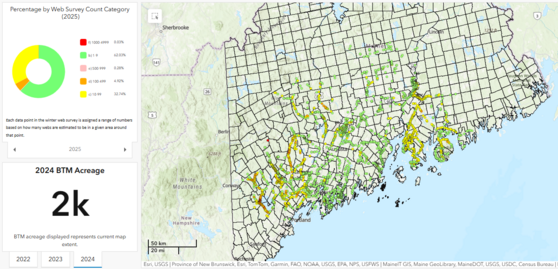
We have updated our interactive BTM map with winter web data from this past winter and aerial survey data from last year. This map can be used to better understand the possible impacts of BTM in your area, however, please be aware that it is not exhaustive. These are broad-scale surveys that do not completely cover the impacted areas.
|