|
Schools are critical spaces to recognize and respond to browntail moth (BTM) infestations to avoid impacts to students and staff. While long-lasting tree defoliation and branch dieback are concerns, impacts to the health of students and staff are the most pressing concerns around schools. The microscopic, toxic hairs of BTM can cause trouble breathing and skin irritation similar to poison ivy lasting from a few hours up to several weeks.
At schools, any number of browntail moth webs per tree or shrub surrounding playgrounds, playing fields, and other sensitive areas can result in rashes on students and teachers in the spring. At these locations, please plan to:
- Remove webs before April (see below) and/or,
- Hire a properly licensed applicator to treat (see below) or,
- Close access to the area from Late May through Mid-June.
Although the Maine Forest Service documented a decline in browntail moth populations statewide, ongoing surveys of winter webs confirm there are areas still expected to experience high browntail moth populations this spring.
Because browntail moth numbers can be extremely patchy, even within a neighborhood, we encourage schools in all communities to look for winter webs. To reduce impacts from browntail caterpillars, remove and destroy webs before April.
In areas where BTM is not managed, exposures to the toxic hairs peak from late-May through July but are possible throughout the year. You can take actions right now, from February to the end of March, to reduce impacts at the end of the school year along with any summer use of the school grounds. There is only a short window of time to complete these actions. Please consider speaking with your facilities manager, custodians, and staff now to create an action plan. Follow the Four Rs (Recognize, Remove, Recruit, and Reach Out) below to create this plan.
Specific Requirements for School Properties
Reminder: Taking action and keeping records of pest prevention and management activities on school properties is the responsibility of your school Integrated Pest Management (IPM) Coordinator. Be sure to report and coordinate all pest sightings and pest management activities, including browntail moth winter web sightings and removal, with your IPM Coordinator. Record-keeping forms and other resources can be found at www.maine.gov/schoolipm, and Hillary Peterson, the IPM Entomologist with the Department of Agriculture, Conservation and Forestry can be reached at hillary.peterson@maine.gov.
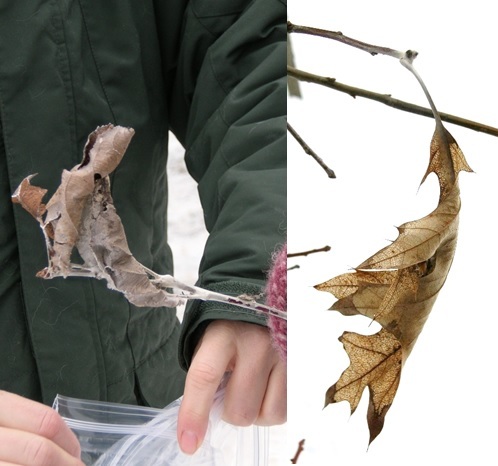
Learn how to tell if the trees around your school have BTM. The winter webs of BTM can look like single leaves hanging onto twigs or fist-sized clumps of leaves tied together tightly with silk. Additional resources to support recognition are found on our website. Do this as soon as possible.
Webs can look like fist-sized clumps of leaves tied together tightly with silk, or like single leaves hanging onto twigs.
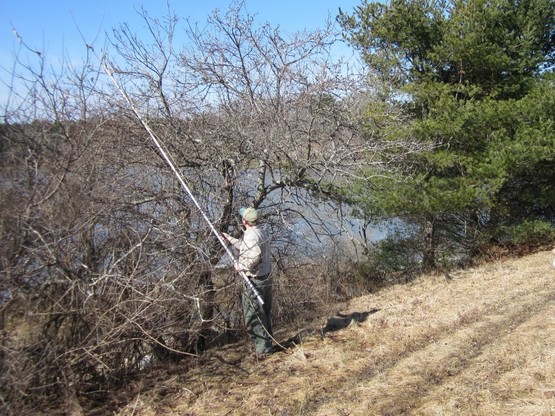
Use hand snips, loppers or extendable pole pruners to remove webs within reach from the ground and away from hazards such as powerlines. Protect your eyes and skin from hairs that might be present from past caterpillar activity. After removal, destroy webs by burning or soaking in soapy water for several days, then dispose of the soaked webs in the trash. Do this before April!
Use hand snips or extendable pole pruners to remove webs within reach from the ground and away from hazards such as powerlines.
Recruit professional help to treat webs out of reach or near hazards on the property you own or manage. Licensed professional arborists can remove browntail webs in larger trees and shrubs in the winter. Some companies with FAA certified remote pilots offer web-clipping services using drones. Finally, in trees where physical control is not practical, Licensed Pesticide Applicators may be able to use insecticides during the growing season to manage browntail moth. Do this as soon as you know you will need the help.
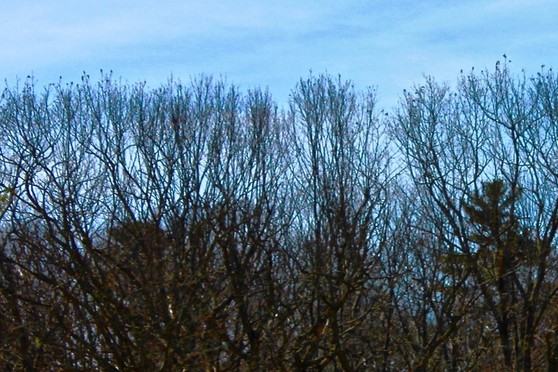
In large, heavily infested trees like these oaks removal of webs may not be practical because of time and cost involved in this approach. In trees like this that are a concern from the standpoint of human health or nuisance, licensed pesticide applicators may be able to use insecticides to help reduce impacts from browntail moth.
If there are places near the school where you cannot manage populations, plan for how the school community will respond to their presence. Depending on the size of the population and locations, steps you might consider include:
-
Excluding activity near infested trees
-
Changing maintenance schedules (such as mowing)
-
Rerouting student access to schools.
Plans will vary depending on your situation and may need to be evaluated on an ongoing basis.
We encourage you to reach out to your communities to provide information on this caterpillar, help them avoid the browntail rash, and enjoy their summers! Also, please reach out to us if you need additional advice.
foresthealth@maine.gov: information on biology and management of browntail moth
hillary.peterson@maine.gov: information on integrated pest management on school grounds
For more information:
Please visit the MFS website. While you are there, sign up for the BTM News Bulletin.
###
Maine State Government is an equal opportunity provider and employer.
|