Browntail Moth Update #11: June 28, 2024
Adult browntail moths are here; we received the first report of an adult browntail moth from our collaborator at the University of Maine in Orono, Dr. Angela Mech on June 26th, 2024. Adult browntail moths typically fly from late June to early August and have white wings (sometimes with a single black dot on each forewing) and fuzzy white legs with a reddish-brown abdomen. This brown abdomen or “tail” is what gives browntail moth its common name.
Browntail moth adults are highly attracted to lights. Making your property less attractive to adult browntail moths may reduce the amount of browntail moths flying and mating in your trees, therefore reducing the amount of browntail moth eggs (and future caterpillars!).
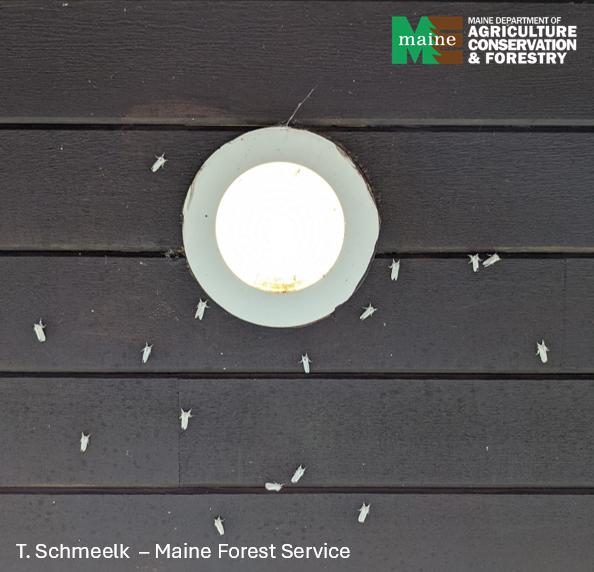
Browntail moth adults resting near an outdoor ceiling lamp. Augusta, ME.
Although there are limited options for browntail moth management at this time of year, there is an important mitigation strategy involving light. Follow the steps below to help reduce browntail moths on your property.
-
Turning off any unnecessary outdoor lighting from late June through early August can help avoid attracting browntail moth to your yard.
-
Switch from white-blue-colored outdoor lightbulbs to yellow-colored outdoor lightbulbs if you cannot turn off your outdoor lighting. Research from Dr. Mech's lab suggests yellow-colored bulbs are less attractive to adult browntail moths.
-
Don't use light traps or bug zappers to kill adult browntail moths. Light traps and bug zappers may only serve to attract more moths to the yard, while killing Maine's beneficial insects. Although a trap may kill some adult browntail moths, it serves as an inviting beacon for both males and females, which may help them find each other and reproduce in your trees.
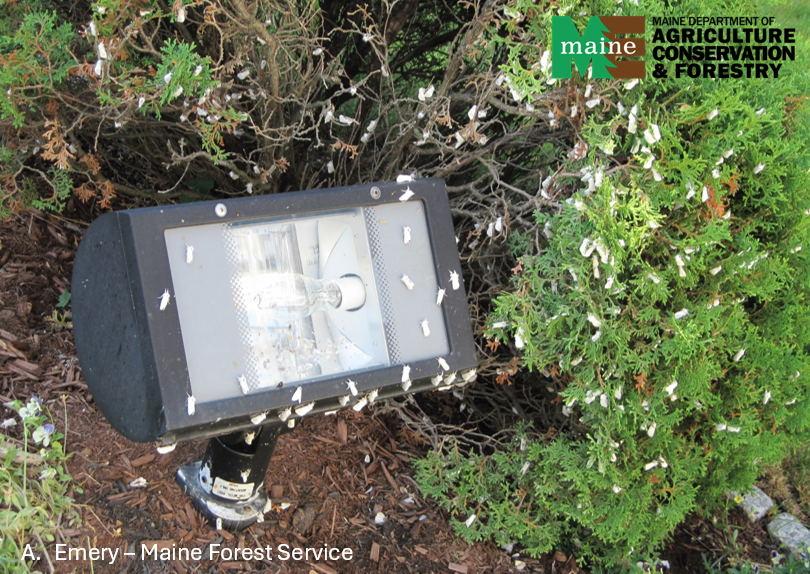
Adult browntail moths covering the shrub by an outdoor light source. Augusta, ME.
Identifying adult browntail moth
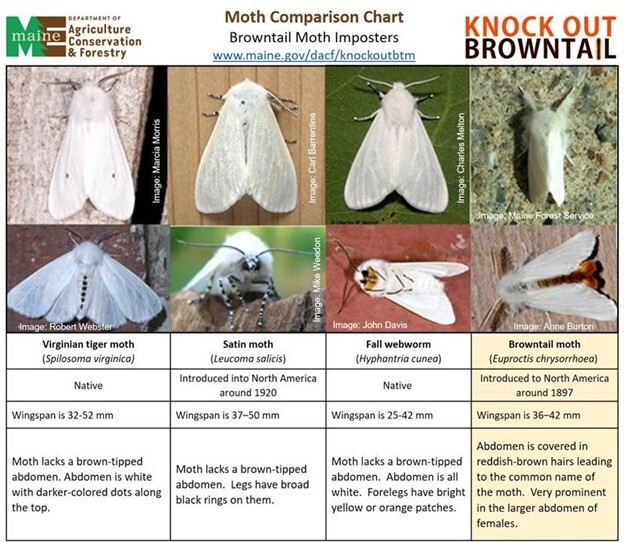
Maine is home to many other white moths which are active at the same time as browntail, this can make browntail moth identification confusing. The comparison chart below was created to help distinguish and identify some of the most common lookalikes.
Chart comparing the diagnostic features of three common lookalikes with adult browntail moth.
Wear protection if removing adult browntail moths
Each year, we receive a few reports of residents developing rashes after washing moths off the sides of their buildings. Some individuals are highly sensitive to foreign hairs and can react similarly to various species of hairy moths. While adult browntail moths have many hairs, these hairs are not the toxic ones found on the caterpillars, as confirmed through microscopy. However, adult moths may carry residual irritating hairs from the pupal packets they formed as caterpillars. So, please be cautious when removing moths from any area.
Will you have browntail moths flying in your area?
Browntail moth adults are highly attracted to lights. Even if you live in an area without significant browntail caterpillar activity, your outdoor lights can be a beacon to browntail moths traveling on summer winds.
Don't use light traps or bug zappers to kill adult browntail moths. Using light traps or other light sources to target browntail may end up killing more of Maine's beneficial insects instead of reducing browntail moths. Check out this informative article on understanding the 7impacts of light trap use from the Master Gardener Foundation below.
|