|
Browntail Moth Update #7: May 31, 2024
In many areas where high populations of browntail occur we are seeing the typical and seemingly rapid top down defoliation of host trees. The caterpillars will continue to grow up to 1.5 inches in length; as they grow, remember that their hairs readily break off their bodies and can cause an irritating rash. Please take caution while performing outdoor yardwork near trees that have browntail to avoid contracting a rash from the toxic hairs - wear long sleeves, eye protection, and gloves.
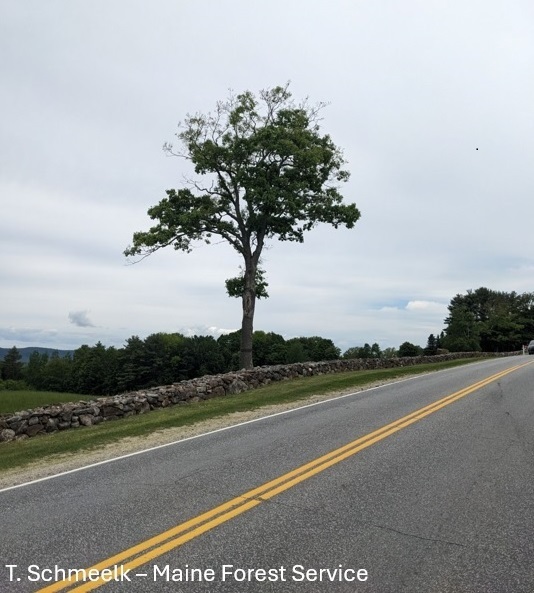
Stripped branches in the canopy of a lone oak, Turner, ME.
Similar to last week, we observed diseased browntail caterpillars at some of our monitoring sites and other areas including Richmond, Old Town, Turner, Brunswick and Bradley. Moderate amounts of rain along with drier spells this spring may have helped the growth of the fungal pathogens that cause browntail caterpillar mortality. Because browntail caterpillars are often found in groups, once the caterpillars die, the pathogens from the fungus or virus can be spread to other nearby caterpillars. Although we are seeing a few diseased caterpillars, it should not be assumed this will lead to a widespread die-off of browntail caterpillars. More typically, the fungus or virus may be able to spread in localized areas, like the population on a tree or a cluster of trees.
Some signs of pathogens may be:
- White or yellow fungal spores on caterpillars (Fungus)
- Caterpillars hanging onto branches with just their rear prolegs (leg-like extensions of the exoskeleton) (Fungus)
- Liquid expulsion of the caterpillar guts (often the caterpillar rests in an upside-down "V" shape) (Virus)
- Swollen, puffy caterpillars (Virus or Fungus)
- Dead caterpillars (Virus or Fungus)
We welcome any reports from the public of diseased caterpillars. Please include a photo or two in your report so we may confirm pathogen presence.
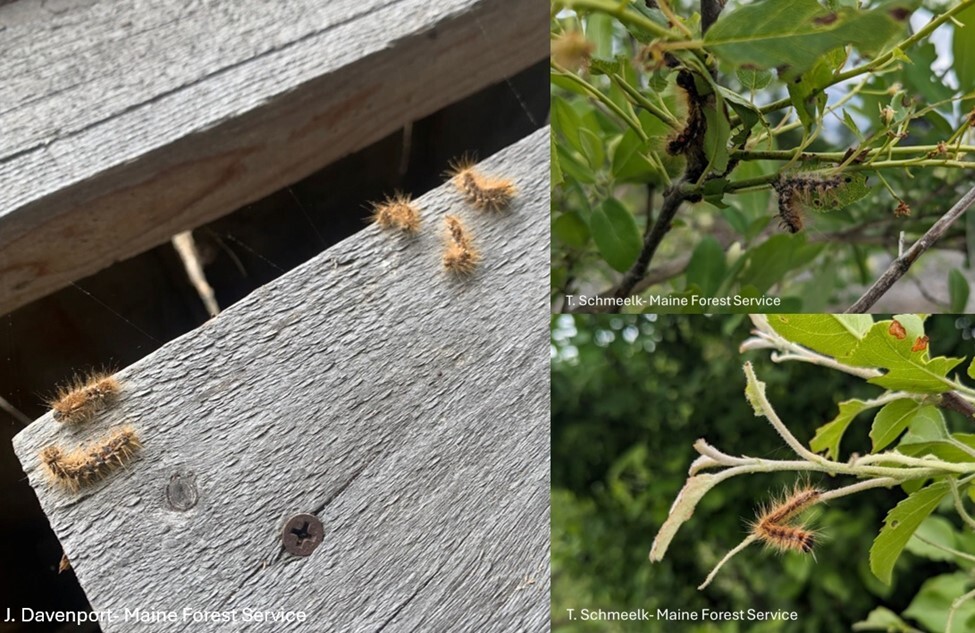
Fungal-killed caterpillars observed in Turner, Brunswick and Bradley.
Other natural enemies
In addition to the pathogens, browntail has other natural enemies in the environment both specialists and generalists. Predatory stink bugs, spiders, hornets, ground beetles and other insects have been observed feeding on browntail moth caterpillars. Some of the specialists include the parasitoid fly Townsendiellomyia nidicola. Karla Boyd’s thesis work at UMaine involved the parasitoid community surrounding browntail moth and in addition to T. nidicola she recorded at least three other parasitoid flies with varying degrees of specificity. Karla also recorded a few parasitoid wasps that attack browntail caterpillars, including species in the genera Pimpla and Theronia. Birds are also considered natural enemies of browntail moth, however many birds will not eat them, especially the larger caterpillars, as the hairs are a defense against vertebrate predators. In Paul Schaefer’s 1974 dissertation, which is one of the most in depth papers on browntail moth he reports 32 bird species as predators of browntail in North America; however, he did not observe predation by birds in his PhD work in Maine and Massachusetts. Two species of cuckoo can be found in Maine, both black and yellow billed. These birds specialize in fuzzy caterpillars and were reported to have been abundant in 2020, also coinciding with plentiful populations of of eastern tent caterpillar, fall webworm, spongy moth, and browntail. It is to be noted that natural enemies are not effective at controlling the population when it is in outbreak.
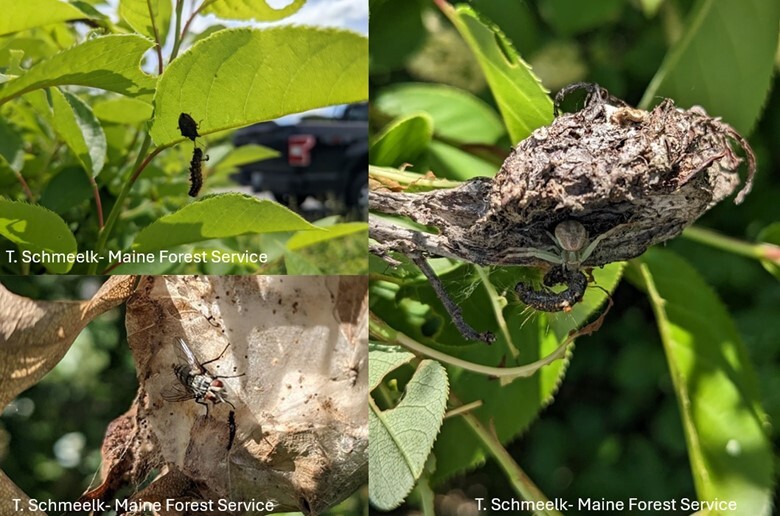 |
Some natural enemies of browntail moth include predatory stink bugs, crab spiders and parasitoid flies
Dealing with Wandering Browntail Moth Caterpillars
Large browntail caterpillars are already being found crawling on the sides of houses, decks and other places around homes and businesses. This means that there may be an increased chance of people coming into contact with the caterpillars, so caution should be exercised in areas of high infestations. These wandering caterpillars are also quite capable hitchhikers, and care should be taken not to spread them to other areas.
To remove wandering caterpillars on your house:
- DO:
- Exercise caution when performing yardwork in high infestations by wearing personal protective equipment and avoiding contact when possible
- Use a strong jet of water to dislodge them from the side of your house
- Fill a wet/dry vacuum with soapy water and vacuum up the caterpillars. Let the caterpillars soak in the soapy water for a few days to kill them, then you can safely dispose of them in the trash
- Remember that the toxin in the hairs can remain active in the environment for up to 3 years
- DON'T:
- Touch the caterpillars. Be sure to wear personal protective equipment when in areas of high infestations
- Use a leaf blower to remove caterpillars; this will stir up the hairs and can cause rash
Mistaken Identities
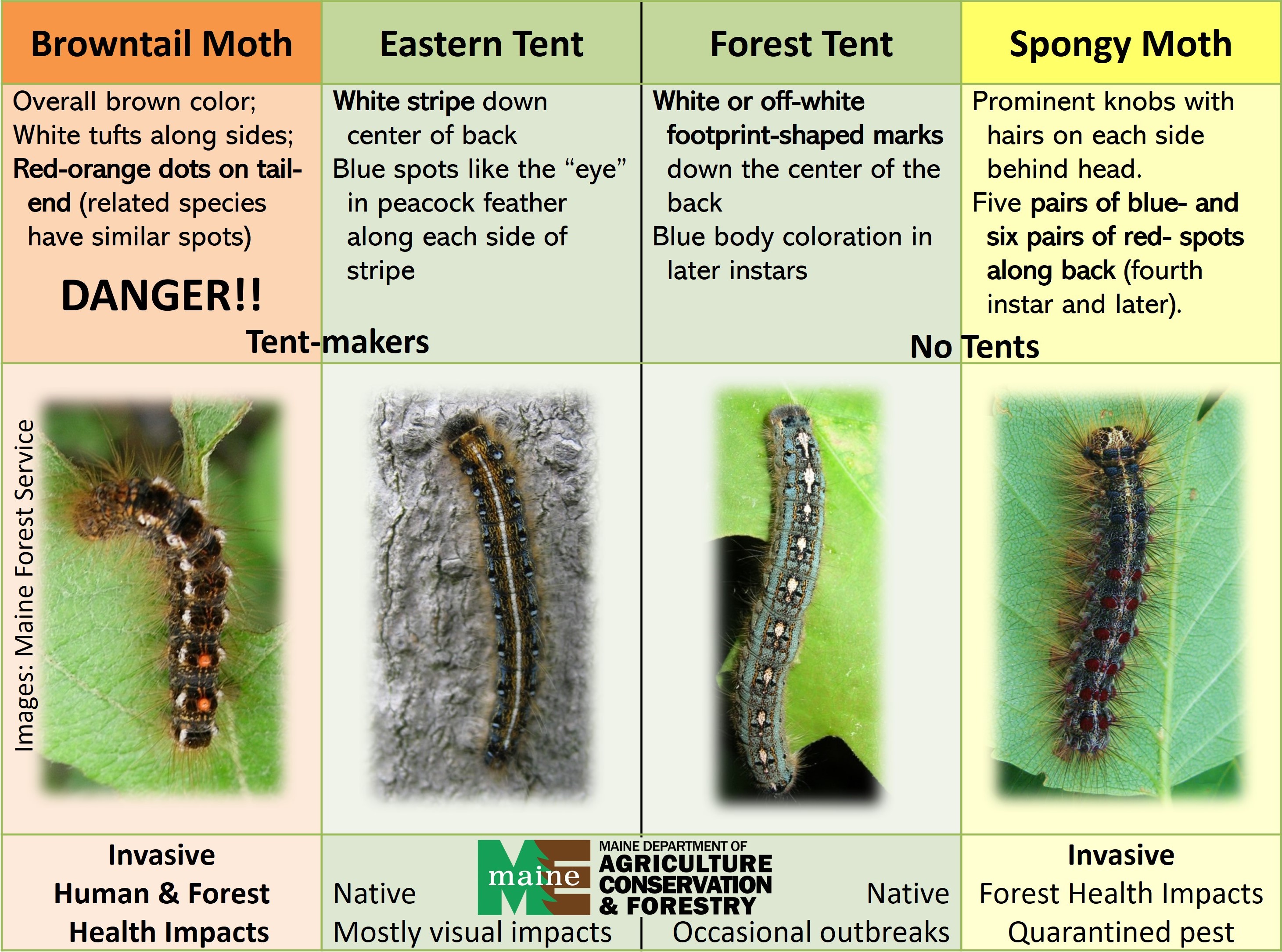
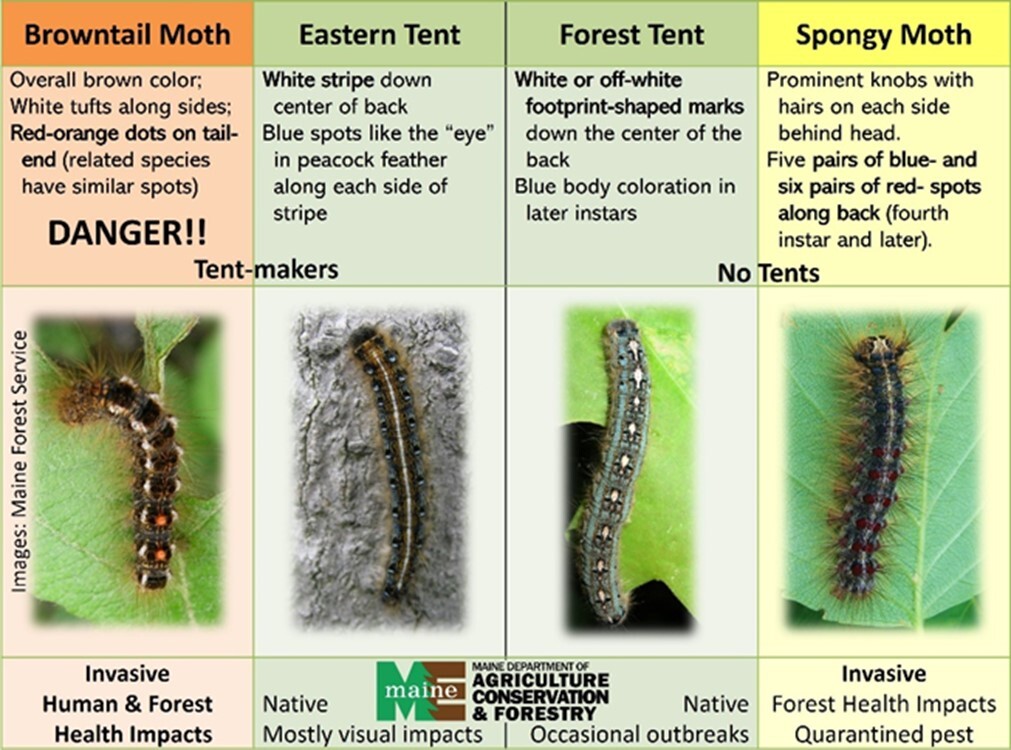
Maine is home to many fuzzy caterpillars; while most of them go unnoticed, some make their presence known either by the damage they cause or by the structures they create as part of their life cycle. The chart below shows browntail moth caterpillars and three of the most common species with which they are confused. Notably, northern Aroostook County is experiencing an outbreak of the native forest tent caterpillar (often called army worms by locals). More information about forest tent caterpillar can be found in our May Conditions Report.
 Check out more helpful advice on management solutions for browntail on our frequently asked questions page:
|