Charged Collision: Aurora Borealis - The Northern Lights
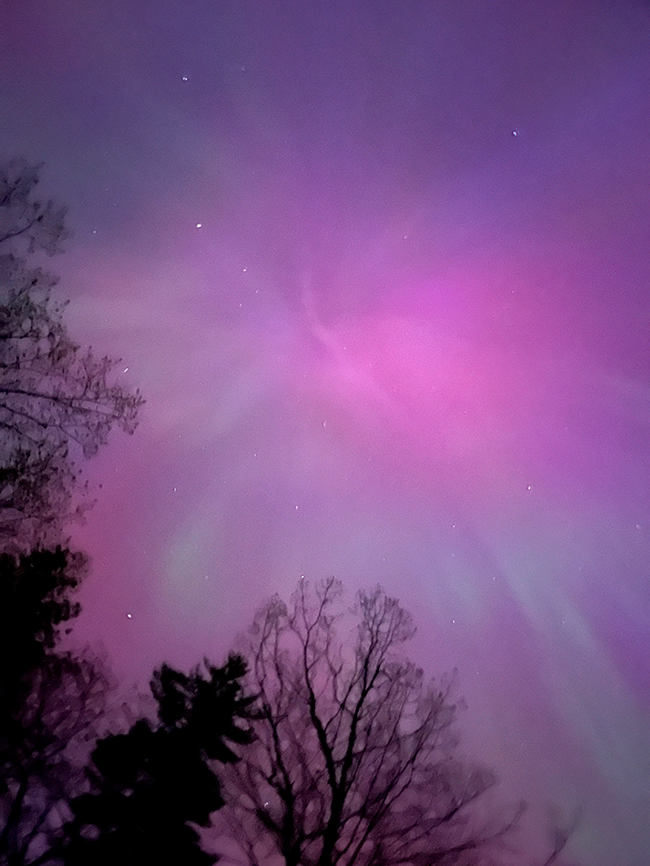
The Northern Lights in Maine on May 10, 2024.
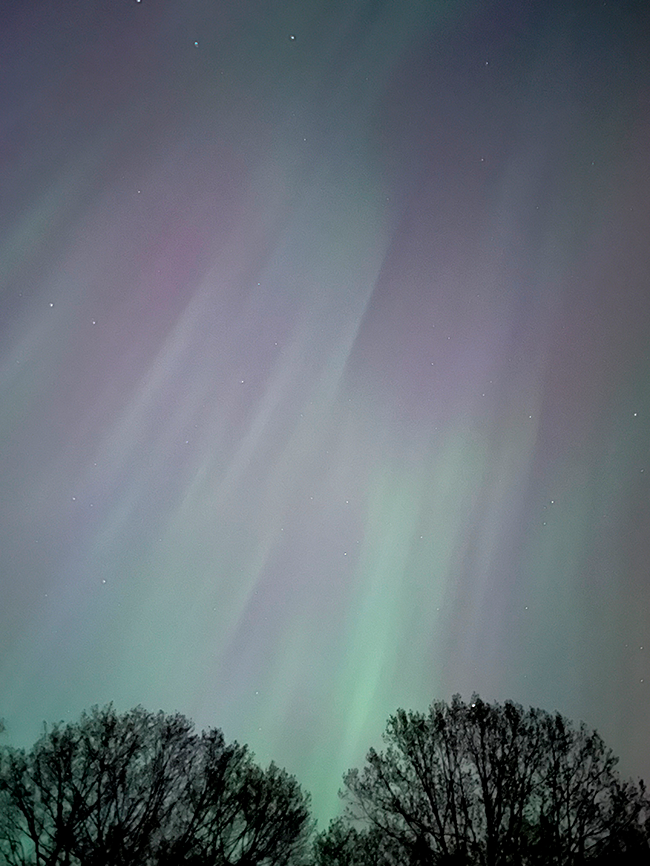
The everchanging Northern Lights in Maine on May 10, 2024.
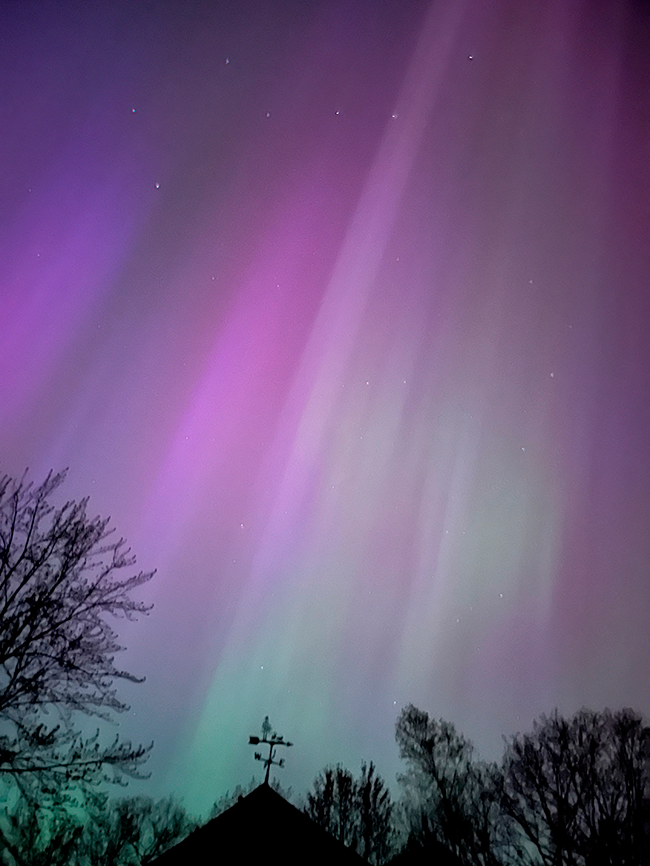
The Aurora Borealis over my home on May 10, 2024. You can see the stars of the Big Dipper at the top of the photo. The Little Dipper is obscured by the intensity of the Northen Lights.All photos by Jocelyn Hubbell.
What a magical night! The sky shimmered and glowed with streaming waves of Northern Lights in everchanging shades purple, pink, and green. A spectacular night show cause by the Sun - the result of the eruptions of solar material, called coronal mass ejections, colliding with Earth's magnetic field. Auroras are best seen at the poles because the Earth's magnetic field holds the charged particles over the polar regions - centered at the magnetic poles. The massive quantity of solar eruptions, rated a G5 on the National Oceanic and Atmospheric Administrations (NOAA) 1-5 geomagnetic storms scale, made this event more widely visible.
Many enchanting evenings to you!
Jocelyn
Share Nature Note with your friends, family, teachers, scouts, and anyone you think might be interested. Here is how they can sign up for a free subscription:
Read back issues online.
Suggest a topic by email; put Nature Note in Subject line and email Jocelyn Hubbell.
|