Browntail Moth Update #4: May 10, 2024
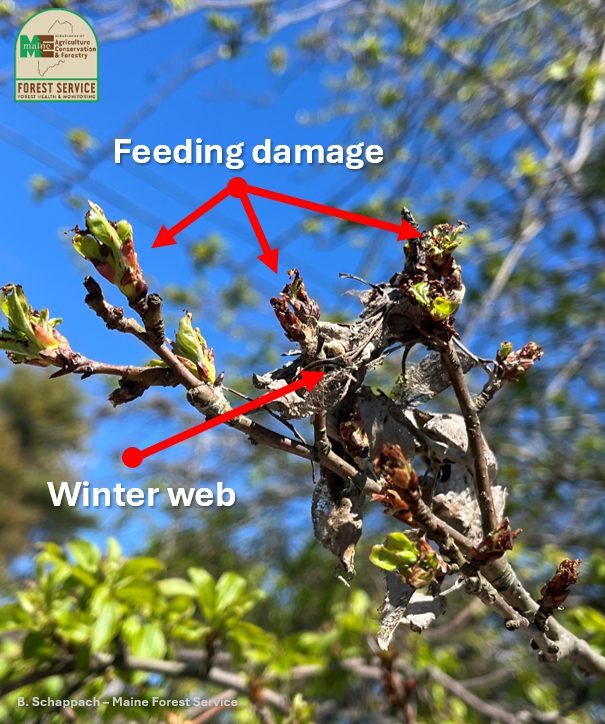
As we experience warmer spring weather, browntail caterpillars and their host trees have been flourishing. This week, we noted symptoms of browntail defoliation; missing, damaged or darkened leaves, which can be more noticeable in areas where their host trees have fully fleshed leaves.
Browntail caterpillars eat buds and full leaves of their host plants. When the leaves are all depleted, the caterpillars will wander to a new spot on the tree and forage together for new food. Hancock, ME.
At this stage, browntail caterpillars are continuing to lay down silk trails - they are not spinning new winter webs. These new silk trails are full of pheromones, a type of chemical signal that only browntail can decipher to help them stay together. Browntail caterpillars use these trails to forage for a fresh food source as a group after they have eaten all of the host leaves on an old branch. At night, the trails serve as a map to help the browntail caterpillars return to their winter web, where they are protected from colder temperatures and predators. Eventually, the caterpillars won’t use their winter webs anymore and they will grow too large to fit back inside them at night. The old webs will disintegrate and fall away from the tree over the summer while the caterpillars continue to grow and molt into adult months in late June and July.
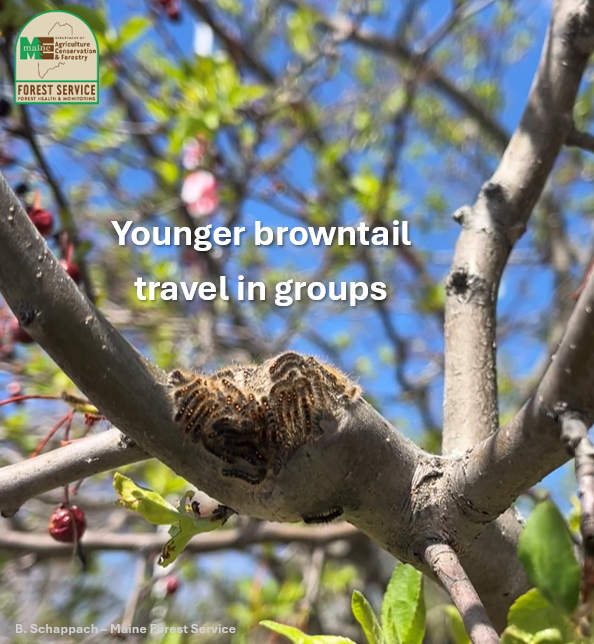
Browntail caterpillars travel and forage together on their host trees to increase their defenses against possible predators. Dover-Foxcroft, ME.
Many trees are beginning to flush out their leaves, which means browntail caterpillars have more food to enjoy. More food for these hungry caterpillars also means that they are continuing to grow and shed their outer layer of their bodies, otherwise known as molting. As the caterpillars grow and shed, their toxic hairs will settle on areas of their host tree, the ground, and items underneath them. If you have browntail infestations in your trees, please take precautions to avoid the hairs coming into contact with your skin to prevent a rash.
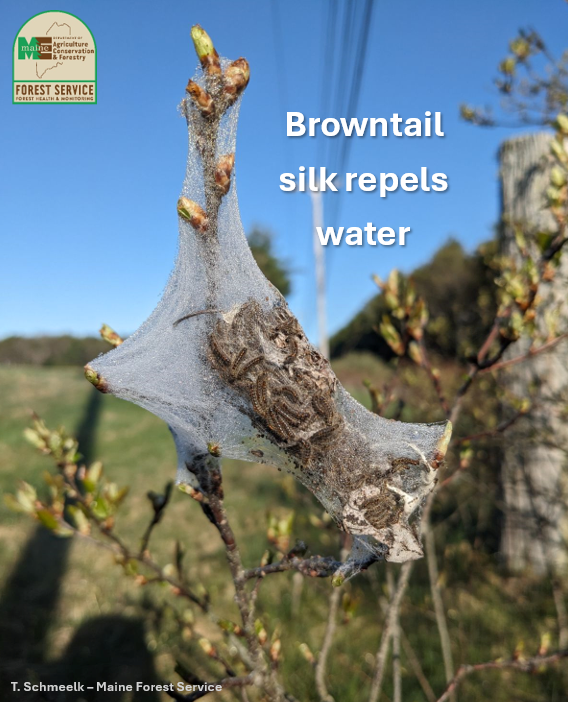
Browntail are continuing to expand their webs with their silk, a hydrophobic component that provides the caterpillars protection from water.
Our interactive browntail moth map contains winter web data from this past winter and aerial survey data from last year. This map can be used to better understand the possible impacts of browntail moth in your area, however, please be aware that it is not exhaustive. These are broad-scale surveys that do not completely cover the impacted areas.
|