Browntail Moth Update #1: April 22, 2024
Maine Forest Service Forest Health and Monitoring staff are conducting weekly development checks and scouting for disease outbreaks at ten sites throughout the infested area of the state. This year, the sites are in Bangor, Belfast, Bridgton, Brunswick, Dover-Foxcroft, Hancock, Lincoln, Newport, Turner, and Unity.*
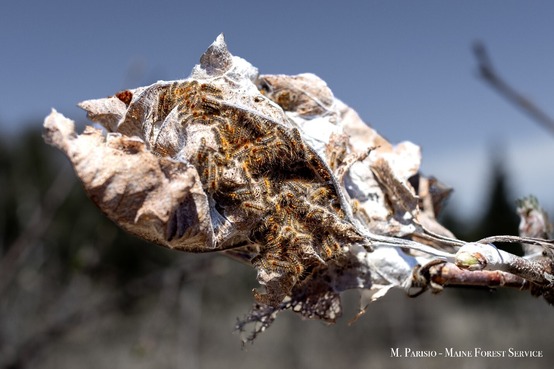
On Monday, April 15, we received our first report of newly emerged browntail moth (BTM) caterpillars, which is a day earlier than last year. We confirmed emergence of BTM on the outside of their webs at almost all of our monitoring sites the same week. We expect BTM caterpillars will have emerged at all of our monitoring sites this week.
As BTM caterpillars become active, they will feed on the buds and newly emerged leaves of host plants. They will continue feeding on maturing leaves and grow larger through the end of June. Even though the caterpillars are small at this time of year, their hairs readily break off and can cause an irritating rash to areas of exposed skin.
Browntail moth caterpillars have emerged from their winter webs in most of the 2024 monitoring sites.
Based on aerial survey data from last year, four counties experienced large population increases; Penobscot (18k acres), Waldo (7.6k acres), Hancock and Knox counties (6k acres each). If this May and June have normal spring rain amounts, the wet season may allow diseases to disrupt BTM population and lead to a population collapse. However, if we have a dry spring, we are likely to see BTM populations continue to spread and fill in areas of previous collapse. People should not count on disease-related collapses to save them from the rash. Please plan ahead to avoid exposure to hairs; avoid areas with BTM infestations, cover bare skin when working outside in infested areas (long sleeves, hat, gloves, closed-toed shoes, etc.), and try to do yardwork on wet days to reduce the hairs getting stirred up from mowing or raking leaves.
By this time, web removal should be completed. Web removal after BTM caterpillars have emerged reduces success of treatment, and pruning wounds can be more damaging to trees and shrubs at this time of year. If you choose to manage BTM with insecticides, we recommend working with a licensed pesticide applicator. For insecticide treatments like spraying, it may be too early in locations without sufficient host budding and leaves; however, for other treatment approaches and in some regions the time is now. In most years, treatments should be completed before the end of May to limit buildup of toxic caterpillar hairs and host foliage loss.
* We want to thank those who have offered their property as a monitoring site in the past, however, we do not need any additional sites at at this time.
|