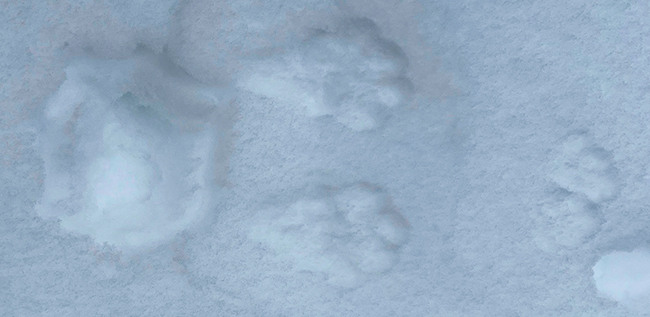
Snowshoe hare track showing a resting position. Note the sit spot and the hind feet behind the smaller front feet. When hopping, their hind feet will land ahead of their front feet.
While tromping through a northwestern woodland in Maine, I recently came across a track I seldom see and heard myself exclaim, Snowshoe Hare! I laughed because I was on snowshoes too, but not staying atop the deep snow as this hare had. I even imagined how surprised the hare might be on its next pass through to find my large, deep snowshoe tracks… and the obstacles they might be to its evening trek. I wondered where the hare’s daytime brambles or hollow tree hideaway was… how far it ventured on nightly foraging rounds… how old it was, what perils it had already faced - if it included evading Canada Lynx, and if it had raised a family. And I mused on the hare's seasonal coat change from summer brown to winter white... and then on the number of coat changes I had in my closet (not two!).
Check out these resources by the Maine Department of Inland Fisheries and Wildlife (MDIFW) to learn more about snowshoe hare and tracking.
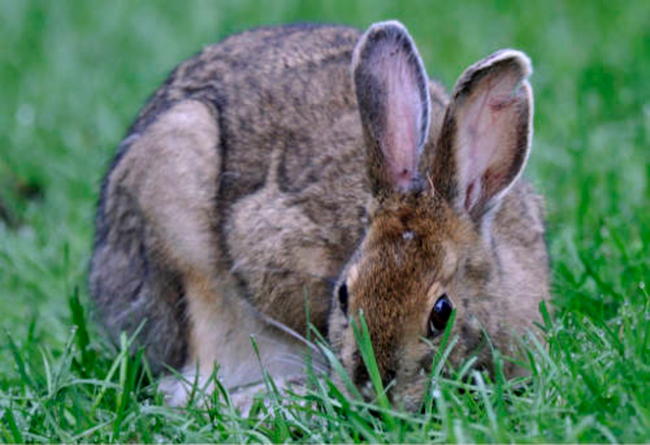
A snowshoe hare during the summer in Maine. Photo by Katherine Wittemore, USFWS.
Share Nature Note with your friends, family, teachers, scouts, and anyone you think might be interested. Here is how they can sign up for a free subscription:
Read back issues online.
Suggest a topic by email; put Nature Note in Subject line and email Jocelyn Hubbell.
|