Autumn's Other Blaze: Asters and Goldenrods
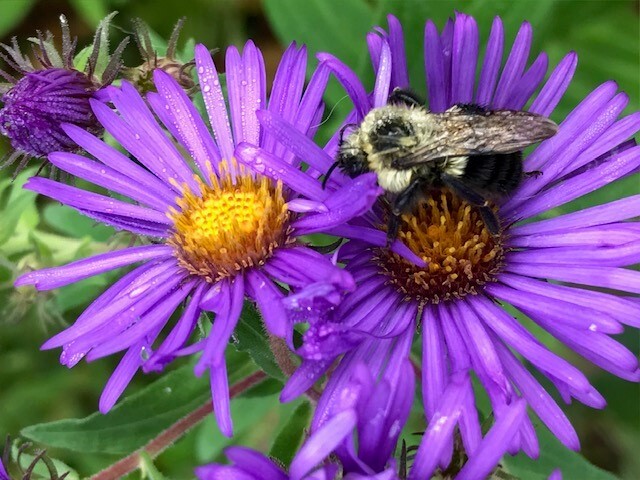
Honey bee collecting nectar from an aster flower. All photos by Jocelyn Hubbell.
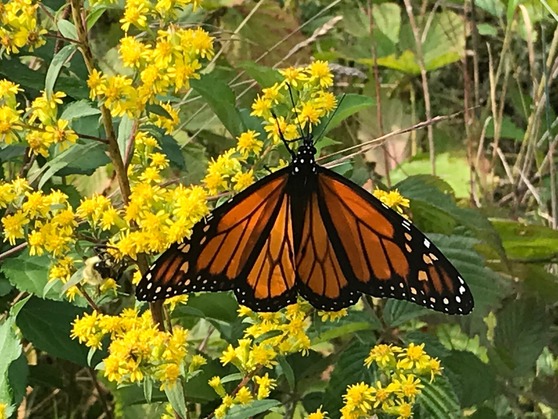
The end-of-summer blaze of royal colors in meadows is a vibrant visual display to attract a variety of insects, including bees that must increase their stores of nectar and pollen for overwintering and monarch butterflies as they stop to fuel up during their southward migration. This mighty showing by asters and goldenrods gets going just before Maine's trees start revealing their famous fall colors and can last well into the Autumn season.
Asters add the deep purples to light lavenders in the field where I walk. They can also be blue, pink, and white. A variety of white asters live in Maine; some are shade-loving woodlanders found along forest trails and edges. Others prefer the full sun provided in meadows. The New England Aster can sport both deep purple and deep pink blossoms.
|
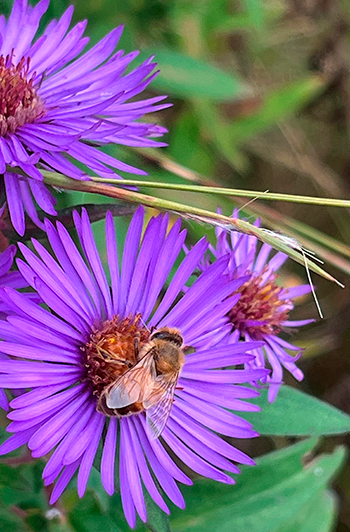
When I visit gardens this time of year, those planted with asters usually have hardworking bees at the blossoms, seemingly preferring the asters over all other flowers. Small mammals and birds benefit from asters, too. The seed lingers on the plants through the cold months and provides much-needed food, while the thickets of dried stems offer hiding places.
Consider planting native asters in your yard to make it a butterfly and pollinator-friendly feeding stop.
Wishing you a brilliantly beautiful Autumn!
|
Monarch butterfly feeding on the nectar of golden rod.
Share Nature Note with your friends, family, teachers, scouts, and anyone you think might be interested. Here is how they can sign up for a free subscription:
Read back issues online.
Suggest a topic by email; put Nature Note in Subject line and email Jocelyn Hubbell.
|