Scorpion-like and Parthenogenesis - What a Wasp!
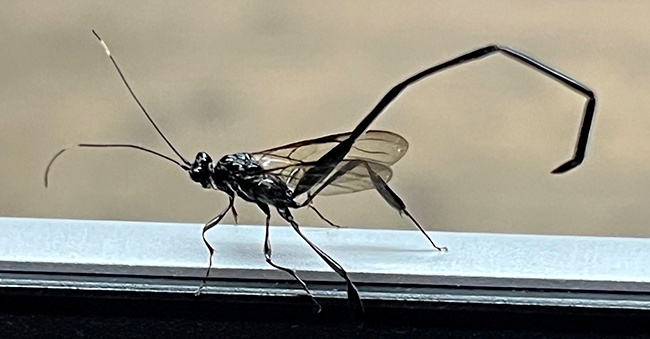
American Pelecinid Wasp (Pelecinus polyturator). Photo by Jocelyn Hubbell.
A mystery guest appeared on a recent evening at Sebago Lake State Park when I was setting up to give a program at the small log cabin-style nature center nestled among tall pines and the campsites of the park's Naples Beach campground. It landed on the top edge of my laptop screen (all of 3/16 of an inch wide) and proceeded to whip its scorpion-like abdomen back and forth. I snapped the above picture and admired its glossy blackness, glistening translucent wings, tiny feet, and long antennae. As program participants arrived, they also admired the mystery guest, an American Pelecinid Wasp. They were happy to let it stay among us once they realized it was not about to sting with that treacherous-looking but stinger-free abdomen.
The long, articulated abdomen marks this as a female American pelecinid wasp. At a total body length of about 2-3/4 inches, her tail-like abdomen makes up most of this length. She uses her abdomen tip to poke into the soil and lays her eggs on the grubs of June Bug beetles, one egg per beetle, then leaves them to mature on their own. When an egg hatches into a larva, it feeds on the living June bug grub. When the grub dies from its wounds, the larva will continue to feed on the dead tissue until it is ready to pupate – which it does right there in the soil next to the grub it has fed on. A few weeks later, it will emerge as a nectar-feeding adult. Male American pelecinid wasps are rare, so the generations most often move forward through parthenogenesis - the eggs do not need to be fertilized to mature.
Look for this amazing wasp during late summer and early autumn, feeding on the nectar of flowers or cruising low over the ground in fields, gardens, open woodlands, and woodland edges.
Happy Nature Watching!
Share Nature Note with your friends, family, teachers, scouts, and anyone you think might be interested. Here is how they can sign up for a free subscription:
Read back issues online.
Suggest a topic by email; put Nature Note in Subject line and email Jocelyn Hubbell.
|