Voice in the Night – the Vociferous Whip-poor-will
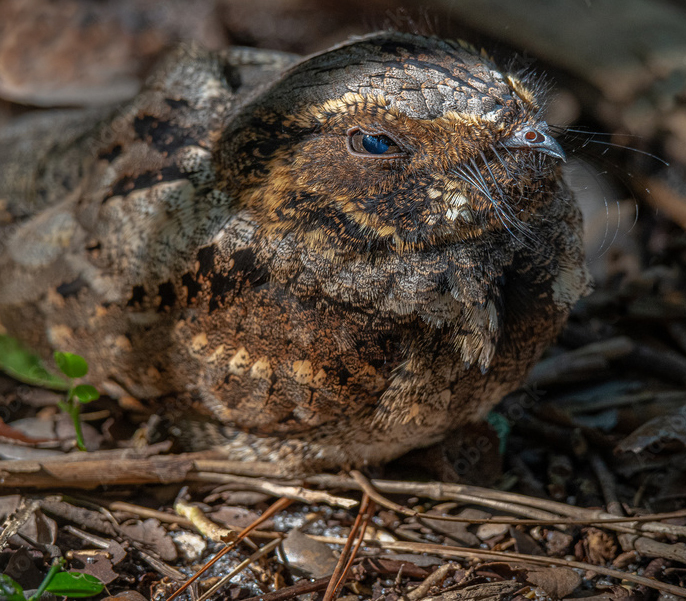
A Whip-poor-will well camouflaged on a forest floor. Stock image used by permission; all rights reserved.
“Whip-poor-will, whip-poor-will, whip-poor-will” is the repeated call I have been listening to at sundown these last few weeks. The return of the Eastern Whip-poor-will each year gives me a sense of peace. Until they arrive, a part of the forest orchestra is missing, and I wonder where they are. Their scientific name, Antrostomus vociferus, means cavernous-mouthed loud vocalizer, such a wonderful description of these wide-mouthed members of the nightjar family who feed exclusively on insects. This ground-nester lays two eggs on the forest floor among the leaf litter in a spot sheltered from the afternoon sun. The incubation of the eggs is about twenty days; hatching takes place about ten days before a full moon. This timing is crucial as it ensures the best timing for the adults’ successful insect hunting during the bright evenings leading up to a full moon.
It is such a joy listening to both the voices of the evening and the dawn chorus. Two beautiful symphonies a day! Listen and learn more at All About Birds.
Share Nature Note with your friends, family, teachers, scouts, and anyone you think might be interested. Here is how they can sign up for a free subscription:
Read back issues online.
Suggest a topic by email; put Nature Note in Subject line and email Jocelyn Hubbell.
|