Browntail Moth Update #1: April 21, 2023
On Sunday, April 16, we received our first report of newly emerged browntail moth caterpillars from our own entomologist, Mike Parisio. We have confirmed emergence of browntail on the outside of their webs at most but not all of our monitoring sites this week. Many of these monitoring sites have changed location from previous years to better capture trends and developmental differences in the browntail population throughout Maine. Right now, browntail moth caterpillars are feeding on the buds and newly emerged leaves of host plants. They will continue feeding on maturing leaves and grow larger through the end of June. Even though the caterpillars are small, their hairs readily break off and can cause an irritating rash to areas of exposed skin.
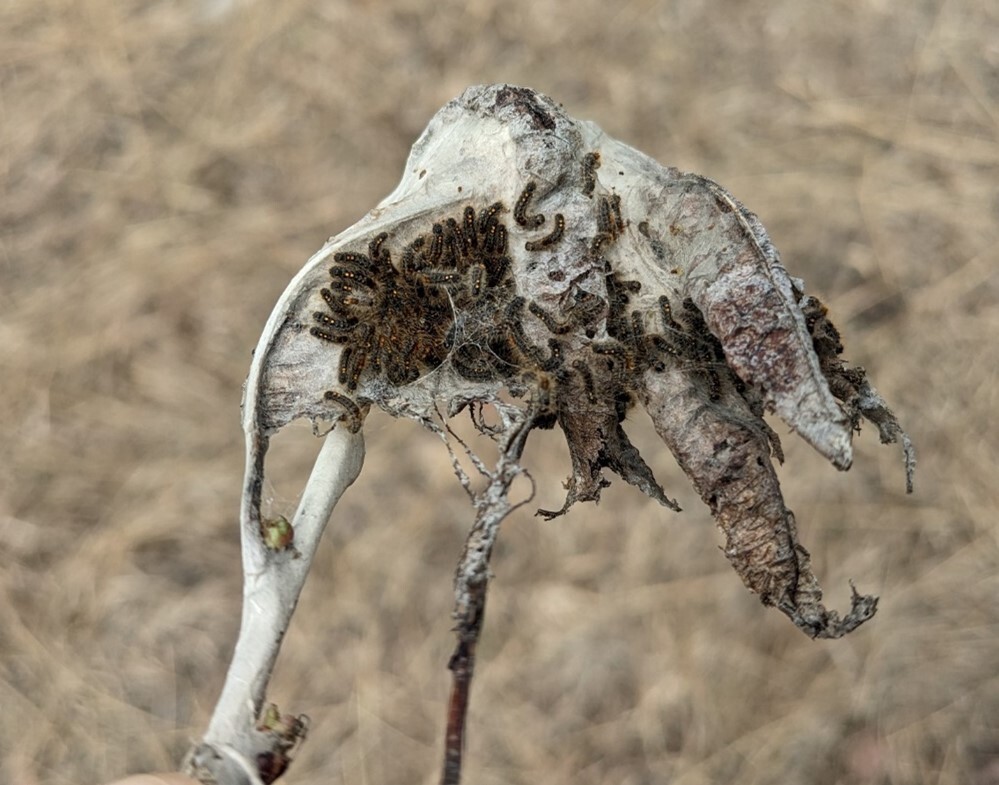
Browntail moth caterpillars have emerged from their winter webs in most of the 2023 monitoring sites.
Based on aerial survey data from last summer and fall, three counties experienced population declines; Kennebec, Cumberland and Sagadahoc. Browntail populations are still present in these areas, the populations are just at lower levels than previous years. Three counties experienced large population increases; Penobscot, Androscoggin and Waldo. If this May and June have consistent spring rain, diseases could lead to further browntail moth population collapses. However, if we have a dry spring, we are likely to see browntail populations spread and fill in areas of previous collapse. People should not count on disease-related collapses to save them from the rash. Please plan ahead to avoid exposure to hairs and treating symptoms related to exposure.
Where population management has been deemed necessary, plans should be in place. By this time web removal should be completed. For pesticide treatments like spraying, it is still too early in many locations; however, for some treatment approaches and in some regions the time is now. We recommend working with a licensed pesticide applicator for this management approach. In most years, treatments should be completed before the end of May to limit buildup of toxic caterpillar hairs and host foliage loss.
Browntail Moth Mitigation Fund
The Browntail Moth Mitigation Fund was established by the legislature and signed into law last year. The fund was established to assist government entities or non-profit organizations with reducing impacts from browntail moth. The rules for this fund have been finalized, and we expect the request for applications (RFA) to be available soon. Look for updates in this bulletin and also on the Division of Procurement Services Grant RFP/RFA page.
A list of eligible areas generated through Maine Forest Service surveys is identified for administration of the Browntail Moth Mitigation Fund. Applications for grant funds to mitigate browntail moth would have to target these areas. Aerial survey and winter web survey data for the past three years was used to determine which towns would be rated in the moderate to severe category. Both types of survey used in this determination were conducted by Maine Forest Service staff. Upon request by an applicant, the division, in its sole discretion, may decide to add additional areas to the division’s list of eligible areas.
|