Springtime Cat Paws and Tails - the Pussy Willow
Tiny cat paws and tails emerge in springtime if you take the time to look… and no, not a kindle of cats or a recently birthed litter of kittens… but the blooms of Pussy Willows!
Look now for the velvet-soft silvery-white flower spikes called catkins – from the old Dutch word, katteken, for a kitten. They emerge from shiny brown bud scales along the stems. The velvety fuzz resembles a tiny cat foot, giving the shrub its common name, Pussy Willow. The soft fuzz acts like a coat protecting the flowers of this early bloomer until the pollen-laden stamens appear. Only the pollen-bearing male catkins (called aments) have velvety coats. The female catkins, most often found on separate shrubs, are smaller and spiked with greenish-yellow pollen-receiving pistils. They rely on the wind to bring pollen from the male catkins so that they can form and bear seed.
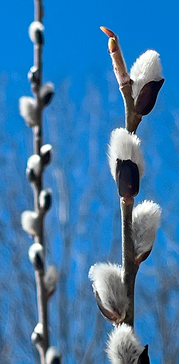
Willow nectar and pollen are important to native insects as a first food source after they emerge. Insect-feeding birds rely on a springtime protein-rich insect meal after migrating north or overwintering in Maine, so they rely on the willow too. Throughout the growing season pussy willows provide much-needed food and shelter for birds and insects. They are host plants to many colorful moths and butterflies, including the caterpillars (larval stage) of Viceroys and Mourning Cloaks that feed on its leaves. Ducks and other waterfowl feed on its seed.
Fun Facts:
-
Salix discolor is the pussy willow commonly seen in Maine. Salix mean willow and discolor refers to the leaves dark green topside and pale underside.
- 26 species of willow are find in Maine. Black Willow, Salix nigra, the largest, is a tree of up to 65-feet tall. Learn more about it on page 68 (page 9 of the PDF) in this section of the Forest Trees of Maine.
- Pussy willow prefer wet soils and wetland edges.
- Willows root quickly and can be propagated with cut stems. They are often used in wetland restoration projects.
- Water in which willow stems have been placed can be used to encourage other plants to root.
- If you cut willows to bring inside, consider keeping them in a vase of water to watch the full development of the catkins and the first appearance of leaves. Afterwards, plant the moist stems to replenish your willow stand, or bend the flexible branches into a wreath, or basket. Put dried willow stems in your compost pile.
- The journals of Henry David Thoreau mention many species of willow he found during his explorations.
|
Share Nature Note with your friends, family, teachers, scouts, and anyone you think might be interested. Here is how they can sign up for a free subscription:
Read back issues online.
Suggest a topic by email; put Nature Note in Subject line and email Jocelyn Hubbell.
|