How does a tree get on the internet?
They log on.
😆
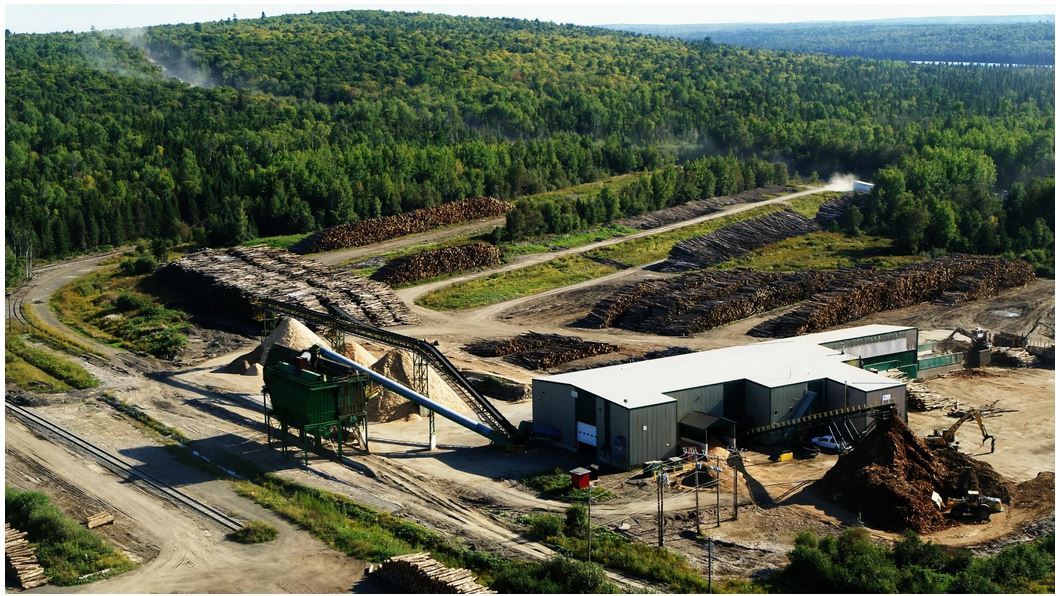 Maine Public - Maine forests already absorb about 70% of the state's annual fossil fuel emissions. Now, a new study shows that Maine's commercial forest landowners could increase annual carbon storage by at least 20% over the next 60 years while maintaining timber harvest levels. The findings are timely as the demand for carbon offset projects accelerates.
The forest modeling study across 7.6 million acres of mostly privately-owned commercial forest lands in northern Maine was conducted by researchers from the University of Maine, the New England Forestry Foundation and the U.S. Forest Service. Under current management practices, the forestlands are expected to remove 36 million metric tons of CO2 per year. But, if climate smart strategies such as increased planting, thinning and selective harvesting were widely adopted, the study suggests even more carbon could be stored without decreasing harvest levels. Read more...
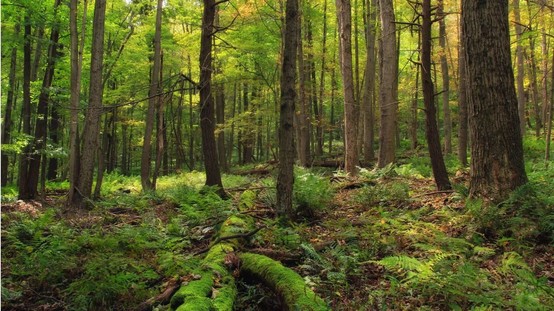 Yale - As the climate warms, some tree species may no longer thrive in areas where they once flourished.
“A tree species may have a threshold in terms of the amount of heat it can tolerate, the amount of drought it can tolerate,” says Maria Janowiak of the Northern Institute of Applied Climate Science. “For instance, a northern conifer species that is adapted to cold conditions, it may not be able to persist or be competitive in a hotter climate.”
Her colleagues in the USDA Forest Service Northern Research Station developed a free online tool called the Climate Change Tree Atlas.
It provides information about the environmental needs of more than 100 tree species in the eastern U.S. And it identifies where those conditions will be found in the future under different global warming scenarios. Read more...
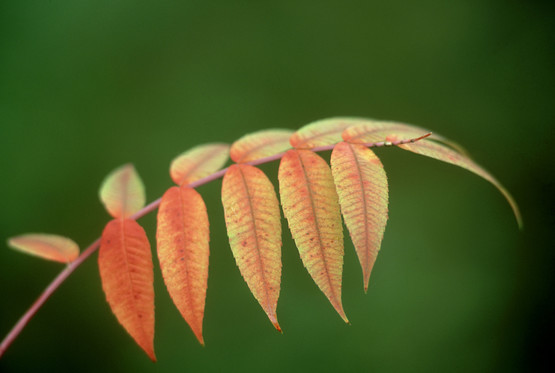 Ohio State - The growing period of hardwood forests in eastern North America has increased by an average of one month over the past century as temperatures have steadily risen, a new study has found.
The study compared present-day observations of the time span from budburst to peak leaf coloration in seven tree species to similar documentation that was collected by an Ohio farmer at the turn of the 20th century.
An analysis of changes in those leaf patterns along with decades of temperature data for northwest Ohio showed a clear connection between increased warming during winter and spring and an extended period of tree growth. Read more...
Bark Bits
Worcester is home to the largest lanternfly infestation in Massachusetts
Mar 30 - 2023 Maine Sustainability & Water Conference, Augusta
April 5 - Forestry Rules of Maine, Old Town
April 5 - Remote Sensing Technology for Improved Forest Carbon Inventorying
April 6 - Forestry Rules of Maine, Wilton
April 12 - A State to Local Model for Producing Climate Adapted Urban Trees
May 1 - EAB Municipal Quarterly Conference Call
--- --- ---
AUGUSTA – The Maine Department of Agriculture, Conservation and Forestry's (DACF) Maine Forest Service (MFS) is providing assistance for local governments, municipalities, educational institutions, non-profit organizations, and private family woodland owners interested in obtaining Invasive Plant Control Practice Plans (IPCPP) for their woods. This invasive plant management program is administered by the MFS and the Maine Natural Areas Program (MNAP).
Funded by a Landscape Scale Restoration Program grant from the USDA Forest Service, financial incentives for IPCPPs are available to public and private woodland owners with ten to one thousand wooded acres in Maine. The program will reimburse up to 50% of the cost based on the number of acres. An average small woodlot may receive up to $500 maximum incentive; larger lots will have larger maximum incentive amounts.
The program's goal is to address invasive plants that choke out native trees, shrubs, and wildflowers in the eligible woodlands. A corps of natural resource professionals trained through the program's Invasive Plant Academy will be qualified to develop the IPCPPs. A list of trained plan preparers is available on the MFS Invasive Plant Management Program web page.
Landowners with approved IPCPPs will also be eligible to apply for the next phase of the program to receive free invasive plant treatment.
- Visit the MFS website for the 2023 IPCPP application. Applications are due by 5:00 p.m., March 31st, 2023.
- Access a list of natural resource professionals eligible to develop IPCPPs.
- Visit the MFS website to learn more about the IPCPP or call MFS Landowner Outreach Forester Allyssa Gregory at (207) 441-2895.
|