Nothing like a traditional “Nor’easter” to help us evaluate the health of our backyard and street trees! Does your property need a bit of clean up? Check out our recent alert for some tips on where to start. Regular pruning and maintenance of your landscape trees can keep your post-storm to-do list shorter.
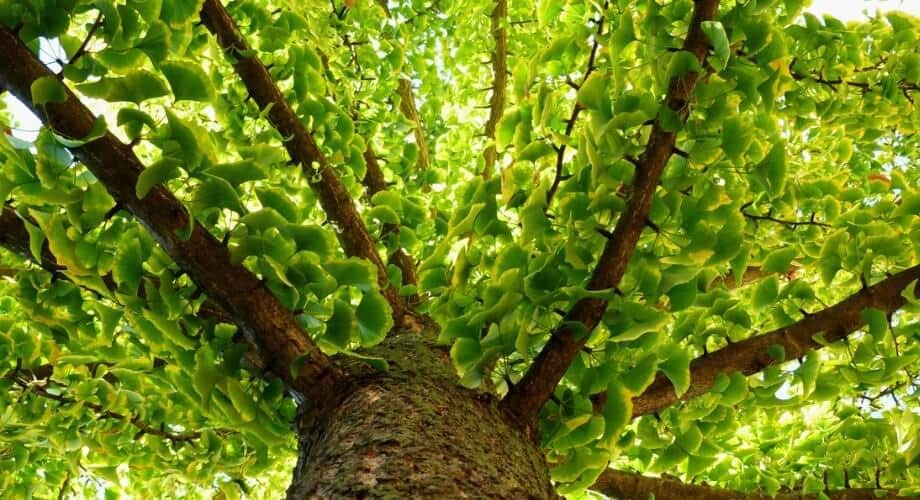 University of Gothenburg - Trees and other greenery in cities provide many benefits that are important for the well-being of residents. Leaves and needles on trees filter air pollutants and reduce exposure to hazardous substances in the air. But which trees purify the air most effectively? Researchers from the University of Gothenburg have collected leaves and needles from eleven different trees growing in the same place in the Gothenburg Botanical Garden’s arboretum (tree collection) to analyse which substances they have captured.
“This tree collection provides a unique opportunity to test many different tree-species with similar environmental conditions and exposure to air pollutants,” says Jenny Klingberg, a researcher at the Gothenburg Botanical Garden. Read more...
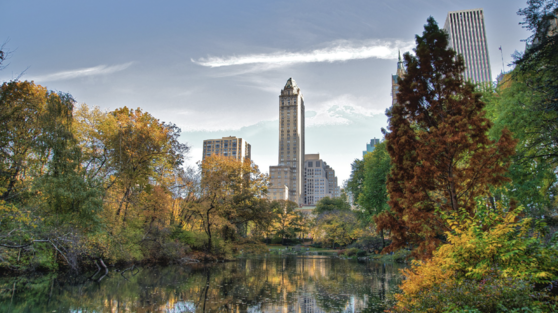 Yale - A 2020 Pew poll found that 90% of Americans support planting trees as a method to curb climate change. The climate benefits of trees are simple to understand: About half of a tree’s dry weight is composed of carbon, which trees extract from the atmosphere as they grow.
According to the Environmental Protection Agency, forests in the United States remove about 800 million tons of climate-warming carbon dioxide from the atmosphere every year. That includes close to 45 million tons specifically from “urban forests” — a term that encompasses a wide variety of configurations of trees ranging from individual street trees to large parks and nature preserves.
Urban forests alone offset the climate pollution from nearly 10 million cars. And according to research led by scientists at the Nature Conservancy, planting more trees in suitable urban areas could remove another 70 million tons of carbon pollution per year, enough to offset the carbon pollution from 15 million more cars.
But you may not know that urban forests also benefit people’s health. Read more...
 Rabble.ca - In Forests – the Shadow of Civilization, Robert Pogue Harrison quotes extensively from David Attenborough’s 1987 book, The First Eden: The Mediterranean World and Man. Forest clearing initially allowed the flourishing of agriculture and urban societies. But over time the soil, unprotected by trees, baked in the summer sun and was washed into the sea by torrential rains. Harbors silted in. The land dried out. The great cities of North Africa vanished, their locations covered with sand dunes.
With the entire world facing a similar scenario of ecological collapse, Canada’s federal government has designated tree planting as one of its programs to mitigate climate chaos. It has pledged to plant two billion trees over a 10-year period, offering a 50:50 match for the cost of projects that involve at least 10,000 trees.
The 10,000-tree minimum could create a barrier to participation of ordinary citizens. It’s encouraging to see groups reaching out to join smaller projects together.
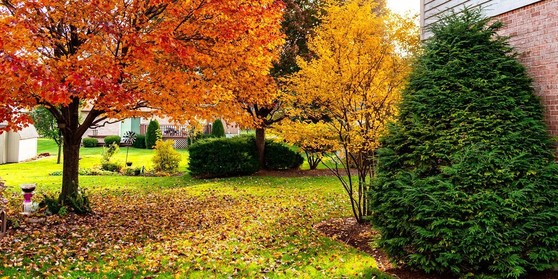
A sole emphasis on planting trees is misplaced, or at least is inadequate. An isolated tree, surrounded by a mowed lawn, whose leaves are removed each fall, has minimal ecological value.
What is really needed is forest ecosystem restoration, particularly establishing mini-forests in urban and suburban areas where nature’s benefits to people are highest. Read more...
Bark Bits
Her Plan for Putting the World Back Together? Trees.
The Peculiar Relationship Between City Trees and Medieval Battle
The Quiet Crisis in America’s Forests
Mar 22 - Project Canopy Grant Applications Due
Mar 24 - A Review of Recent Spruce Budworm Activity in Maine
Mar 30 - 2023 Maine Sustainability & Water Conference, Augusta
April 5 - Forestry Rules of Maine, Old Town
April 6 - Forestry Rules of Maine, Wilton
***
AUGUSTA – The Maine Department of Agriculture, Conservation and Forestry's (DACF) Maine Forest Service (MFS) is providing assistance for local governments, municipalities, educational institutions, non-profit organizations, and private family woodland owners interested in obtaining Invasive Plant Control Practice Plans (IPCPP) for their woods. This new invasive plant management program is administered by the MFS and the Maine Natural Areas Program (MNAP).
Funded by a Landscape Scale Restoration Program grant from the USDA Forest Service, financial incentives for IPCPPs are available to public and private woodland owners with ten to one thousand wooded acres in Maine. The program will reimburse up to 50% of the cost based on the number of acres. An average small woodlot may receive up to $500 maximum incentive; larger lots will have larger maximum incentive amounts.
The program's goal is to address invasive plants that choke out native trees, shrubs, and wildflowers in the eligible woodlands. A corps of natural resource professionals trained through the program's Invasive Plant Academy will be qualified to develop the IPCPPs. A list of trained plan preparers is available on the MFS Invasive Plant Management Program web page.
Landowners with approved IPCPPs will also be eligible to apply for the next phase of the program to receive free invasive plant treatment.
- Visit the MFS website for the 2023 IPCPP application. Applications are due by 5:00 p.m., March 31st, 2023.
- Access a list of natural resource professionals eligible to develop IPCPPs.
- Visit the MFS website to learn more about the new IPCPP by or call MFS Landowner Outreach Forester Allyssa Gregory at (207) 441-2895.
|