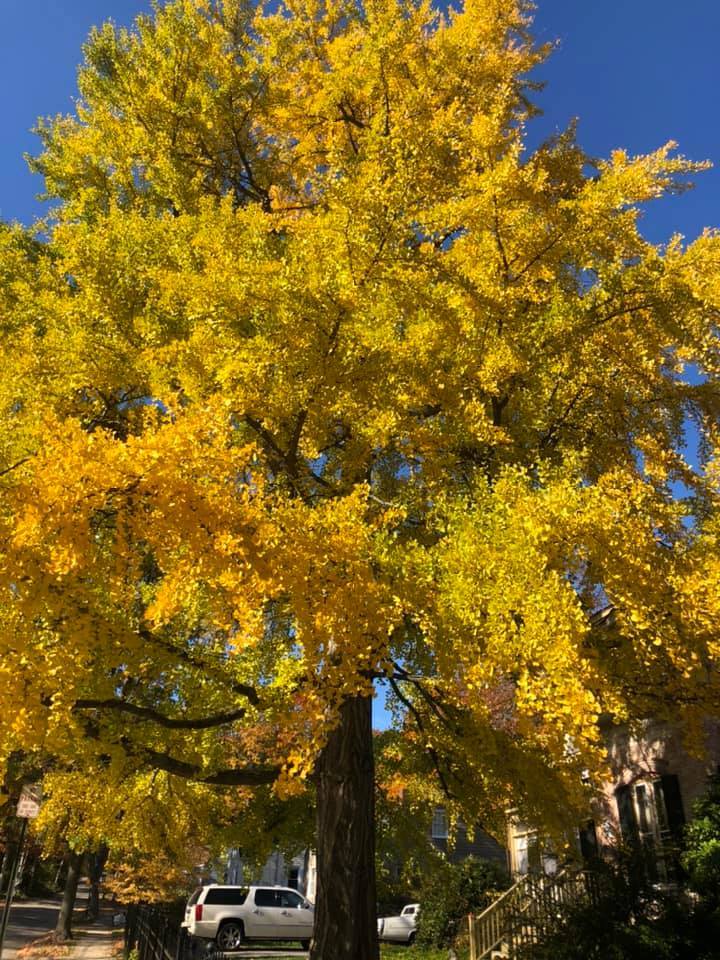
Fall is a great time for tree planting! Cooler temps, more rainfall, and less chance of sun scorch gives trees a great chance to set roots before the soil freezes solid. Not sure what type of tree belongs in the space you have? Check out the story below for some ideas. And be sure to check out our website for tips on how to plant a tree and make sure it's the right tree in the right place.
Kim Ballard, Project Canopy - As urban foresters we are often asked, “Why do you recommend planting a non-native tree in front of my house/on my sidewalk/in that parking lot?” The question is complex and has as many answers as there are environments in Maine. But it all boils down to “right tree, right place.”
Maine is the most forested state in the nation. Along with our beloved state tree, the eastern white pine, our forests are full of sugar maple, red oak, white birch and eastern hemlock. If you get a chance to wander through these native woods, you’ll notice that the shady air is cooler, moister, and perhaps not as breezy as the air around your neighborhood sidewalks. Trees planted in our downtowns face a whole host of conditions – solar reflection, drought, soil compaction, road salt, tunneling winds – that forest trees rarely encounter. Can you imagine a majestic white pine on Congress Street in Portland? Even if it could survive, it certainly wouldn’t be very happy. Our downtowns are NOT native spaces, and they cannot support our native species appropriately. Read more...
Your local park has a hidden talent: helping fight climate change
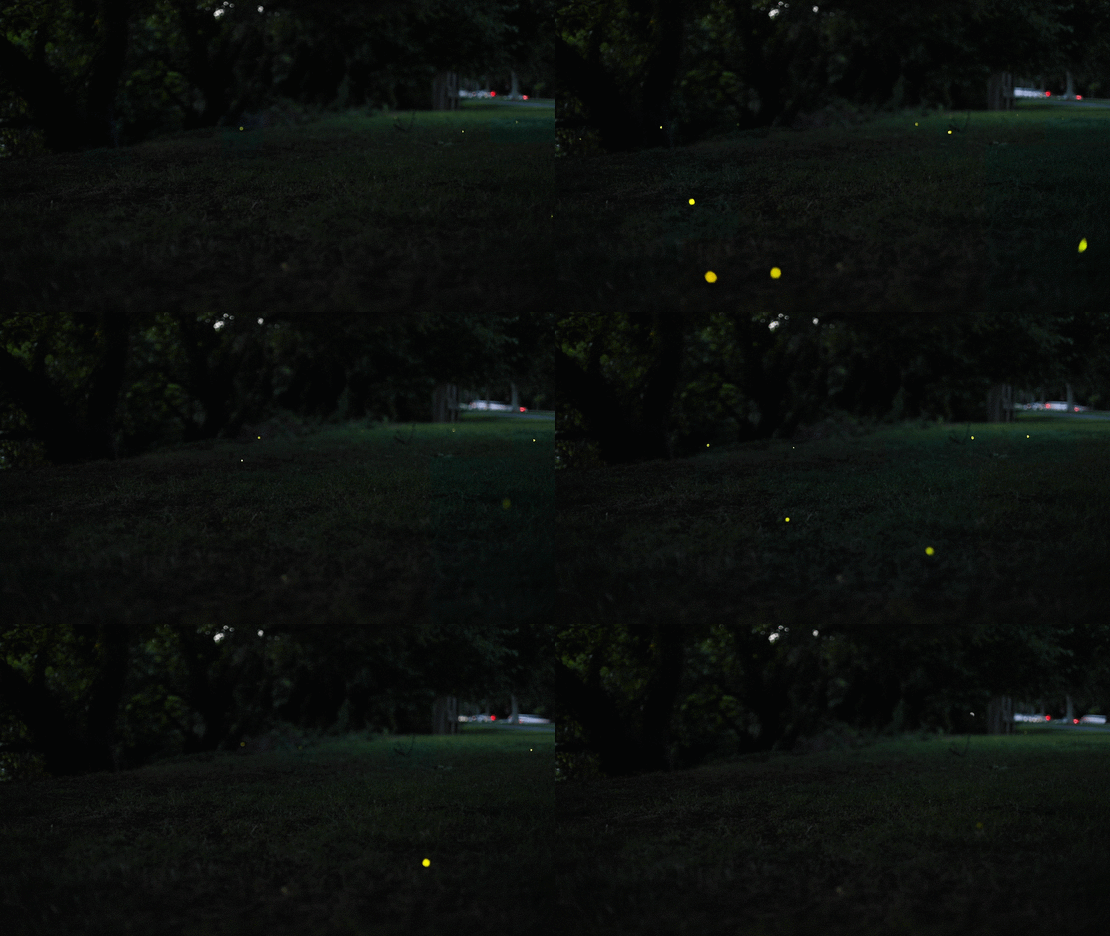 NPR - Consider the unremarkable city park. A postage stamp of green amid the concrete. Trees, swings, grass, a basketball hoop.
Maybe your park has a public pool. Maybe it has a walking path or a barbecue grill or a leafy spot that's good for watching birds. Yosemite it is not. Your park is not a vacation destination. Instead, it's something much more valuable: a little piece of nature, right where you live. Read more...
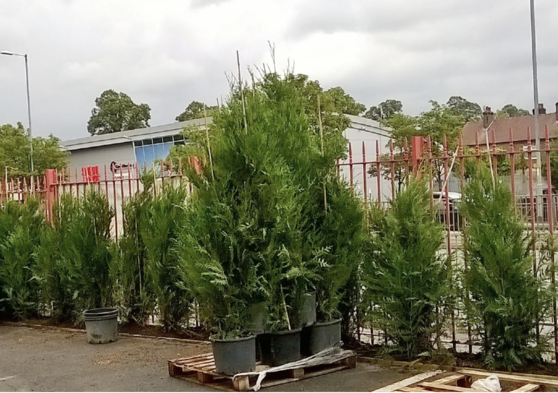 NEW ATLAS - It has long been known that plants can help mitigate air pollution in urban environments. New research reinforces such findings, showing that "tredges" planted around schoolyards can help protect children from traffic-derived airborne particles.
In the study, which was led by Lancaster University's Prof. Barbara Maher, rows of tredges (trees serving as head-height hedges) were installed around three Manchester schoolyards during the summer holidays of 2019. All of the yards were located next to busy roads.
One of the schools received ivy tredges, another got western cedar, and a third received a mix of western red cedar, Swedish birch and an inner juniper hedge. A fourth schoolyard, which served as a control, was left without a tredge of any sort.
When air quality readings taken within and outside of the yards were analyzed, it was found that the pure red cedar tredges performed best. More specifically, they blocked 49% of black carbon particles, along with 26% of PM2.5 and PM1 microparticles emitted by passing traffic. The cedar tredges additionally helped lessen the severity of sudden acute spikes in air pollution occurring within the schoolyard. Read more...
Fighting fire with fire | Teams meet in Maine for prescribed burn training
This map can tell you when fall foliage is peaking in 2022
Long-Term Growth of Highway Rights-of-Way Trees
Oct 6 & 7 - Stream Smart Phase II Workshop, Falmouth
Oct 12 & 13 - Stream Smart Phase II Workshop, Farmington
Nov 1 - Maine Stormwater Conference, Portland
Nov 16 - Arbor Day Foundation Partners Conference, Seattle
|