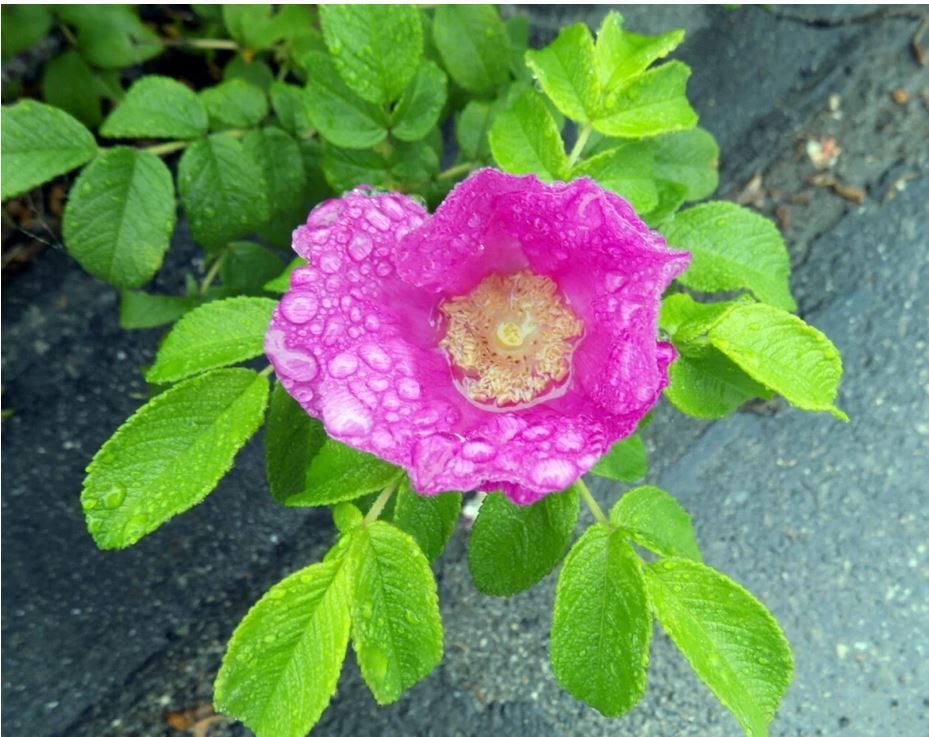
 PPH - The state has added 30 species to the list of plants that will be illegal to sell in Maine as of January 2024, joining the 33 plants that became illegal to sell more than four and a half years ago*. The plants are banned for sale because they are invasive, meaning they spread aggressively and crowd out native species.
Another 30 plants were added to a “species watch list.” The spread of this second group species will be monitored until, some five years from now, the Terrestrial Invasive Plant Stakeholder Committee begins considering anew which new plants to add to the banned list.
Under the new rules, rugosa rose, the fragrant beach rose that is prevalent throughout Maine but especially along the coast, gets its own category: “Invasive Terrestrial Plant of Special Concern.” Read more...
*Correction: Previous newsletter sent on 7/12/2022 stated 3 years ago.
Heat Officers Use Landscaping to Help Cool Cities
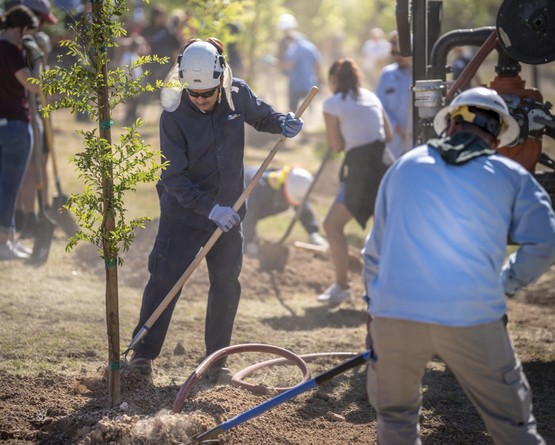 THE EDGE - Cities have been warming at twice the global average due to the urban heat island effect, which is caused by buildings and pavement trapping heat. In response to this issue, several cities have created the position of ‘chief heat officer’ to be responsible for developing heat mitigation strategies.
Phoenix, Los Angeles and Miami-Dade County are some of the first metro areas to create these dedicated positions. Phoenix launched the Office of Heat Response and Mitigation (OHRM) in October 2021 and is the first city in the world with a publicly funded, municipal government office focused on heat.
“As time goes on and global temperatures continue to warm, it’s likely that more cities – especially in large metro areas – will begin to pour more resources into the fight against extreme heat,” says Spencer Blake, public information officer for the city of Phoenix. “Many cities and counties are already working on heat mitigation through existing departments and positions but creating a specific department or office to collaborate and organize the efforts can prove to be extremely helpful and efficient.” Read more...
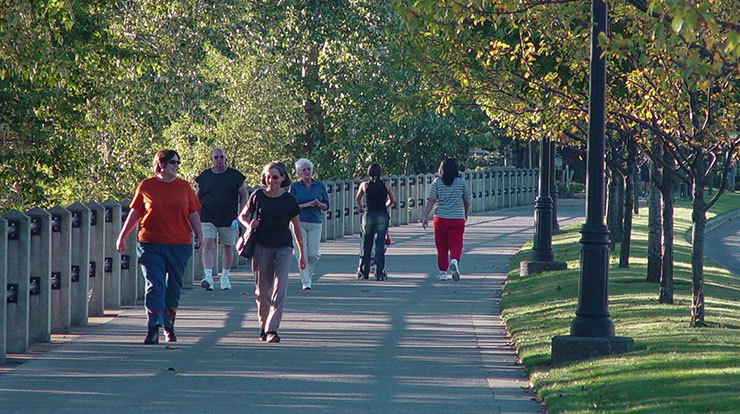 USFS - Urban forests can help communities adapt to and reduce the effects of climate change, but these forests are also vulnerable to changes in climate. The Northern Research Station and partners developed a menu of actions to adapt urban forests to climate change while also improving human health and well-being.
Decades of research has described the role of urban forests helping cities address climate change by supporting greenhouse gas mitigation and reducing the impacts of extreme heat and altered climate that impair human health. The street trees, urban parks, and backyard climbing trees that make up an urban forest also provide space for communities to commune with nature.
Urban areas, however, are particularly vulnerable to climate change. High levels of impervious cover, pollution, and built structures intensify impacts from increasing temperatures, drought, and extreme weather. This puts residents at risk of many climate stressors that cause both mental and physical harm. The people managing urban forests need robust strategies to adapt to a changing climate. Read more...
|
In 2020, SFI surveyed the urban and community forest sector to determine the need for a new SFI urban and community forest certification standard. Over 600 people responded, and the overwhelming majority said “yes.” From this, SFI recruited experts in the urban and community forest sector to form a Task Group. In 2021, the Task Group developed a first draft of an SFI Urban and Community Forest Sustainability Standard and conducted an open public comment period to receive input. There were more than 500 comments from 121 individuals and organizations, of which:
- 18% were from municipal,
- 28% from non-profits,
- 16% from private or corporate,
- 24% from federal, state, or county government,
- 7% from university or students, and
- 6% unknown.
Eight percent of the commenters were from Canada.
The Task Group reviewed all comments from the first comment period, made revisions based on the input, and produced a second draft of the SFI Urban and Community Forest Sustainability Standard. Based on feedback, the second draft is 25% more concise than the first draft. We also created definitions of key terms and guidance to assist with implementation.
SFI is seeking your input through this second comment period on the Standard. They want to know what you think about the 5 Principles, 16 Objectives, their associated Performance Measures, and Indicators. Visit surveymonkey.com/r/SFI2ndUFC to provide feedback.
SFI is also hosting three webinars to discuss the new Standard:
- Introduction to the SFI Urban and Community Forest Sustainability Standard: Thursday, July 7, 2022, from 2 pm to 3:30 pm eastern / 11 am to 12:30 pm pacific. Register to attend webinar 1
- Focus on Objectives 1 through 7 of the SFI Urban and Community Forest Sustainability Standard: Tuesday, July 12, 2022, from 2 pm to 3:30 pm eastern / 11 am to 12:30 pm pacific. Register to attend webinar 2
- Focus on Objectives 8 through 16 of the SFI Urban and Community Forest Sustainability Standard: Thursday, July 14, 2022, from Noon to 1:30 pm eastern / 9 am to 10:30 am pacific. Register to attend webinar 3
We will have plenty of time for questions and discussion.
Interested in testing the Standard with your organization? We are looking for opportunities to pilot the Standard. Email Paul if you are interested.
Remember this final public comment survey will be open until August 2, 2022. Please share this opportunity with your network.
|
|
Emerald Ash Borer Detections in Oakland and Waterville Provide Timely Reminder: Leave your Firewood at Home
Forest & Shade Tree – Insect & Disease Conditions for Maine July 11, 2022
Benches for Buck's Ledge Community
Identifying Organizations that could Manage and Administer a Financial Assistance Program for Firewood Banks (RFI)
USDA Forest Service State & Private Forestry received FY 2022 funding direction in the Bipartisan Infrastructure Law (BIL) that the Forest Service should provide financial assistance for the operation of firewood banks and to support feedstock acquisition in Section 40803(c)17. This Request for Information (RFI) seeks to identify eligible organizations that can partner with the Forest Service to manage and administer a financial assistance program for the operation of firewood banks. This financial assistance would be provided using pass-through funding or sub-awards to local firewood banks across the United States.
Firewood banks have provided emergency and seasonal wood for heating homes for decades. Modeled after food banks, they provide fuel assistance to many people in the United States. In 2016, it was reported that there were approximately 65 firewood banks, but it is now projected that there may be nearly 150, with the potential for others to be implemented in the future. Firewood bank programs are diverse with a wide range of operating factors including organization type, source of wood, quantity of wood supplied, operations funding, and strategy for assistance. Read more (PDF)....
EPA Solicits Applications for Cooperative Agreement for the Pesticide Inspector Residential Training (PIRT) Program. Applications due July 16.
July 14 - Hemlock Woolly Adelgid Management session - Old Orchard Beach
July 15 - Maine's Wildfire Weather Program - Forestry Friday Webinar
July 16 - Low-Impact Forestry 101
July 23 - Hayday: A Field & Forest Day at Maine Organic Farmers and Gardeners Association (MOFGA) - Unity
Aug 19 - Overview of Maine's Forestry Regulations - Forestry Friday Webinar
Aug 20 - Northern Woodlands Field Day
|