Look to the Stars - A Universe Awaits
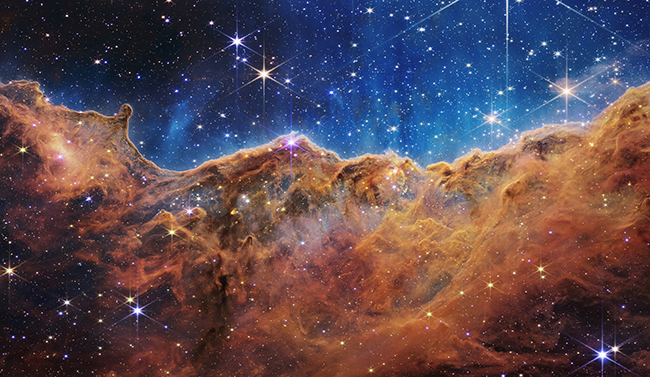
The Carina Nebula, a star forming region or stellar nursery, as seen by the James Webb Space Telescope. NASA photo.
We can now look deeper into the night sky than ever before. The James Webb Space Telescope is sending images of the birthplaces of stars in stunning clarity and revealing so beautifully massive dimensions measured in light-years. A light-year is the distance light travels in one Earth year - about 6 trillion miles!

Learn more about the telescope, track its journey, and view images as they are released at Where is Webb?
I hope the NASA images will inspire you to explore the night sky firsthand. An evening outdoors looking into the universe with binoculars or a telescope opens to the mind to so much pondering... how are the stars used for navigation by both people and animals? What stores have been passed down through time about the stars, and why? Who are we in the universe? How much more will we see and learn from Webb?
The Maine Bureau of Parks and Lands is offering several night sky and star gazing programs this summer. Coming up this month are:
The park telescopes used at the programs were funded by a Maine Outdoor Heritage Fund grant. When not in use by the parks, the Orion telescopes may be checked out for use by visitors camping at Maine State Park campgrounds. Check this listing of Maine libraries that offer telescopes on loan so you can stargaze at home or on your next evening outing.
|
Share Nature Note with your friends, family, teachers, scouts, and anyone you think might be interested. Here is how they can sign up for a free subscription:
Read back issues online.
Suggest a topic by email; put Nature Note in Subject line and email Jocelyn Hubbell.
|