Browntail Moth Update #8: June 17, 2022
This week we observed most of the caterpillars at our monitoring sites spinning pupal cocoons in preparation for the next life stage. At least some pupation occurred at all of our monitoring sites. However, there are still some smaller caterpillars (about 25 mm in length), which are still active and have not pupated yet. In many places, particularly in the Midcoast and north of Augusta, we already see re-foliation of some affected trees and branches. This is undoubtedly helped by the precipitation we’ve had this past month.
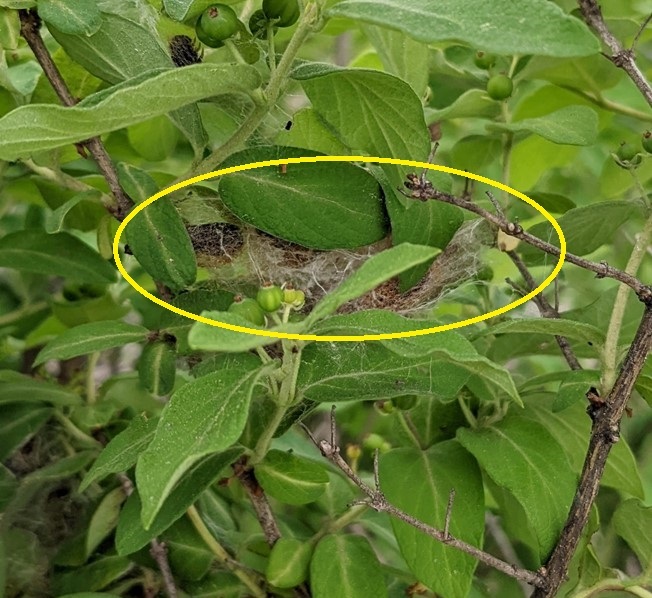 Browntail moth pupal cocoon with multiple individuals inside. Brunswick, ME.
The silky cocoons surrounding the pupae contain the last cast skin of the caterpillar and are full of toxic hairs. Many people become exposed to the hairs through encounters with the cocoons as they can pupate on buildings and vehicles/ trailers and host tree foliage. Residents should check vehicles and trailers for cocoons before moving them to prevent them from hitching a ride. People in areas with browntail moth populations should take precautions to minimize exposure to the caterpillars’ hairs.
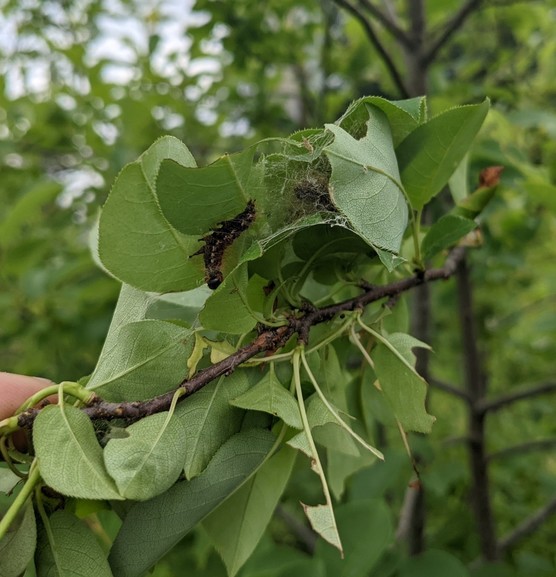 Pupal cocoon with fresh, fungus killed caterpillar just outside. Belfast, ME.
Information Request
The Maine Forest Service would like your help in locating diseased caterpillars. Infected caterpillars will have a puffy, swollen appearance and are covered in whitish/yellowish dust which is spores of the fungus. As caterpillars succumb to the fungus, they will hold tight to the branches they die on, which helps spread the browntail caterpillar-killing spores (see images below). Reports of ONLY DISEASED browntail caterpillars can be sent to foresthealth@maine.gov.
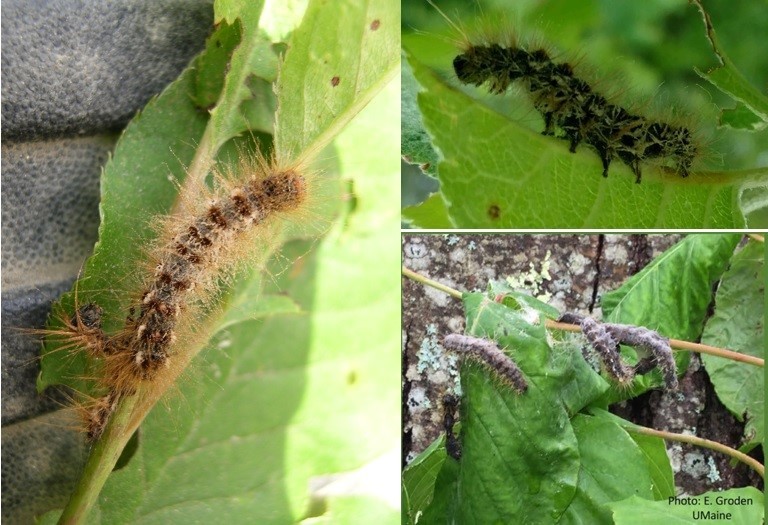 Examples of fungus-killed caterpillars.
Research News
Dr. Angela Mech of UMaine and her undergraduate student Rachel Jalbert made an interesting discovery regarding browntail caterpillar feeding. During the first week of June. Dr. Mech’s research team discovered browntail moth caterpillars feeding on conifers, which has not been previously recorded in Maine to our knowledge. Spongy moth (formerly gypsy moth) feeds on conifers as the caterpillars mature, and has been observed defoliating hemlock and white pine in outbreak areas of the state this month. These two species are grouped in the same family (Erebidae), and there is now evidence that browntail can do the same, although far less commonly. Dr. Mech’s team confirmed this with photos, videos, and a lab experiment.
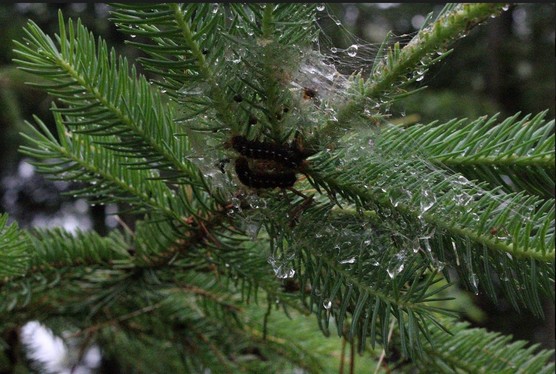 Browntail moth caterpillars feeding on spruce, note feeding damage in the top right. Credit: Rachel Jalbert.

|