Browntail Moth Update #6: June 3, 2022
Browntail caterpillars continue to grow and feed. Impacts from feeding are highly variable. In some areas they have stripped the trees on which they overwintered, in others defoliation is just beginning to be more visible in the upper canopies of some trees. The caterpillars have a little less than a month left of development before pupation; however this could be shorter depending on conditions in the field.
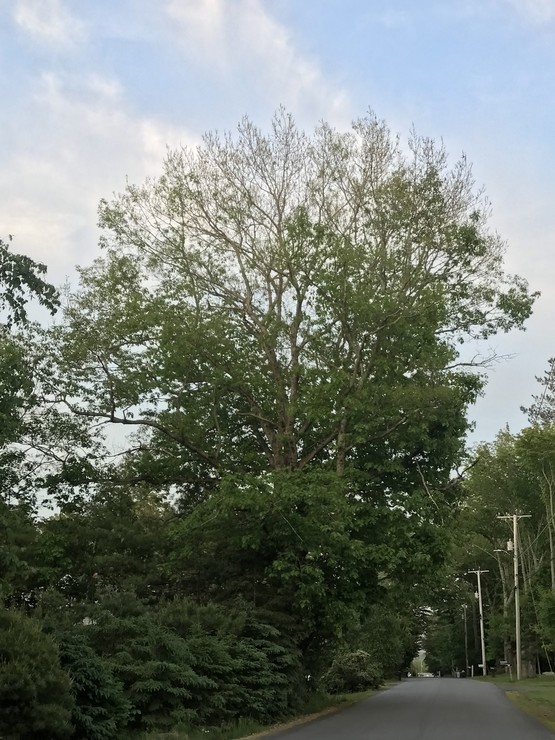 An oak tree with advanced defoliation by browntail caterpillars. Orono, ME.
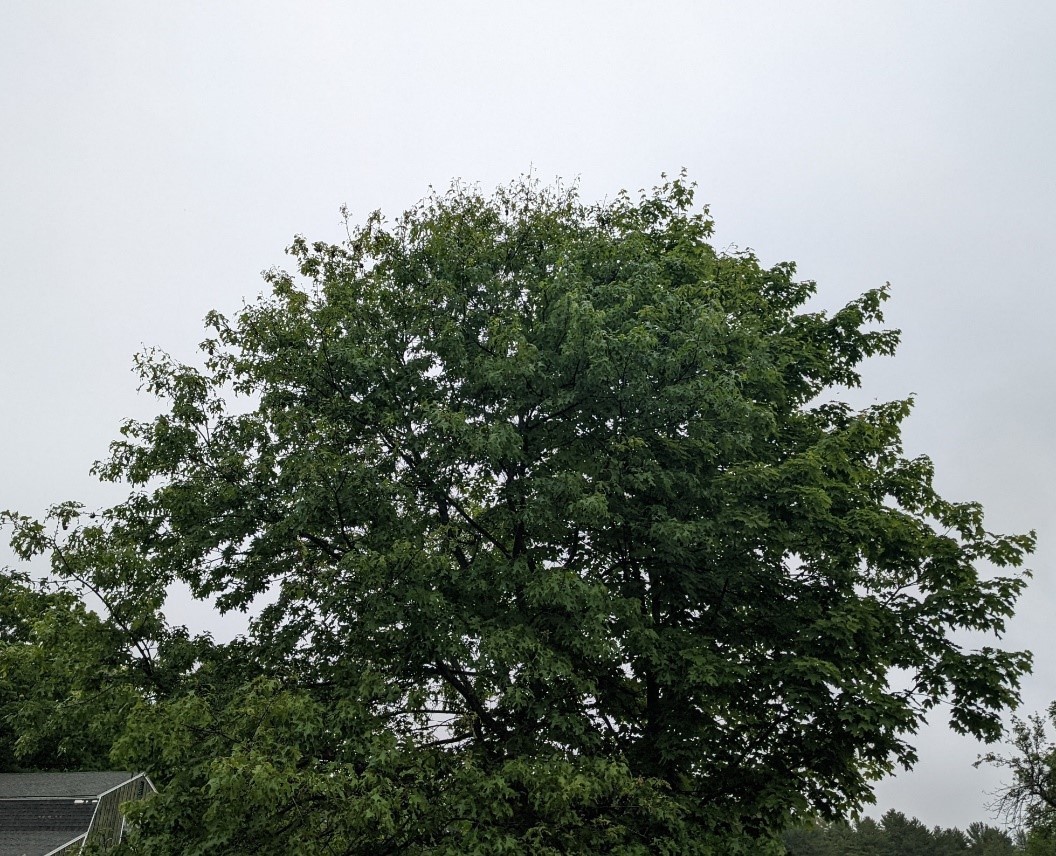 The beginning of canopy defoliation at the top of an oak. Cumberland, Maine.
The rains of May and now June will help to support tree health and may also help aid the development of both fungal and viral diseases in BTM. At over half of our monitoring sites this week we saw some evidence of pathogen activity with one site (Chelsea) having a high level of fungus-related mortality making it hard to find live caterpillars at the site. We will continue to monitor for disease-causing agents at our developmental monitoring sites and elsewhere in the coming weeks. However we should caution that pockets of disease impact may be quite isolated, as was seen last year.
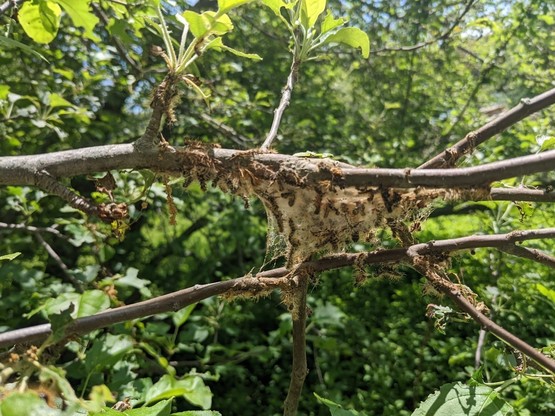 Fungus killed caterpillars on their web in Liberty, ME.
 Two fungus killed caterpillars at the Liberty monitoring site. Liberty, ME.
It is often stated that browntail moth has no natural enemies. That is a simplification of reality. Browntail moth does have natural enemies, they are just not enough to prevent significant impacts here in Maine. This week we received a photo of a predatory stinkbug making a meal of browntail moth, and observed the same at one of our monitoring sites. Other natural enemies of browntail moth include other predators, like beetles, spiders, birds and small mammals, parasitoids like flies and wasps, and diseases like before the mentioned fungus and the baculovirus.
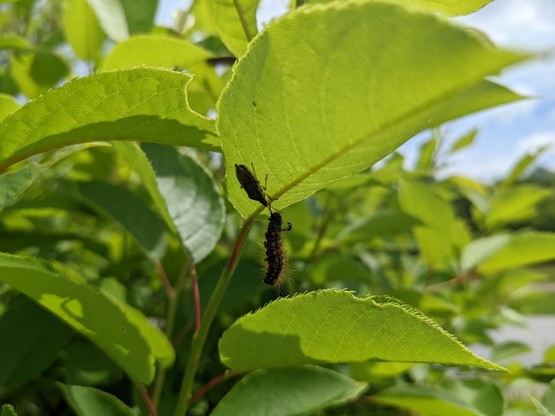 Predatory stink bug making a meal of a browntail caterpillar, Jefferson ME.
Handling Wandering Browntail Moth Caterpillars
If you wish to remove caterpillars from decks, buildings, driveways and other surfaces do it in a way that will not increase your risk of exposure to their hairs (No leaf blowers allowed! We’ve seen it). You can dislodge them from areas out-of-reach with a strong jet of water. To remove them more permanently, add a couple of inches of soapy water to the canister of a wet/dry vacuum, vacuum them up, and allow them to sit until the caterpillars have drowned. Then safely dispose of the contents (bear in mind, the toxin in the hairs is stable).
Contact 211 Maine for answers to frequently asked questions on browntail moths:
- Dial 211 (or 207-874-2211)
- Text your zip code to 898-211
Or visit our Browntail Moth FAQs.
More Browntail Moth Updates

|