Browntail Moth Update #4: May 20, 2022
Starting late last week and at all of our developmental monitoring sites this week we have observed that about half of the BTM caterpillars have developed to the fourth instar (life stage). Fourth instar and older caterpillars have white markings on the sides of each body segment and have more of the irritating hairs that cause human health impacts. This is a tipping point for this species in terms of the number of irritating hairs as well as the growing appetites of the caterpillars. We have also observed a high rate of variability in caterpillar size within sites. At one of our monitoring sites there are caterpillars that are 23 mm long alongside 9 mm caterpillars (indicating little development since emergence).
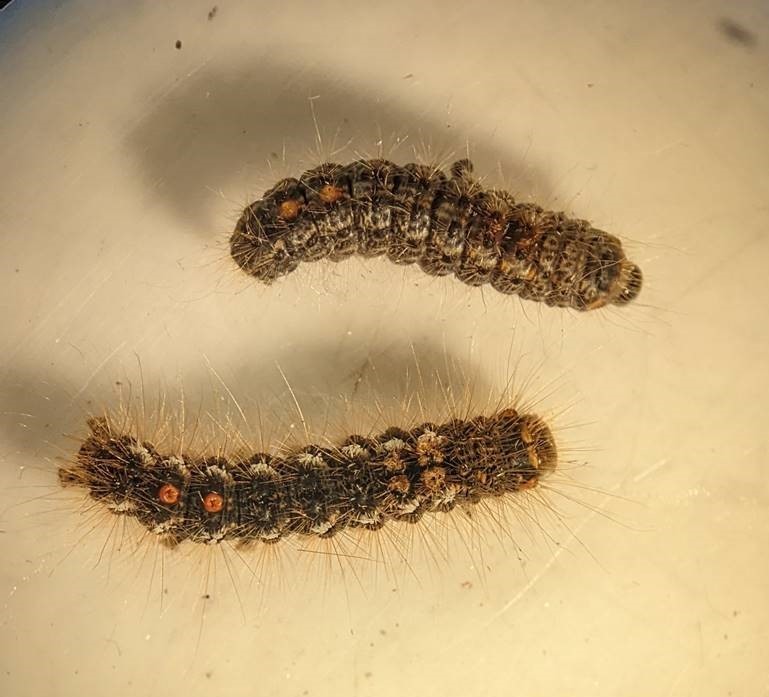 Comparison of 3rd (Top) and 4th (Bottom) instar caterpillars, note the white tufts on each side of the body segments and the more abundant hairs.
The windy weather we’ve had the last couple of days seems to have hastened some of the caterpillars leaving their host trees by being blown to the ground. This means that there may be an increased chance of folks coming into contact with the caterpillars so caution should be exercised in areas of high infestations.
If you wish to remove caterpillars from decks, buildings, driveways and other surfaces do it in a way that will not increase your risk of exposure to their hairs (No leaf blowers allowed! We’ve seen it).You can dislodge them from areas out-of-reach with a strong jet of water. To remove them more permanently, add a couple of inches of soapy water to the canister of a wet/dry vacuum, vacuum them up, and allow them to sit until the caterpillars have drowned. Then safely dispose of the contents (bear in mind, the toxin in the hairs is stable).
Plans for management through insecticide treatment, and some treatments, should already be made. We recommend working with a licensed pesticide applicator for insecticide treatments. In most years, treatments should be completed before the end of May to limit buildup of toxic caterpillar hairs and host foliage loss.
Contact 211 Maine for answers to frequently asked questions on browntail moths:
- Dial 211 (or 207-874-2211)
- Text your zip code to 898-211
Or visit our website.
Browntail moth caterpillars are not the only fuzzy caterpillar out and about this week. We have also received images and made observations of eastern tent, forest tent, and spongy moth caterpillars. Below we share some of those observations from the Bangor area.
Eastern tent caterpillars will be found in both wild and cultivated fruit trees. We covered some of the differences in the webs in last week’s update. Note the central white stripe on the caterpillars. These native caterpillars can be considered beneficial. They provide important food for predators and parasitoids that also attack browntail moth. However, if they are in a prized fruit or ornamental tree, you may want to remove them. To remove them, you can twist a forked stick in the web during the evening hours. They can be moved to a wild cherry or serviceberry tree or disposed of in a manner similar to browntail moth.
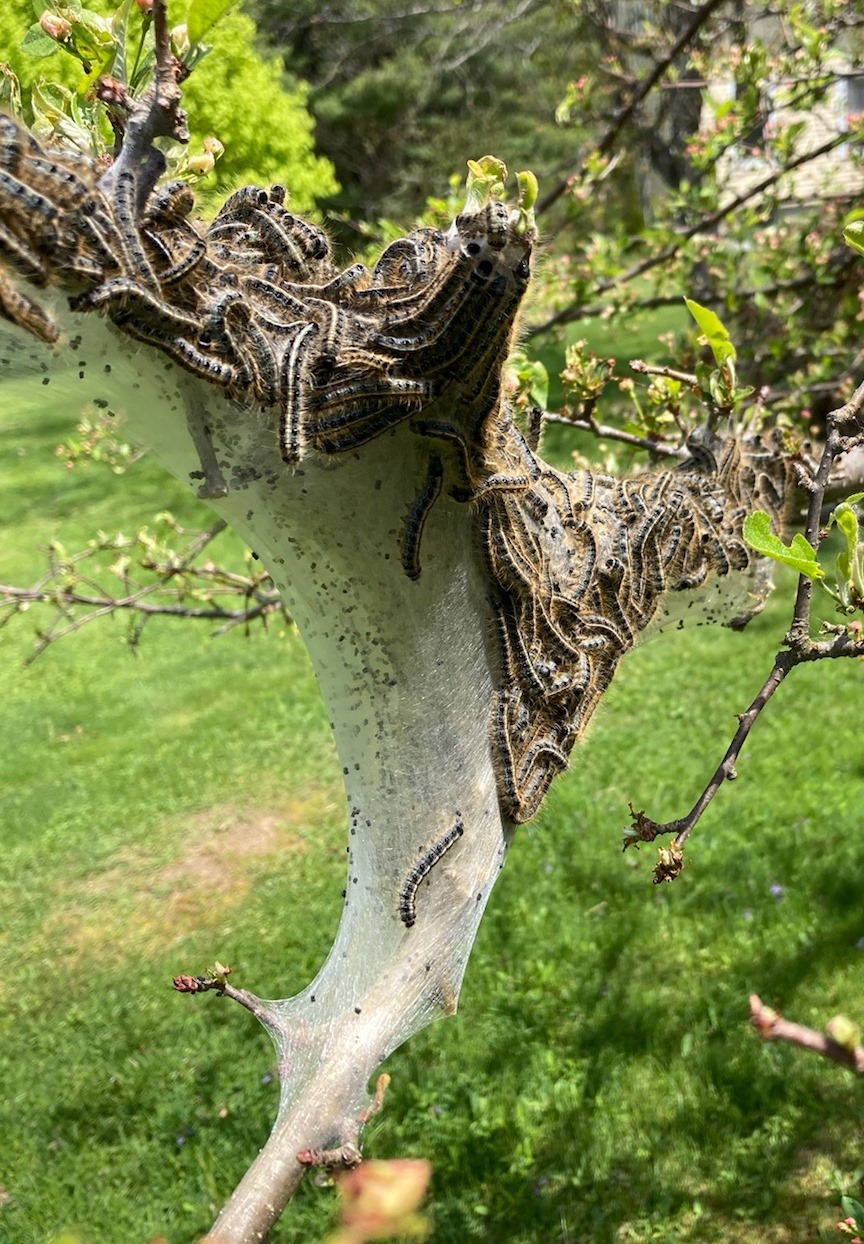 Eastern tent caterpillars basking in the sun in Orono. May 19, 2022. Courtesy Megan Schneider.
Forest tent caterpillars are starting to show their characteristic central white spots and blue coloration. The spots are variously described as footprint, keyhole and penguin shaped. They are sometimes off-white. This is also a native species. In small populations, they do little damage to trees. They are an occasional outbreak species, and recently contributed to a small pocket of oak mortality in Blue Hill.
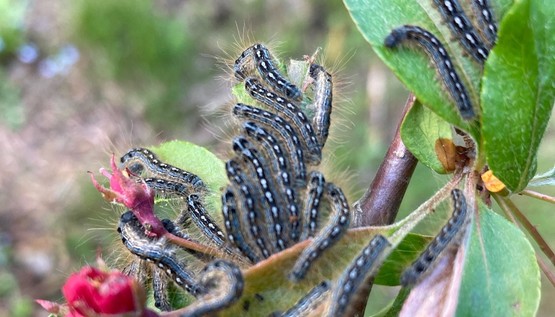 Forest tent caterpillars feeding on foliage in Orono. May 19, 2022. Courtesy Megan Schneider.
In the Bangor region, spongy moth caterpillars are just hatching. During this stage they will “balloon”, or travel on the wind using length of extruded silk. Like browntail moth, this species is introduced. Also like its cousin, it is in outbreak-level populations in parts of Maine. The characteristic knobs on the side of the head capsule are the easiest identification cue at this stage of the caterpillar’s development.
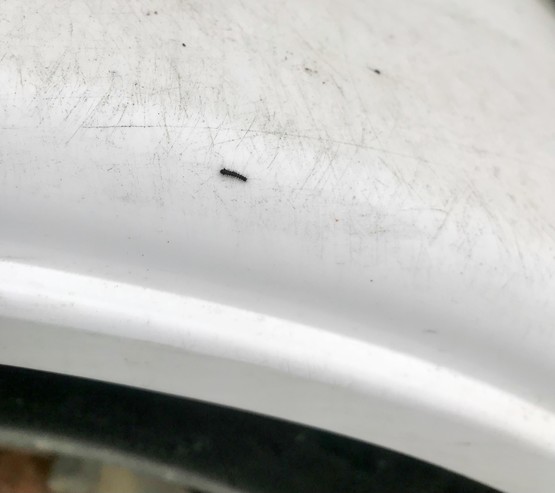 Spongy moths like this early instar caterpillar spread easily to new areas via human transport.
If you’ve read this far, you already know how to recognize browntail moth caterpillars. They are in variable stages of development, as are all the species covered. Look for the characteristic orange dots and the white tufts of hair. These caterpillars are quite able hitchhikers; you can read more in our recent bulletin.
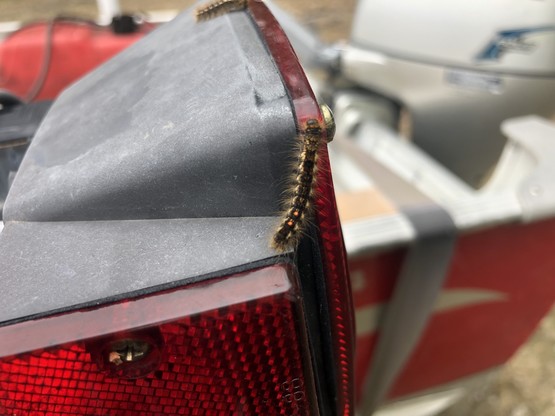 Don't bring browntail moths home with you- check trailers and vehicles for any caterpillars hitching a ride.
More information on distinguishing between some of Maine’s hairy caterpillars is available in this video.

|